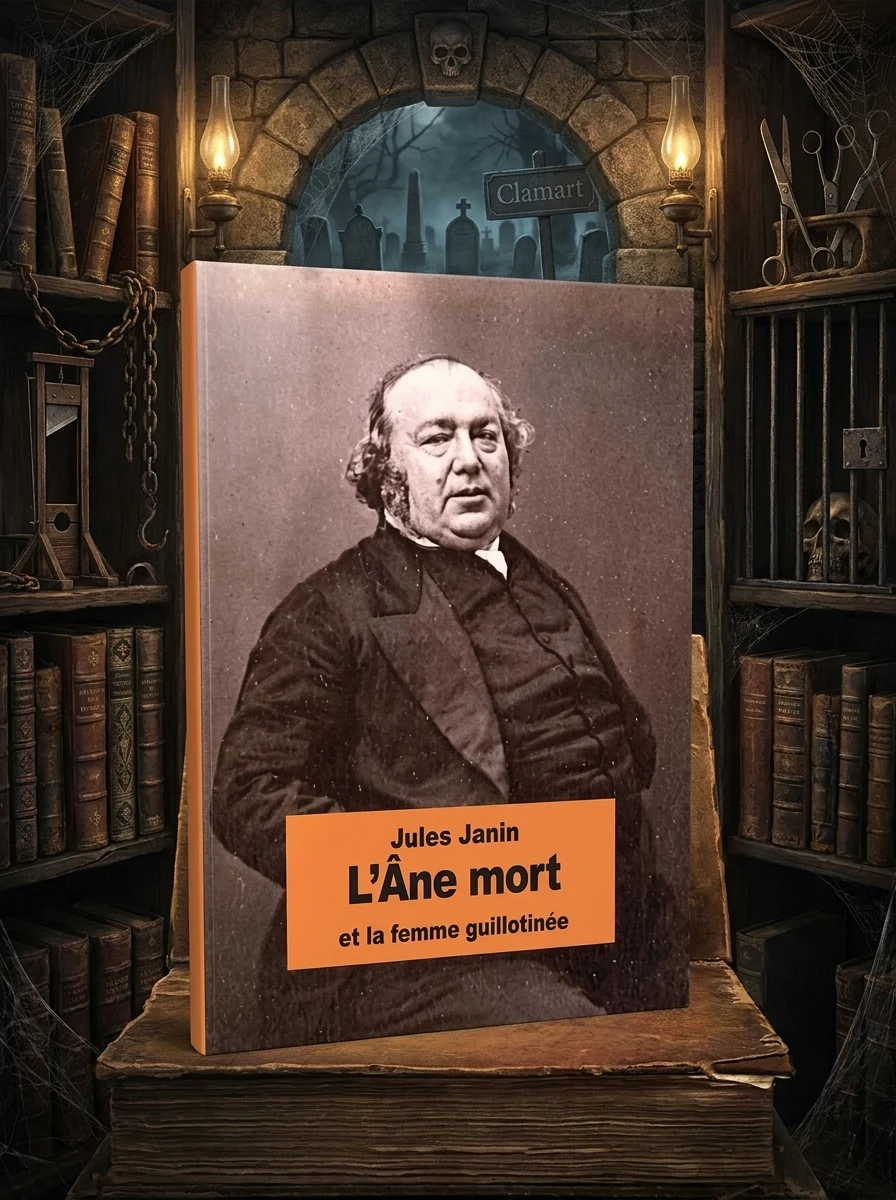
L'Ane mort et la femme guillotinee
A singular 1829 French Romantic novel exploring horror through morgues and cemeteries.
Janin’s 1829 publication marks his entry into the world of novelists. The text is characterized by outrances and lyrical prose that define its place in French Romanticism. The narrative drives toward frenzy by utilizing specific locations such as the Clamart cemetery. It features figures like executioners and madmen to create a sense of dread. The work does not shy away from the grim realities of death and punishment. Its organization relies on these atmospheric elements rather than complex plotting. This makes it a distinct artifact of its literary era. The book offers a raw look at the supernatural interests of the time.
This text emerged in 1829 as a singular work by Jules Janin. It stands as a major piece of French Romantic literature. The style is defined by outrances and lyrical tone. It reflects the literary trends of early nineteenth-century France.


📝 Description: L'Ane mort et la femme guillotinee
💎 Our verdict on L'Ane mort et la femme guillotinee
📖 Why choose it
Why this book is worth reading
Readers drawn to the atmospheric depths of early nineteenth-century urban life will find this text compelling. It appeals to those interested in the historical evolution of supernatural literature and the macabre traditions of French Romanticism. The book is ideal for scholars and enthusiasts who value emotional intensity and lyrical style over complex plotting. Those seeking a raw exploration of death, punishment, and the morgue will appreciate its unflinching gaze at grim realities. It serves as a significant example of how horror was constructed through setting and character rather than narrative drive. The work offers a distinct lens into the supernatural interests of its time, making it essential for understanding the period's literary landscape.
⭐ Reader reviews
Reader rating
Janin’s novel excels in creating an overwhelming atmosphere of dread through specific, grim settings like the Clamart cemetery and poorly ventilated prisons. Its lyrical prose and excessive style define its place in French Romanticism, prioritizing emotional intensity above all else. The text features executioners and madmen to amplify a sense of horror that drives toward frenzy. While it lacks straightforward plotting or light reading qualities, it succeeds as a distinct artifact of its era. This book suits readers interested in gothic fiction and the history of supernatural literature. It is best appreciated by those who can navigate its challenging tone and value atmospheric depth over conventional narrative structure.
📖 Read on the blog
✍️ More books by this author Jules Janin


🏛 Books from this publisher Createspace Independent Publishing Platform



You might also like
See more →



Have a question about this item?
Ask about the edition, condition, delivery or anything else — we reply by email or phone, usually within a day.
