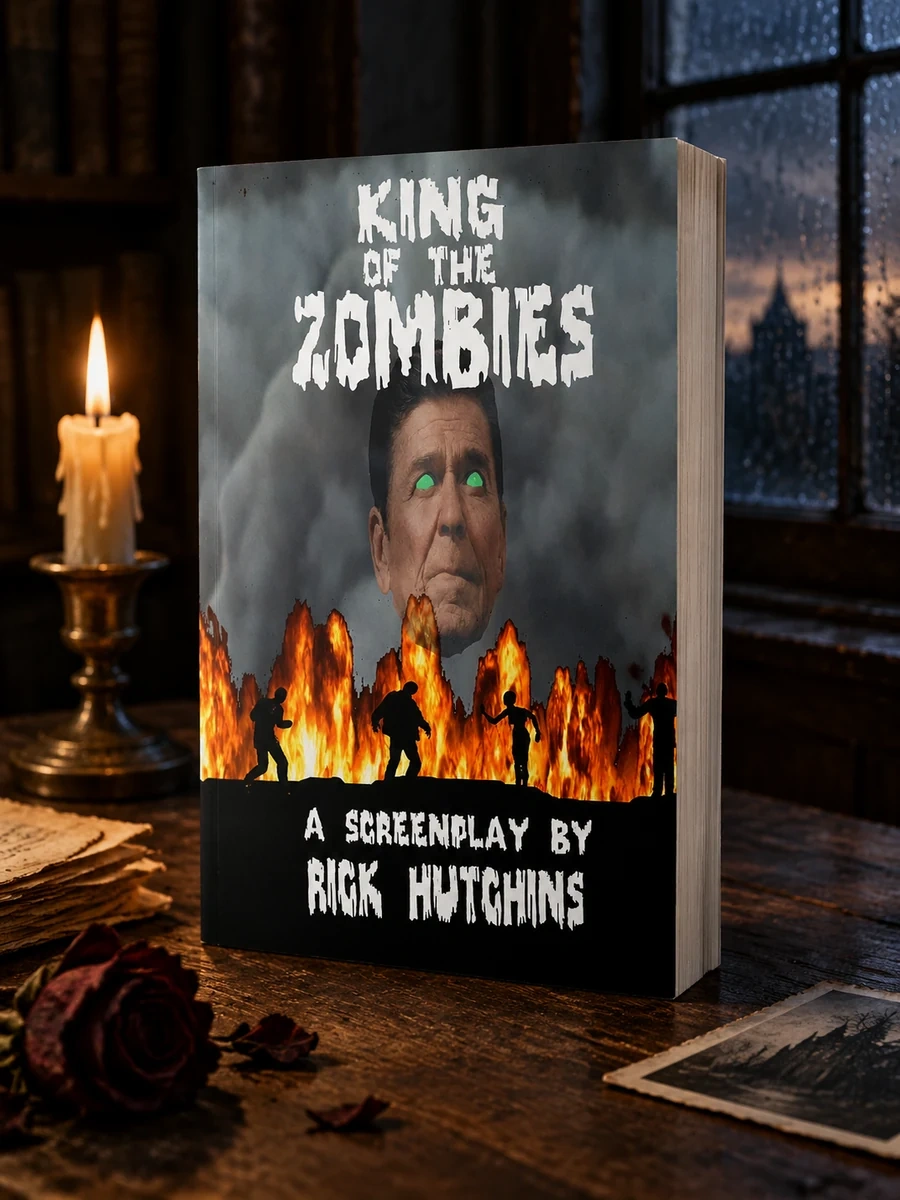
King Of The Zombies
An unproduced 1980s satire screenplay about zombies and politics.
Hutchins writes a script that mocks the Reagan era while embracing 1980s music trends. The story uses zombie tropes to critique political figures and cultural shifts. It avoids standard horror formulas to deliver a sharp commentary on the time period. The narrative reflects the tension between punk rock, new wave, and emerging MTV culture. This approach creates a distinct tone that separates it from conventional genre works. The screenplay remains unproduced, preserving its original satirical intent without commercial compromise.
The screenplay emerged in the early 1980s, a time defined by punk rock, new wave, post-disco, and the rise of MTV. It reflects the political nostalgia of the Reagan administration and the cultural shifts toward rap and digital media.


📝 Description: King Of The Zombies
💎 Our verdict on King Of The Zombies
📖 Why choose it
Why this book is worth reading
Readers interested in the intersection of horror fiction and political satire will find this unproduced screenplay a compelling study. It offers a unique perspective on the Reagan era, using zombie tropes to dissect social and musical transitions rather than relying on standard horror formulas. Those who appreciate sharp commentary on cultural shifts, from punk rock to pre-rap sounds, will value its distinct tone. The book serves as a document of its time, preserving original satirical intent without commercial compromise. It is ideal for those seeking insight into how era-specific anxieties were processed through fictional narratives, providing a critical look at political figures and cultural trends that defined the period.
⭐ Reader reviews
Reader rating
Hutchins crafts a distinct artifact that challenges traditional genre conventions by using the undead premise to dissect social and musical shifts of the 1980s. The screenplay avoids standard horror tropes to deliver sharp commentary on the Reagan administration and its opposition, aiming for a reaction comparable to George Romero. It successfully captures the tension between punk rock, new wave, and emerging MTV culture. While it may not appeal to those seeking produced films or straightforward horror without political subtext, it stands as a unique document of its specific moment. The work suits readers interested in unproduced screenplays and satirical takes on zombie cinema, offering valuable insight into the era's anxieties processed through fictional narratives.
📖 Read on the blog
🏛 Books from this publisher Lulu Press



You might also like
See more →



Have a question about this item?
Ask about the edition, condition, delivery or anything else — we reply by email or phone, usually within a day.
