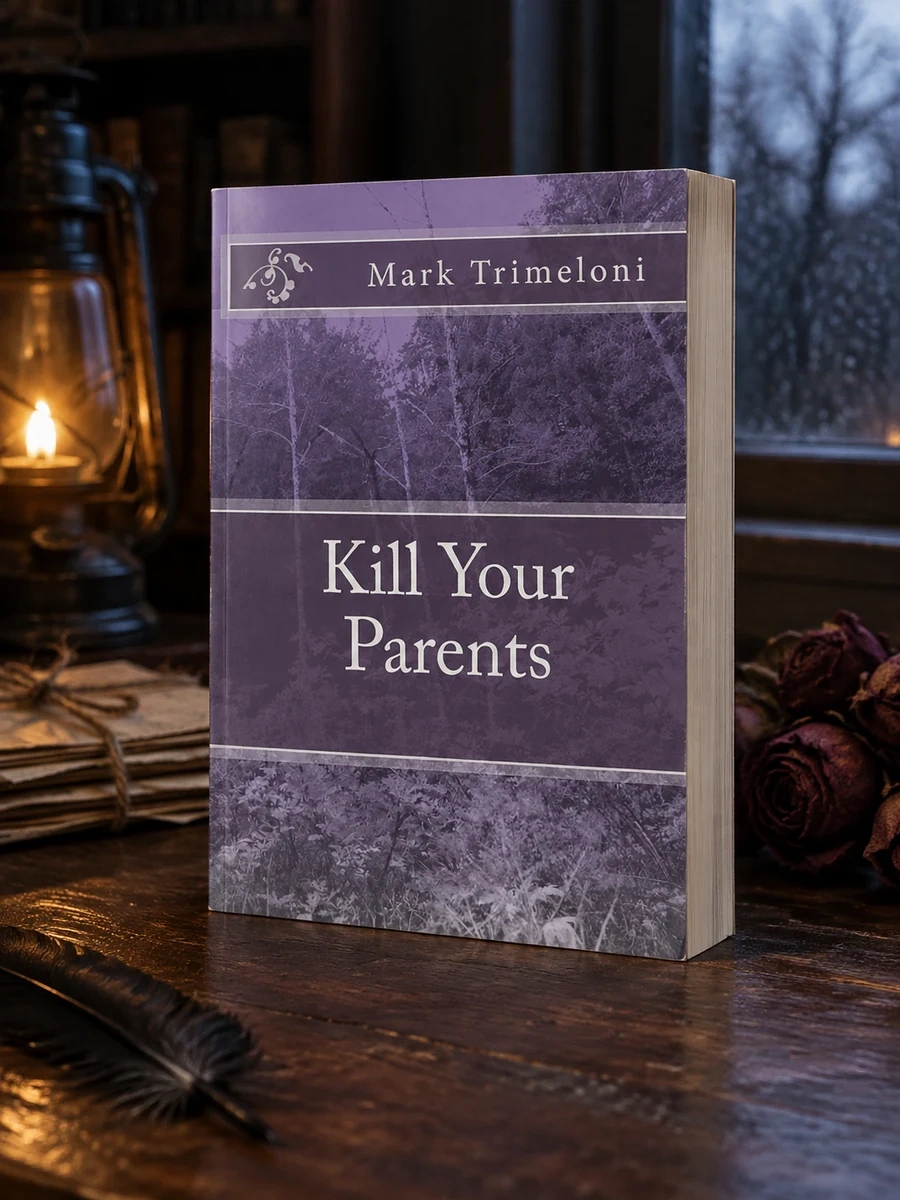

Kill Your Parents
A thriller about a boy who wants to kill his parents in a town where other adults are dying.
This book follows Caleb’s internal struggle while external chaos erupts in Copper Bend. He must decide if his personal desire for freedom justifies murder, especially when a pamphlet suggests a broader purge is necessary. The story relies on the tension between his private guilt and the public crisis unfolding around him. Trimeloni uses this setting to explore the limits of youthful rebellion against parental authority.
The story is set in Copper Bend, a small town where adults are dying. It draws on traditions of domestic horror and supernatural fiction, focusing on the breakdown of family structures rather than historical periods or specific literary movements.


📝 Description: Kill Your Parents
💎 Our verdict on Kill Your Parents
📖 Why choose it
Why this book is worth reading
Readers who enjoy intense psychological thrillers focused on internal conflict will find this narrative compelling. It offers a stark examination of filial obligation versus independence, appealing to those interested in the limits of youthful rebellion. The story is ideal for fans of character-driven horror who prefer moral ambiguity over simple good-versus-evil dynamics. Those seeking a direct confrontation with the tension between personal guilt and public chaos will appreciate the grounded perspective. It serves readers looking for a narrative that challenges their views on authority and liberation without offering gentle explorations of family bonds, delivering a breathless experience through its focus on Caleb's specific moral dilemma.
⭐ Reader reviews
Reader rating
Trimeloni crafts a tense narrative centered on Caleb’s desperate desire for freedom in Copper Bend. The book excels in grounding the horror in Caleb’s internal struggle, balancing his private guilt against the external chaos of dying adults. It suits readers who prefer slow-burn character studies over straightforward mysteries with clear antagonists. The pacing is direct, avoiding gentle explorations of family bonds to focus on the tension between independence and filial duty. While it may disappoint those seeking a traditional mystery structure, it rewards those interested in moral dilemmas and psychological depth. The surprise ending aims to leave readers breathless, cementing its place as a provocative study of rebellion against authority figures within a horror framework.