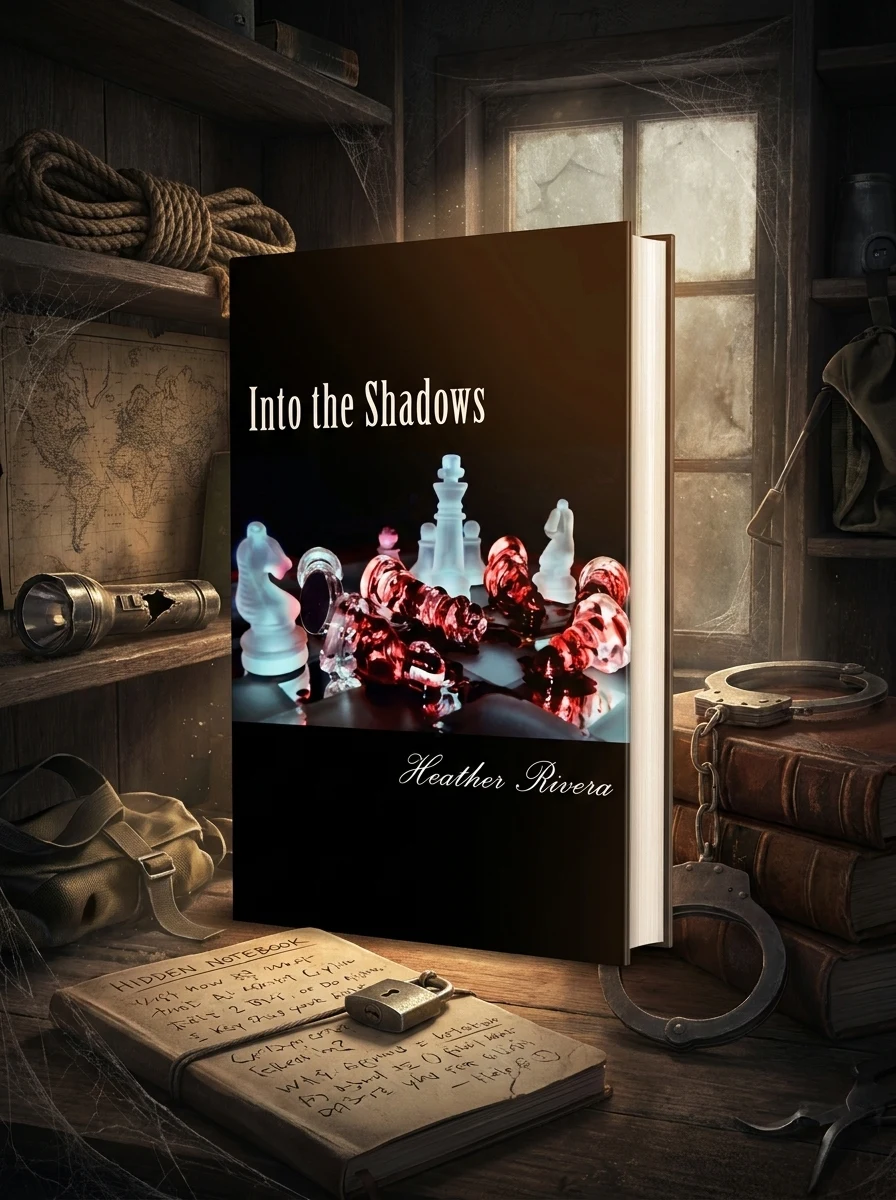

Into the Shadows
A psychological thriller about an urban explorer's captivity and shifting loyalty.
Rivera focuses on the internal landscape of Abby rather than external action. The narrative prioritizes the evolution of her feelings toward her captor. This shift from fear to fondness forms the core conflict. The story does not rely on gore or jump scares. Instead, it examines how isolation and lack of physical abuse can distort perception. The ending delivers a significant plot twist that challenges the reader's understanding of the relationship. This approach appeals to fans of character-driven suspense. It offers a study in psychological adaptation under extreme duress.
This work sits within the contemporary urban exploration genre, drawing on real-world practices of exploring abandoned structures. Published in 2013, it reflects a period where internet-facilitated subcultures began influencing mainstream fiction. The setting is grounded in modern American cities, utilizing the aesthetic of decay and forgotten spaces as a backdrop for psychological tension.


📝 Description: Into the Shadows
💎 Our verdict on Into the Shadows
📖 Why choose it
Why this book is worth reading
Readers who prefer character-driven suspense over gore will find this title compelling. It offers a deep dive into the psychological adaptation of Abby under extreme duress, exploring how isolation distorts perception and loyalty. The narrative avoids traditional jump scares, focusing instead on the evolution of feelings toward a captor. Those interested in the mechanics of Stockholm Syndrome and the blurred lines between fear and affection will appreciate the nuanced examination of human interaction. The significant plot twist challenges understanding of relationships, providing intellectual engagement alongside emotional tension. It is ideal for fans of urban exploration who enjoy stories where the terror stems from mental states rather than monsters.
⭐ Reader reviews
Reader rating
Rivera delivers a tense study in psychological manipulation, prioritizing Abby’s internal landscape over external action. By eschewing gore and supernatural entities, the book forces readers to confront the unsettling reality of human-caused horror. The portrayal of shifting loyalty is nuanced, illustrating how a lack of physical abuse can be misinterpreted as kindness. This approach creates a unique atmospheric dread that lingers long after the final twist. While it may disappoint those seeking traditional horror tropes or paranormal scares, it rewards patience with a sophisticated exploration of captivity dynamics. The narrative succeeds in making the mundane terrifying through its focus on mental erosion and situational tension.
📖 Read on the blog
✍️ More books by this author Heather Rivera


🏛 Books from this publisher Createspace Independent Publishing Platform

You might also like
See more →


Have a question about this item?
Ask about the edition, condition, delivery or anything else — we reply by email or phone, usually within a day.
