
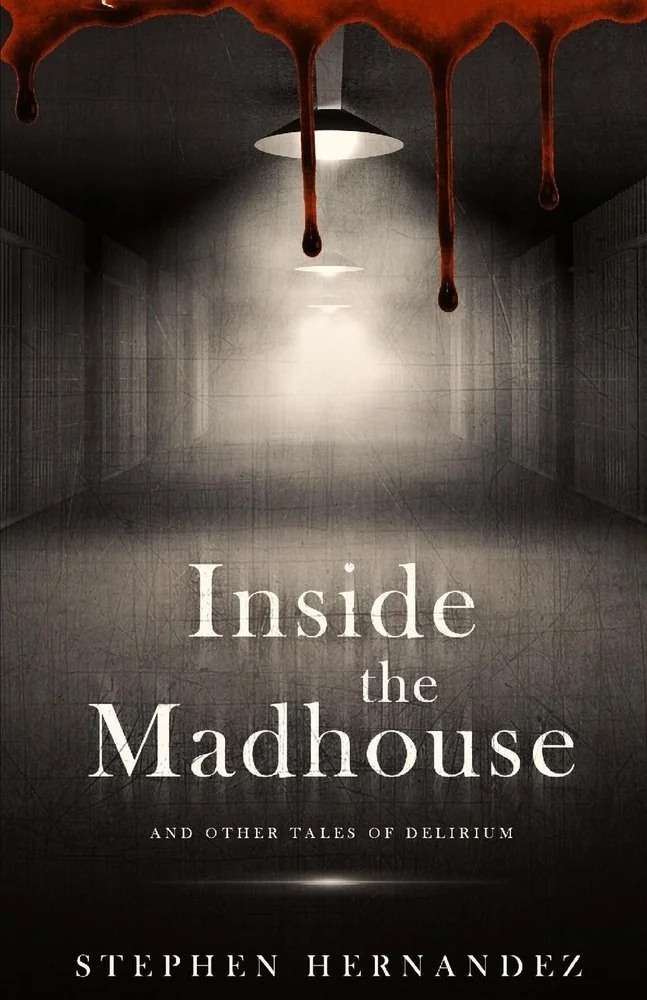
Inside the Madhouse: and other tales of delirium
A collection of twenty tales exploring madness and delirium across diverse settings.
Hernandez uses varied scenarios to examine the limits of sanity. The narratives range from historical contexts like World War II prison camps to speculative futures involving orbital coliseums. By placing characters in extreme situations, such as trapped explorers or troubled patients, the author highlights the fragility of the human mind. The collection does not rely on a single setting but moves between different periods and locations to illustrate how delusion can manifest in unexpected ways. Each story stands as an independent exploration of psychological breakdown.
The book sits within the tradition of horror, gothic, and supernatural fiction. It draws on settings ranging from the Amazon rainforest to Normandy villages and Japanese prison camps. The collection reflects a global perspective on mental instability, bridging historical periods with futuristic speculation.


📝 Description: Inside the Madhouse: and other tales of delirium
💎 Our verdict on Inside the Madhouse: and other tales of delirium
📖 Why choose it
Why this book is worth reading
Readers who appreciate the unsettling intersection of psychological breakdown and extreme circumstance will find this collection deeply rewarding. Hernandez offers a rigorous examination of delirium, moving beyond simple scares to explore the fragility of the human mind. Those seeking lighthearted entertainment should look elsewhere, as this work challenges comfort zones through disturbing narratives. It appeals to fans of gothic supernatural fiction who desire depth and complexity. By stripping away normalcy in settings ranging from Amazonian pits to orbital coliseums, the book reveals dark truths about obsession and madness. It is ideal for those willing to endure discomfort for the sake of profound thematic exploration.
⭐ Reader reviews
Reader rating
Stephen Hernandez delivers a potent anthology that meticulously dissects the anatomy of delirium through twenty distinct narratives. The strength of this work lies in its refusal to rely on a single setting, instead traversing from World War II prison camps to speculative futures with remarkable versatility. This diversity underscores the universal nature of psychological collapse, making each story feel both isolated and connected to the central theme. The prose effectively exposes the thin veneer of civilization, revealing the terrifying potential within human nature. While not for the faint-hearted, it offers a rich, albeit disturbing, experience for those who enjoy horror that prioritizes psychological depth over traditional tropes. It is a compelling study of the mind under pressure.
You might also like
See more →







Have a question about this item?
Ask about the edition, condition, delivery or anything else — we reply by email or phone, usually within a day.
