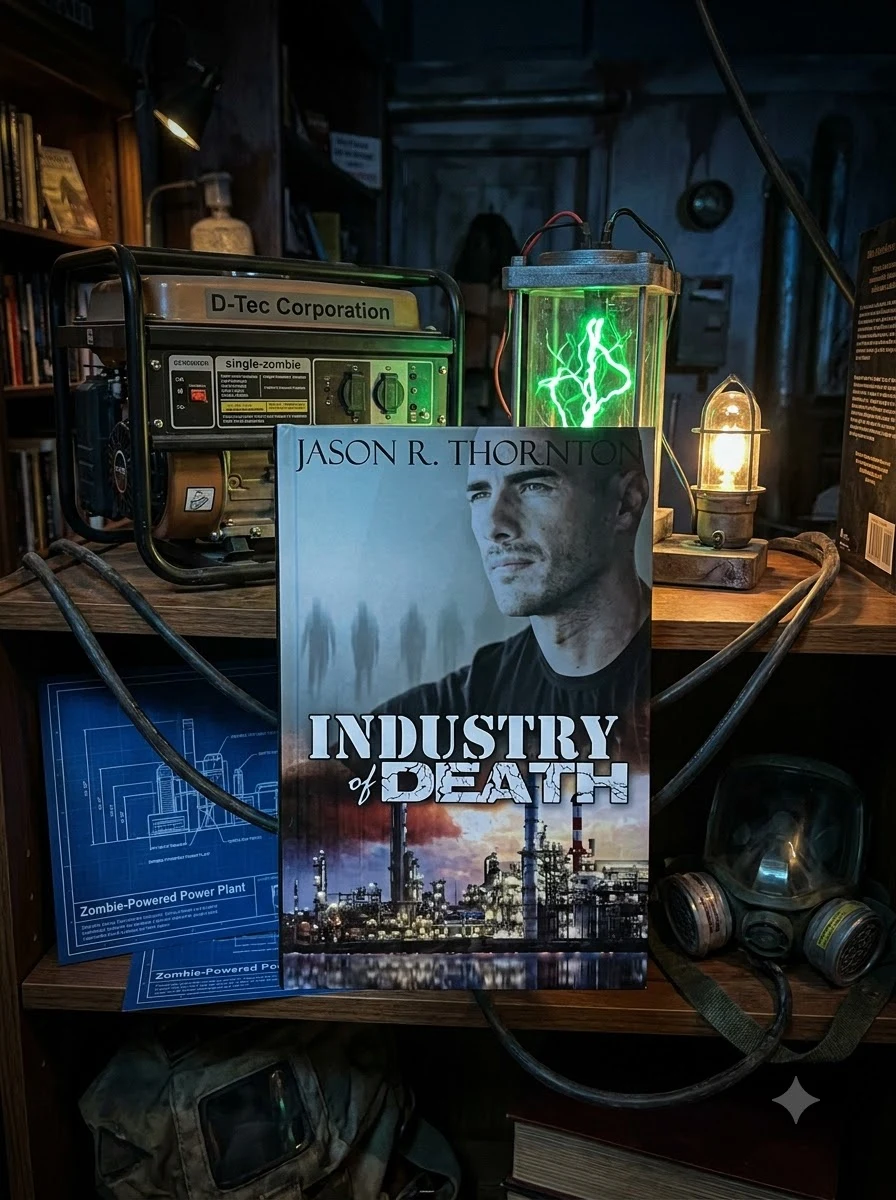
Industry of Death
A novel about using zombies as energy sources in a rebuilt society.
Tyler works for D-Tec Corporation, managing zombie aggression to power cities. He finds his job monotonous and seeks a change in his routine. The story explores the ethical implications of harvesting undead energy. Thornton details the technical aspects of maintaining these biological power units. The narrative focuses on the psychological toll of such labor. It questions the cost of progress when built on exploitation. The setting shifts from wild isolation to corporate conformity. This transition drives the central conflict of the plot.
This work sits within the post-apocalyptic genre, specifically examining a world recovering from a zombie outbreak. It draws on themes of industrialization and corporate power in a reconstructed American setting, focusing on Fargo as a hub for D-Tec Corporation's operations.


📝 Description: Industry of Death
💎 Our verdict on Industry of Death
📖 Why choose it
Why this book is worth reading
Readers interested in the intersection of horror and speculative fiction will find value in this unique premise where zombies serve as energy sources rather than mere threats. It appeals to those who enjoy dystopian narratives that critique corporate exploitation and industrial ethics. The book offers a fresh perspective on the zombie apocalypse genre by focusing on bureaucratic routine rather than survival action. Fans of eco-horror and dark fantasy will appreciate the exploration of how humanity commodifies death to sustain its progress. It is ideal for audiences seeking stories that question the moral cost of technological advancement and societal conformity.
⭐ Reader reviews
Reader rating
Thornton effectively grounds a fantastical concept in the mundane realities of corporate labor, creating a compelling critique of industrial ethics. The focus on Tyler's psychological toll provides depth beyond standard action-horror tropes. By detailing the technical maintenance of biological power units, the author builds a believable world where horror is institutionalized. This approach suits readers who prefer intellectual engagement with horror themes over visceral scares. The transition from wild isolation to corporate conformity offers a nuanced look at societal rebuilding. While it may not satisfy those seeking traditional gothic elements, its strength lies in its speculative rigor and thematic consistency regarding the exploitation of the undead for modern energy needs.
📖 Read on the blog
✍️ More books by this author Jason Robert Thornton


🏛 Books from this publisher Createspace Independent Publishing Platform


You might also like
See more →


Have a question about this item?
Ask about the edition, condition, delivery or anything else — we reply by email or phone, usually within a day.
