
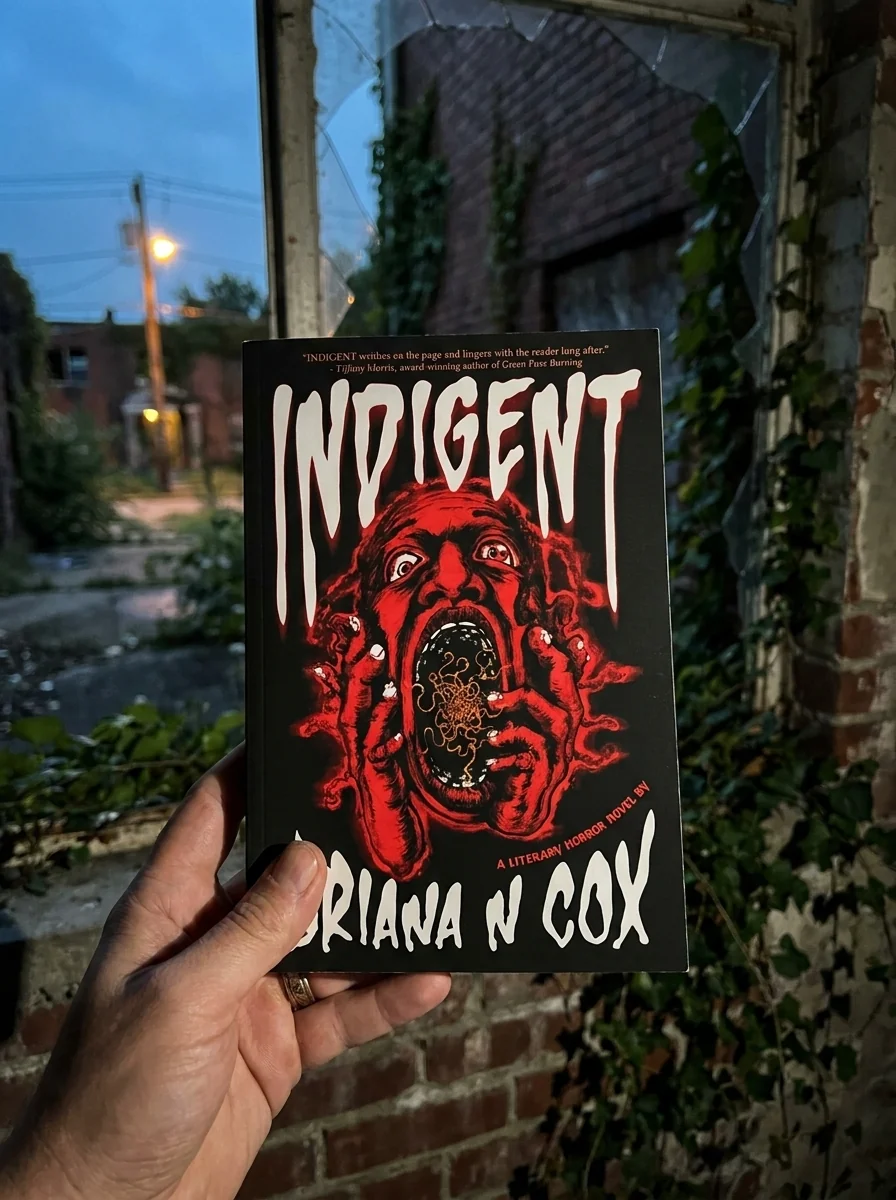

Indigent: A Literary Horror Novel
A parasitic horror novel about gentrification and survival in Atlanta.
Cox examines the intersection of poverty and supernatural dread through the lens of a specific housing crisis. The narrative focuses on the psychological decay of Xavier, who transitions from observer to participant in the squatting family's ritualistic consumption. This shift highlights the complicity required for survival in marginalized communities. The text critiques the U.S. health care system by portraying it as a source of damnation rather than aid. Readers interested in sociological horror will appreciate the detailed depiction of Leigh Pierce Estates. Those preferring clean resolutions may struggle with the ambiguous and bleak ending.
The novel is set in a gentrifying Atlanta neighborhood, reflecting contemporary American urban decay. It draws on the literary horror tradition established by authors like Tananarive Due and Erin E. Adams. The work addresses current issues of housing insecurity and systemic neglect facing the working poor.


📝 Description: Indigent: A Literary Horror Novel
💎 Our verdict on Indigent: A Literary Horror Novel
📖 Why choose it
Why this book is worth reading
Readers interested in the intersection of poverty, supernatural dread, and urban decay will find this novel compelling. It offers a visceral critique of the U.S. health care system and class struggle through the lens of parasitic terror. Those who appreciate slow-burn psychological horror over fast-paced action will gain from its detailed depiction of Leigh Pierce Estates. The book appeals to those seeking a bleak, ambiguous narrative that explores complicity in marginalized communities rather than clean resolutions or traditional ghost stories.
⭐ Reader reviews
Reader rating
Cox delivers a literary horror novel that intertwines acid-bath class struggle with visceral bodily terror. By using a parasite as a metaphor for systemic neglect, the text critiques the U.S. health care system and gentrification in Atlanta. The narrative follows Xavier’s psychological decay as he transitions from observer to participant in a squatting family’s ritualistic consumption. This slow-burn approach suits readers who enjoy sociological horror and complex character studies. However, those preferring traditional ghost stories or fast-paced action may find the ambiguous ending unsuitable. The book is best appreciated for its detailed world-building and thematic depth regarding survival and indigency.
You might also like
See more →







Have a question about this item?
Ask about the edition, condition, delivery or anything else — we reply by email or phone, usually within a day.
