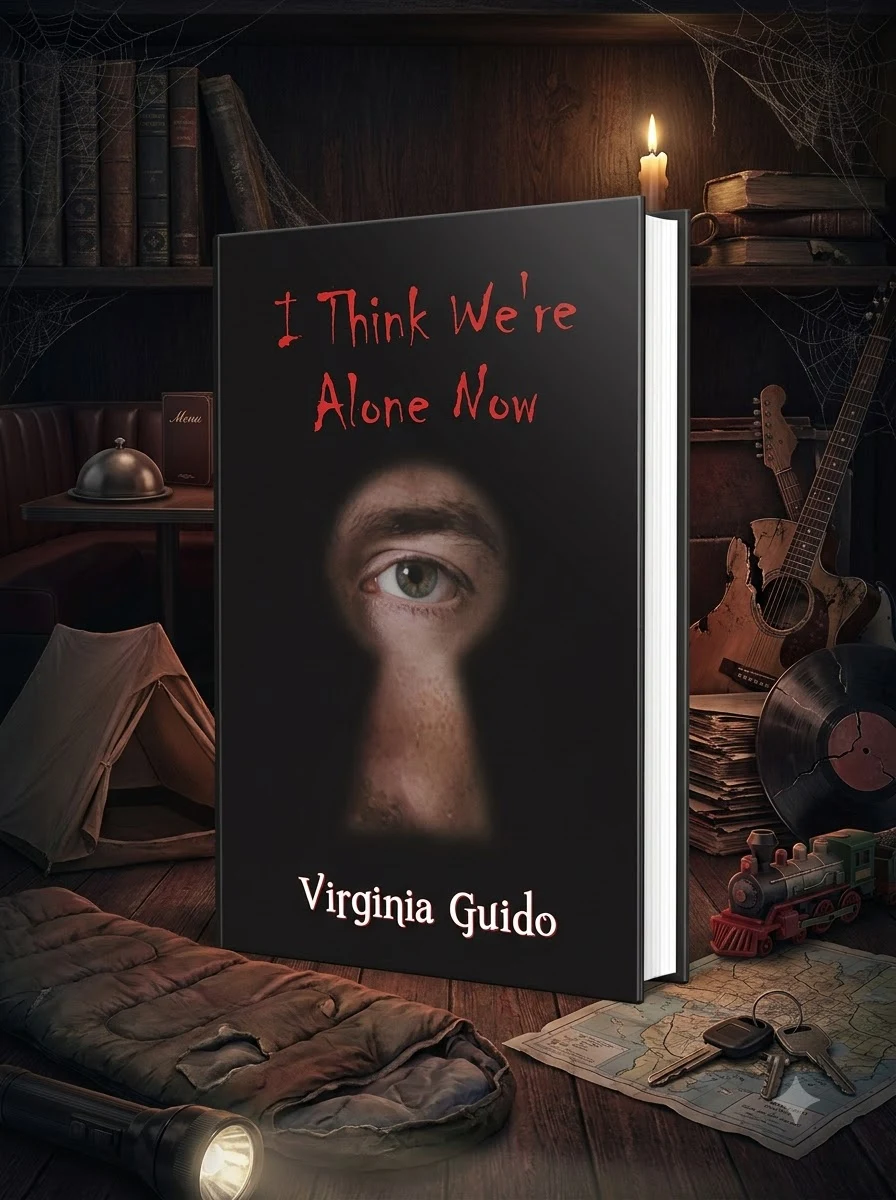
I Think We're Alone Now
A collection of unsettling stories by Virginia Guido that subvert everyday settings.
Guido constructs a narrative environment where domestic and public spaces become sites of dread. The text avoids conventional horror structures in favor of psychological unease derived from the mundane. By utilizing song titles as chapter markers, she creates a false sense of familiarity before delivering discordant narratives. The work does not offer escape or catharsis. Instead, it demands that the reader remain within its unsettling atmosphere. The author’s direct address to the audience establishes a contract of mutual risk. This method strips away the safety net typically provided by genre fiction. The result is a reading experience that feels invasive and inescapable. Guido’s style prioritizes atmosphere over plot resolution. She leaves the reader with lingering questions rather than answers. This approach appeals to those who find horror in the distortion of reality rather than in monsters or ghosts.
Published independently in 2020, this work reflects a modern trend of self-published horror that bypasses traditional gatekeepers. It engages with the American tradition of domestic horror, where safety is an illusion. The direct address to the reader mirrors contemporary digital culture's blurring of boundaries between fiction and reality.


📝 Description: I Think We're Alone Now
💎 Our verdict on I Think We're Alone Now
📖 Why choose it
Why this book is worth reading
Readers who derive satisfaction from psychological unease and the subversion of familiar settings will find this collection rewarding. It appeals to those willing to abandon traditional horror tropes in favor of a lingering, invasive atmosphere that refuses to provide catharsis or clear answers. The book is ideal for individuals comfortable with direct authorial engagement that establishes a contract of mutual risk. Those seeking comfort, safety, or conventional plot resolutions will likely find the experience alienating. However, readers who appreciate the supernatural bleeding into daily life without explanation will gain a unique, unsettling insight into how ordinary spaces can become sites of dread. It offers a distinct alternative to monster-driven horror by focusing on the distortion of reality and the psychological impact of mundane environments turned off-key.
⭐ Reader reviews
Reader rating
Guido constructs a narrative environment where domestic and public spaces become venues for uncommon experiences, effectively stripping away the safety net typically provided by genre fiction. By utilizing song titles as chapter markers, she creates a false sense of familiarity before delivering discordant narratives that defy easy categorization. The author’s direct address to the audience establishes a contract of mutual risk, demanding that readers remain within an unsettling atmosphere without escape. This method prioritizes atmosphere over plot resolution, leaving the reader with lingering questions rather than answers. The work suits those who find horror in the distortion of reality rather than in ghosts or monsters. It is a bold, unapologetic engagement with fear that requires a willingness to accept discomfort and uncertainty, ultimately rewarding those who seek unease rather than reassurance.
📖 Read on the blog
🏛 Books from this publisher Independently Published








You might also like
See more →
Have a question about this item?
Ask about the edition, condition, delivery or anything else — we reply by email or phone, usually within a day.
