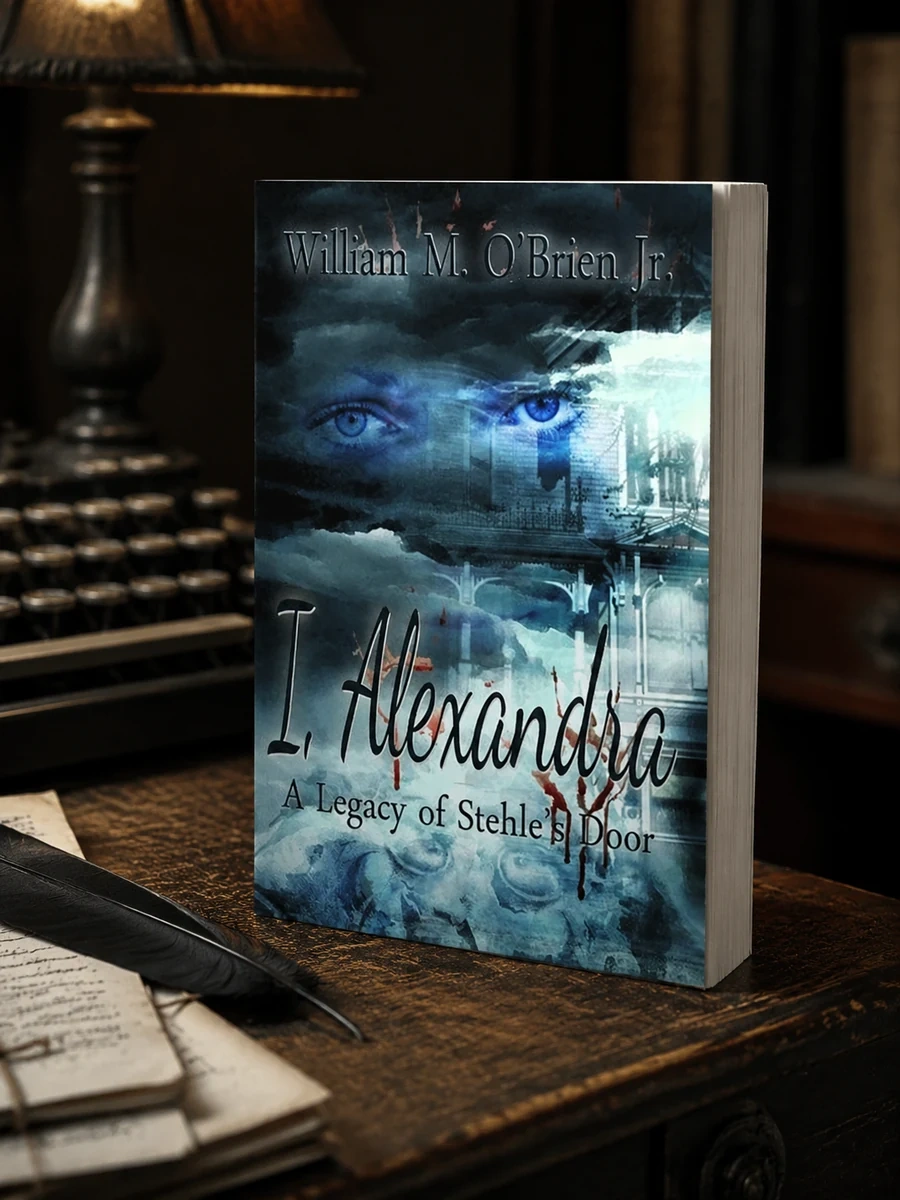

I, Alexandra (A Legacy of Stehle's Door)
A haunting tale of escalating supernatural disturbances centered on the mysterious entity Johanna.
The narrative tracks Alexandra’s descent into terror as she faces Johanna, an apparition that defies logical explanation. O'Brien avoids traditional monster tropes by focusing on the psychological toll of unexplained events. The story moves from domestic intrusion to a journey in Galveston, where the characters uncover the evil heart of the disturbances. Paul and Alexandra rely on their history to fight back, yet their efforts fail repeatedly. The absence of Stehle's door or any clear trigger adds to the frustration and fear experienced by the protagonists. Billy enters the story as another element in this chain of dead ends. The plot emphasizes the mystery of Johanna’s motives rather than providing easy answers. This approach creates a sense of lingering unease that persists beyond the final page.
Published by Treasureline Publishing in 2012, this work fits within the contemporary American horror genre. It utilizes classic gothic elements of isolation and unseen threats to explore modern fears of the inexplicable.


📝 Description: I, Alexandra (A Legacy of Stehle's Door)
💎 Our verdict on I, Alexandra (A Legacy of Stehle's Door)
📖 Why choose it
Why this book is worth reading
Readers who appreciate slow-burn supernatural mysteries and complex character dynamics will find this narrative compelling. Those willing to endure deliberate pacing and ambiguous resolutions will gain a profound sense of lingering unease that persists beyond the final page. The book is ideal for audiences seeking psychological terror and the mystery of unexplained events rather than fast-paced action or clear answers. It offers a study in fear and persistence through a lens of persistent dread, making it suitable for those who enjoy exploring the unknown without the comfort of easy explanations.
⭐ Reader reviews
Reader rating
O'Brien crafts a haunting tale centered on escalating disturbances that defy logical explanation. By avoiding traditional monster tropes, the narrative focuses intensely on the psychological toll experienced by Alexandra and her companions. The structure emphasizes futile searches for triggers, creating frustration that mirrors the protagonists' fear. While the absence of clear motives may alienate some, it effectively builds a sense of persistent dread. This work suits readers who enjoy gothic traditions and unresolved tensions. It stands as a testament to the power of mystery in horror, offering a chilling exploration of evil without providing comforting closure.
You might also like
See more →







Have a question about this item?
Ask about the edition, condition, delivery or anything else — we reply by email or phone, usually within a day.
