

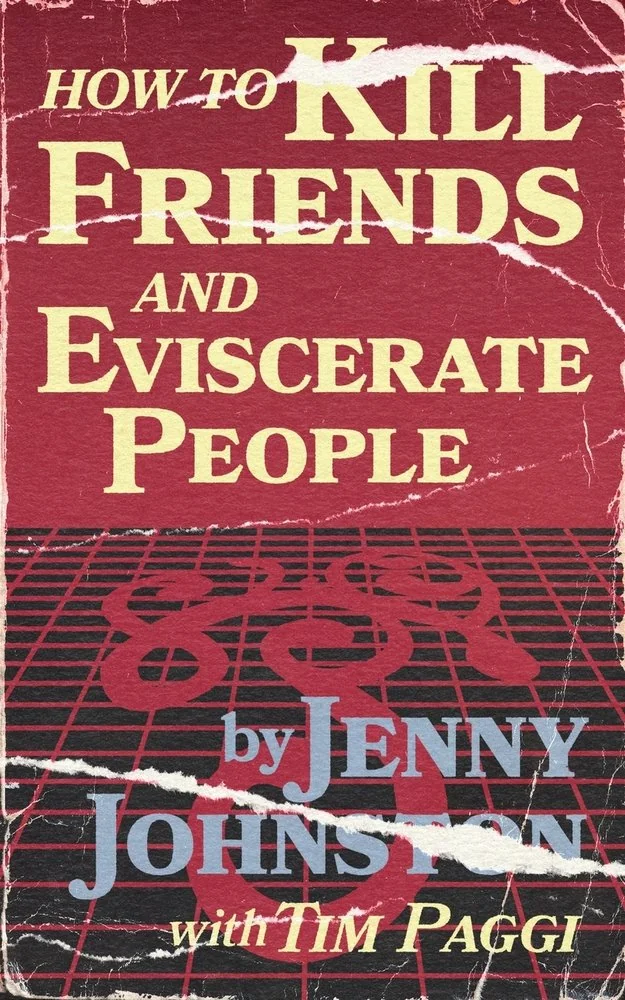
How to Kill Friends and Eviscerate People
A satirical guide on demonic transformation disguised as corporate advice.
The narrative centers on Jenny Johnston’s shift from businesswoman to instrument of hell. Paggi structures this account to mimic instructional literature while subverting its purpose. The text details how one might connect with high priestesses and utilize office tools for dark purposes. This approach highlights the absurdity of treating evil as a career advancement opportunity. The story suggests that reality is malleable under the influence of cosmic entities. Readers witness the collapse of logical thought processes as the angel of death approaches. The work serves as a critique of professional ambition when stripped of moral constraints.
Published in September 2024 by Scope Creep, this volume sits within contemporary horror fiction that blends mundane office life with supernatural elements. It reflects a modern anxiety about the erosion of reality and the rise of cosmic indifference during a transitional millennium.


📝 Description: How to Kill Friends and Eviscerate People
💎 Our verdict on How to Kill Friends and Eviscerate People
📖 Why choose it
Why this book is worth reading
Readers interested in the intersection of corporate life and occult practices will find this book uniquely compelling. It offers a dissonant reading experience by framing murder as a mundane necessity within instructional literature, thereby critiquing professional ambition stripped of moral constraints. Those who appreciate the collapse of logical thought processes under cosmic influence will enjoy the narrative’s exploration of reality’s malleability. The work appeals to individuals seeking unconventional horror that utilizes the guise of self-help to expose power and corruption. It is ideal for those who tolerate absurdity in service of serious thematic critique, providing a lingering sense of unease about how demonic forces might infiltrate daily routines and office politics.
⭐ Reader reviews
Reader rating
Tim Paggi executes a daring subversion of the instructional genre, turning corporate advice into a conduit for demonic transformation. The narrative’s strength lies in its dissonant tone, which remains serious despite the absurdity of weaponizing word processing software for dark purposes. By detailing Jenny Johnston’s shift from businesswoman to instrument of hell, Paggi highlights the terrifying malleability of reality under cosmic entities. This approach effectively critiques modern professional culture, suggesting that evil can be treated as a career advancement opportunity. The book suits readers who enjoy psychological horror blended with satirical elements. It avoids traditional plot resolutions in favor of thematic exploration, making it a distinctive entry for those seeking unconventional perspectives on power, corruption, and the indifference of cosmic forces to human logic.
You might also like
See more →







Have a question about this item?
Ask about the edition, condition, delivery or anything else — we reply by email or phone, usually within a day.
