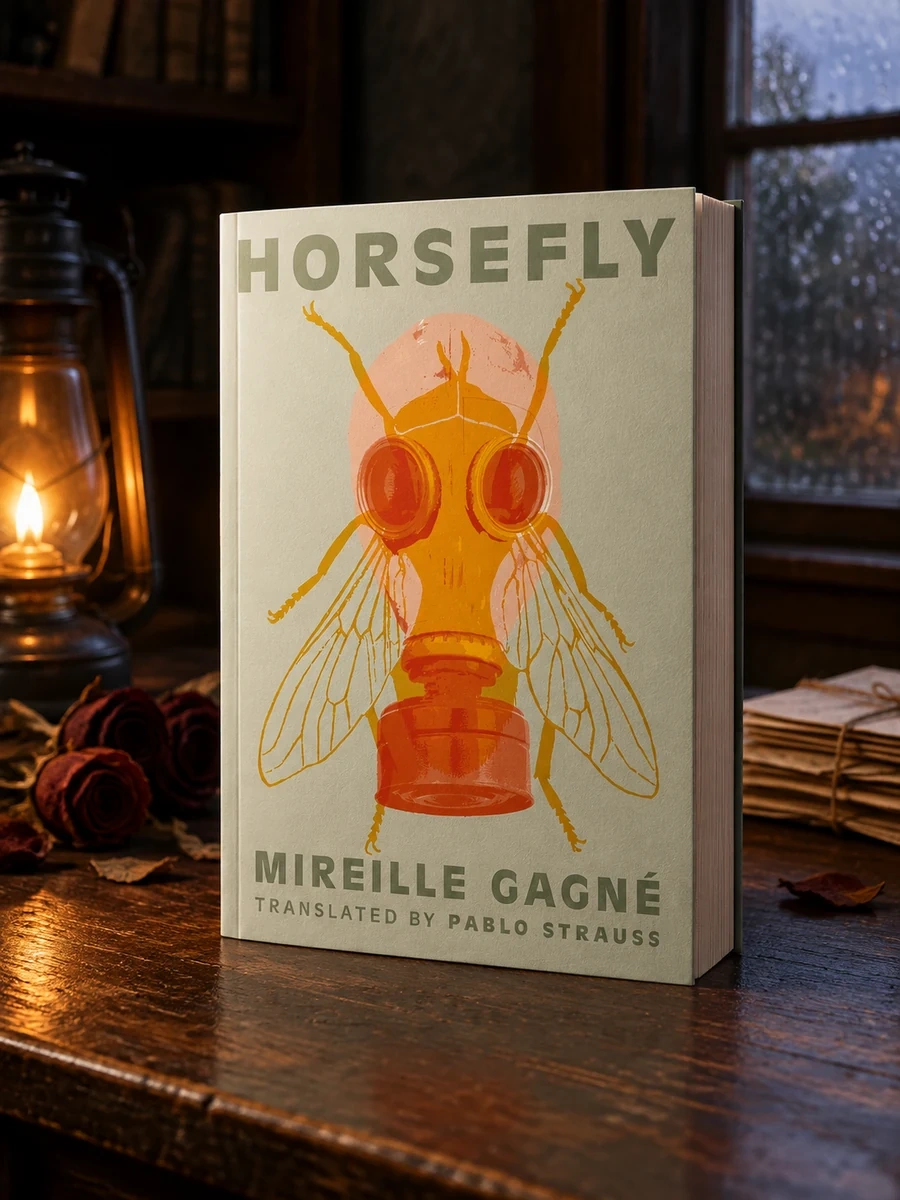
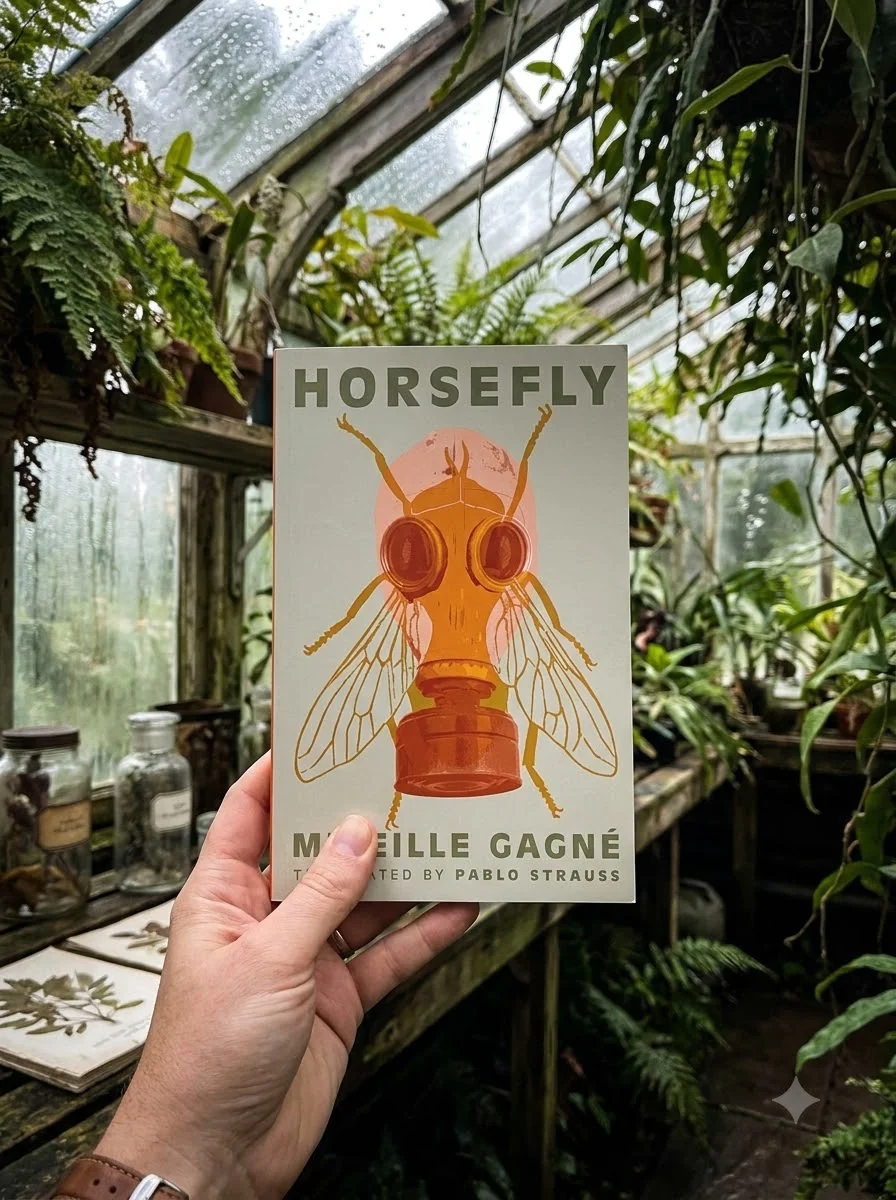
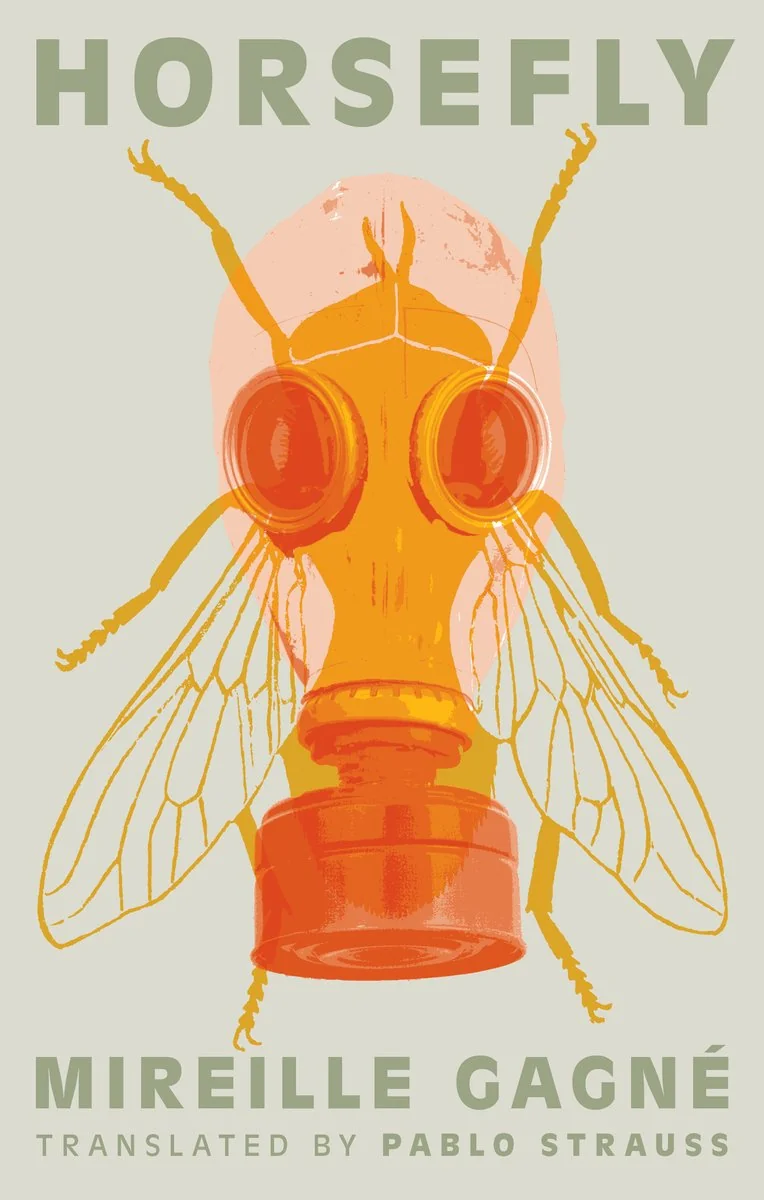
Horsefly
A dual-timeline horror novel about nature's revenge on human arrogance.
The book operates through two distinct temporal settings connected by environmental cause and effect. The first timeline documents the ethical decay of wartime science, where researchers are isolated while creating deadly agents. The second timeline focuses on contemporary psychological unraveling in Quebec, driven by extreme weather and insect infestations. Gagne uses the horsefly as a central motif to bridge these eras, showing how past actions manifest as present-day chaos. The narrative does not offer easy resolutions but instead presents a chilling view of inevitable consequences for those who attempt to dominate natural systems.
The story is loosely based on historical events involving Allied military research in Quebec. It draws on the period of 1942 and contemporary times in the same region, specifically referencing Grosse Ile. The work engages with traditions of gothic fiction and ecological horror to critique human attempts at control over the natural world.


📝 Description: Horsefly
💎 Our verdict on Horsefly
📖 Why choose it
Why this book is worth reading
Readers drawn to psychological horror and eco-thrillers will find this novel compelling for its chilling examination of inevitable consequences stemming from the attempt to dominate natural systems. The dual-timeline approach offers a unique perspective on how past actions manifest as present-day chaos, bridging historical fact with supernatural fiction. Those interested in the ethical decay of science during wartime or the psychological unraveling driven by environmental extremes will appreciate the dense, atmospheric storytelling. It is ideal for audiences who enjoy narratives that challenge comfort zones and explore the dark intersection of human arrogance and nature's revenge without offering easy resolutions.
⭐ Reader reviews
Reader rating
Mireille Gagne delivers a disturbing exploration of ecological balance through the lens of historical and contemporary horror. The narrative effectively bridges 1942’s wartime biological weapon research with modern Quebec’s insect-infested crisis, using the horsefly as a potent motif for retribution. The tone is relentlessly chilling, focusing on psychological unraveling rather than jump scares. This work suits readers who appreciate complex, atmospheric tales examining the cost of scientific hubris. It may not appeal to those seeking lighthearted entertainment or straightforward historical accounts, but it rewards those willing to engage with its dense, consequence-driven narrative structure.
📖 Read on the blog
🏛 Books from this publisher Coach House Books


You might also like
See more →





Have a question about this item?
Ask about the edition, condition, delivery or anything else — we reply by email or phone, usually within a day.
