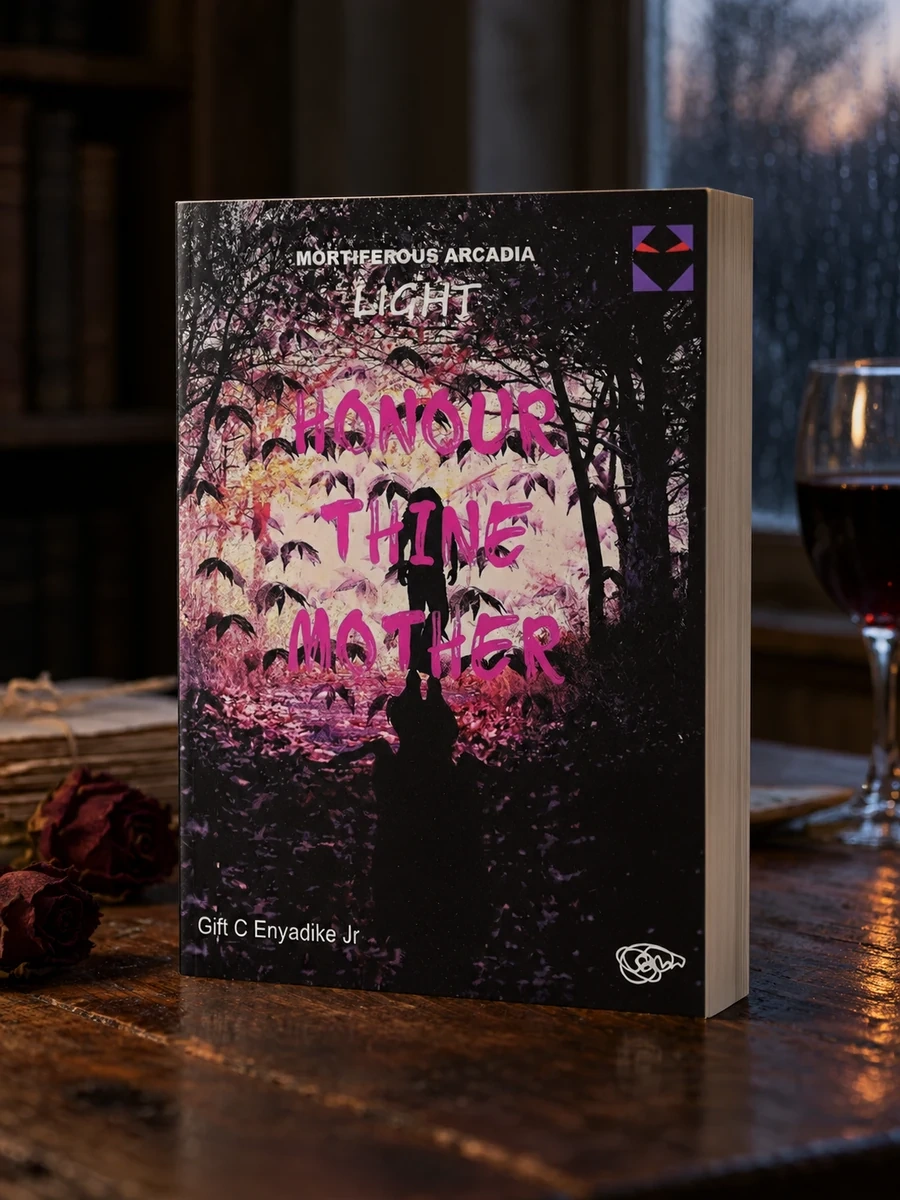
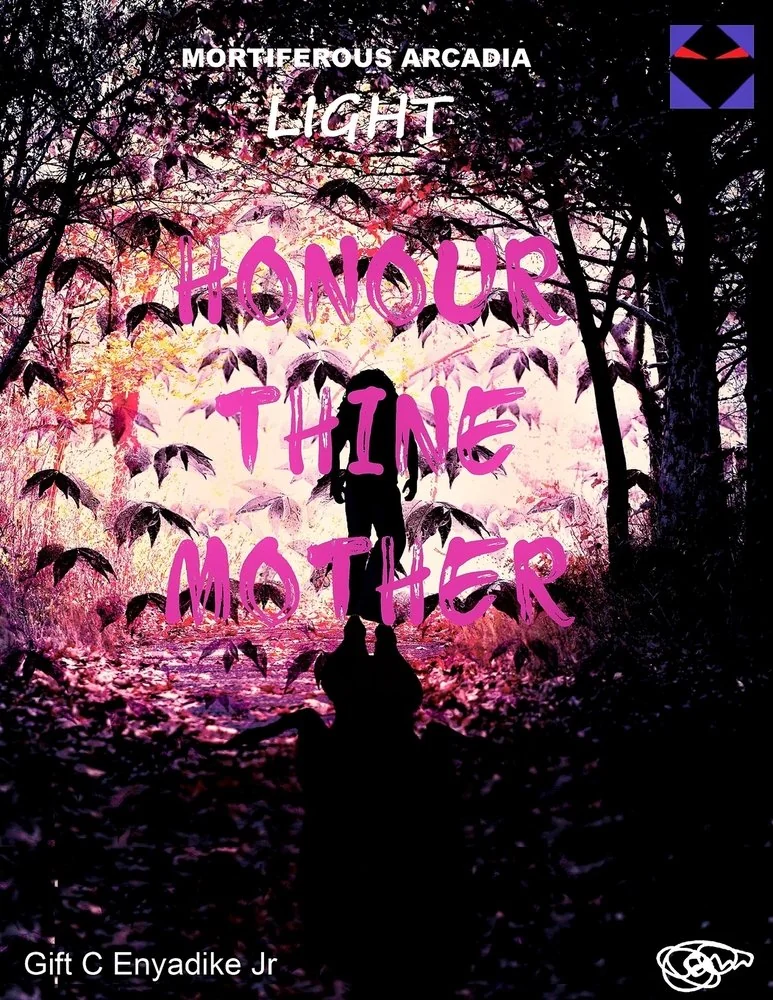
Honour Thine Mother
A short horror fantasy about a boy seeking revenge using mythical powers from African folklore.
The plot centers on Esomchi’s physical decline and supernatural encounters. He battles biloko demons and relies on a giant python for rescue. The Mngwa offers power contingent on his moral choice regarding vengeance. The narrative structure moves from personal tragedy to mythological trial. Gift C Jr Enyadike uses these elements to explore the cost of hatred. The story remains intimate, focusing on Esomchi’s internal conflict alongside external threats. It avoids sprawling plots in favor of concentrated tension and cultural specificity.
The work draws inspiration from folklore and religion found in both West and East Africa. It integrates these regional traditions into a horror fantasy framework, creating a narrative that reflects specific cultural beliefs about curses, spirits, and moral consequences within those geographical contexts.


📝 Description: Honour Thine Mother
💎 Our verdict on Honour Thine Mother
📖 Why choose it
Why this book is worth reading
Readers who appreciate concise horror narratives with deep cultural resonance will find this work compelling. It offers an intimate exploration of hatred and its costs, avoiding sprawling plots in favor of concentrated tension. Those interested in African mythology, particularly the Mngwa and biloko, will enjoy the specific mythological references. The story suits those seeking a focused character study of internal conflict rather than broad world-building. It is ideal for readers who want to experience the intersection of religious themes and supernatural elements within a tight narrative frame. Fans of dark fantasy that prioritizes cultural authenticity over length will gain significant satisfaction from this concentrated tale of vengeance and moral choice.
⭐ Reader reviews
Reader rating
Gift C Jr Enyadike delivers a potent short horror fantasy that leverages West and East African folklore to create a unique atmosphere of dread. The narrative effectively balances Esomchi’s physical decline with his supernatural encounters, maintaining tension without unnecessary exposition. The reliance on specific character interactions and mythological references provides a rich texture for those familiar with these traditions. While it may not appeal to readers seeking lengthy epics or non-African settings, its concentrated strength lies in its cultural depth and moral complexity. The story succeeds as an intimate examination of vengeance, offering a distinct voice in the genre. It is best suited for enthusiasts of dark fantasy who value concise storytelling and authentic mythological integration over expansive plotlines.