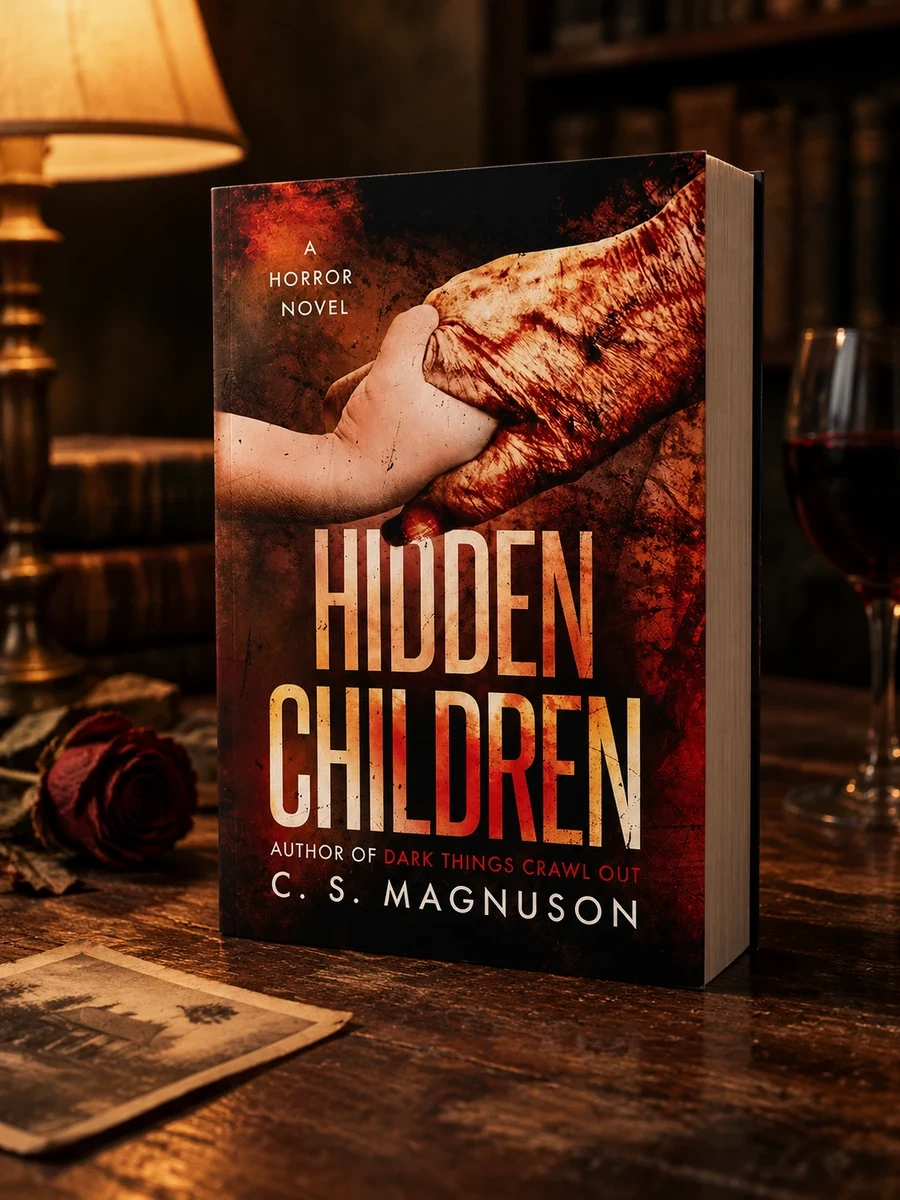
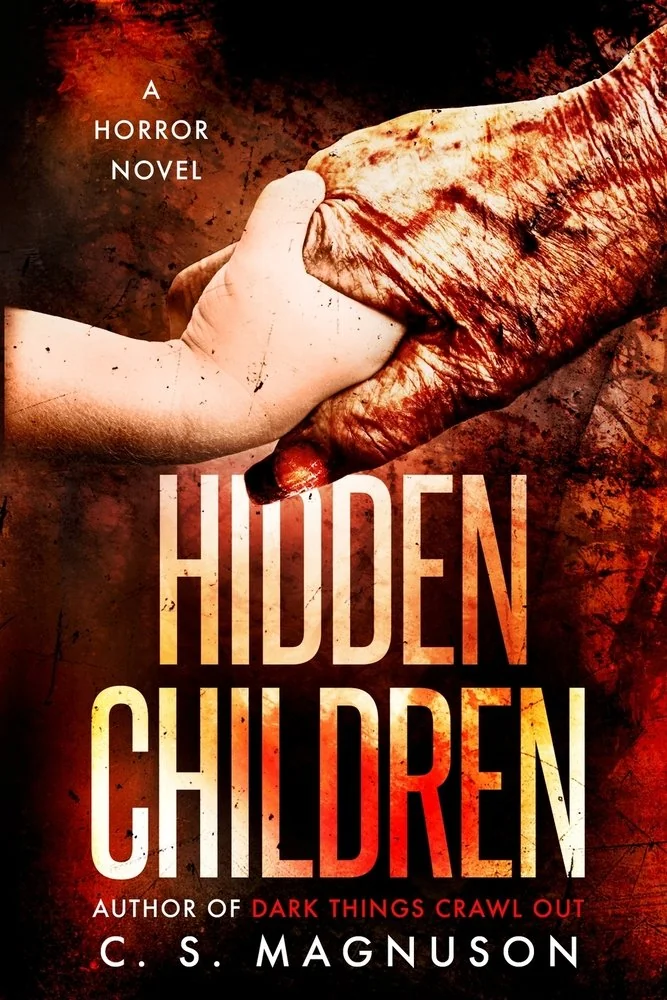
Hidden Children
A father returns his grandson to a cursed homestead, unleashing a rotting entity upon his town.
Jaelynn Burden’s death forces her son back to Oracle Springs. Jodie Burden brings the child home, unaware of the shapeshifting horror waiting in the shadows. This entity feeds on decay and promises revenge against the town that bullied the family. The narrative follows the spread of putrid flesh and rot as the creature acts on its vow. Magnuson uses the setting of a isolated mountain homestead to create claustrophobic tension. The story does not offer easy escapes for the townspeople. It examines how collective guilt can manifest as literal monstrosity. The ending leaves the fate of Oracle Springs uncertain, emphasizing the inescapable nature of the curse.
The book sits within the American horror tradition of rural gothic fiction. It draws on folklore surrounding outcast families and mountain homesteads. The narrative reflects contemporary anxieties about community judgment and hidden trauma. Magnuson uses the setting of Oracle Springs to critique social exclusion.


📝 Description: Hidden Children
💎 Our verdict on Hidden Children
📖 Why choose it
Why this book is worth reading
Readers who appreciate atmospheric dread and complex family sagas with dark twists will find this compelling. The narrative offers a claustrophobic tension derived from the isolated mountain setting, appealing to those who enjoy horror that examines how past sins manifest as physical terror. It is ideal for audiences seeking grim tones and ambiguous resolutions rather than lighthearted adventures. The exploration of vengeance within a cruel community provides a unique lens on supernatural punishment, ensuring that those interested in the intersection of psychological horror and gothic traditions will find the story’s relentless decay and retribution deeply engaging.
⭐ Reader reviews
Reader rating
Magnuson delivers a potent tale of rural horror where isolation breeds terror. The shapeshifting entity serves as a powerful metaphor for collective guilt, turning ostracization into literal rot. By refusing easy escapes, the author maintains a consistent atmosphere of inescapable dread. The focus on decay and vengeance creates a visceral experience that resonates with fans of gothic bloodline curses. While the ambiguity may unsettle some, it effectively emphasizes the curse's permanence. This book succeeds in blending family saga elements with cosmic horror, offering a grim but rewarding read for those who enjoy psychological depth alongside physical horror.