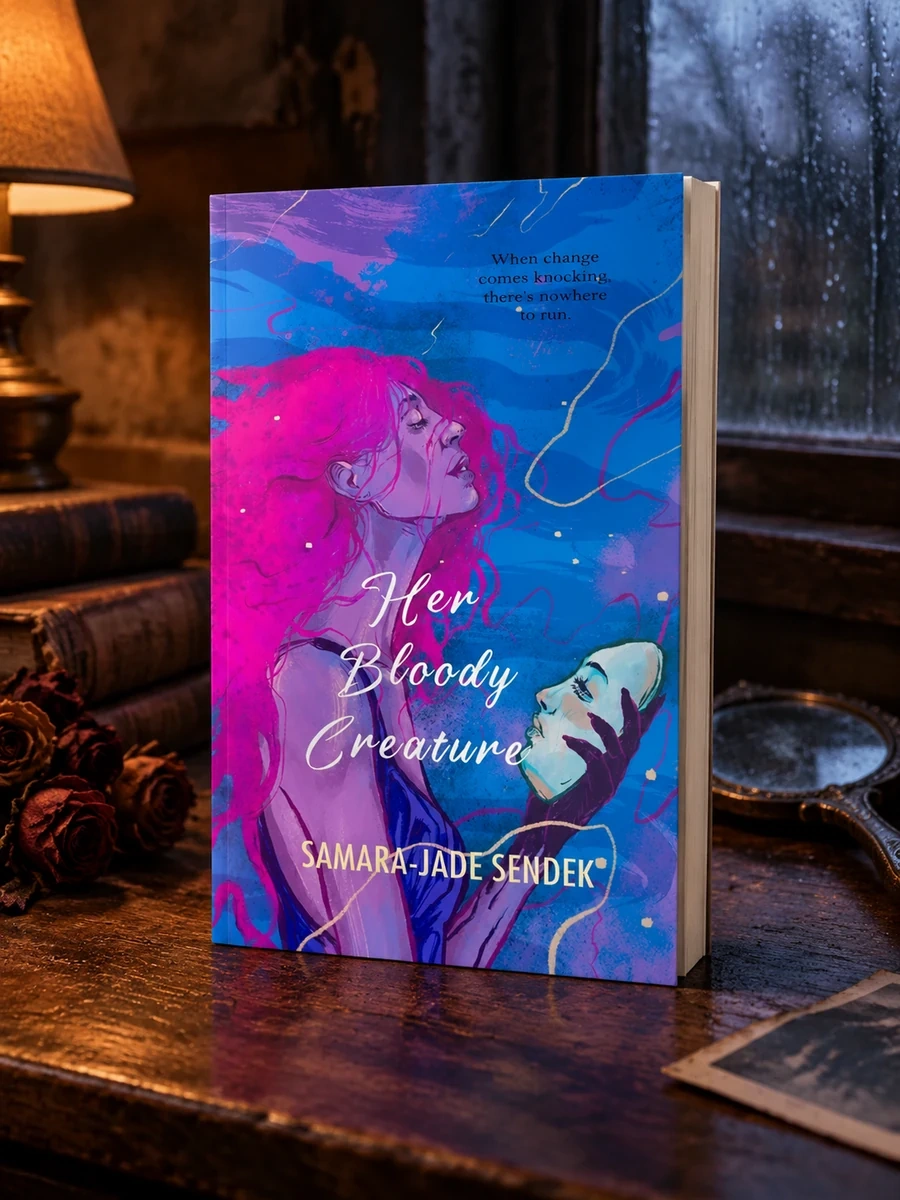
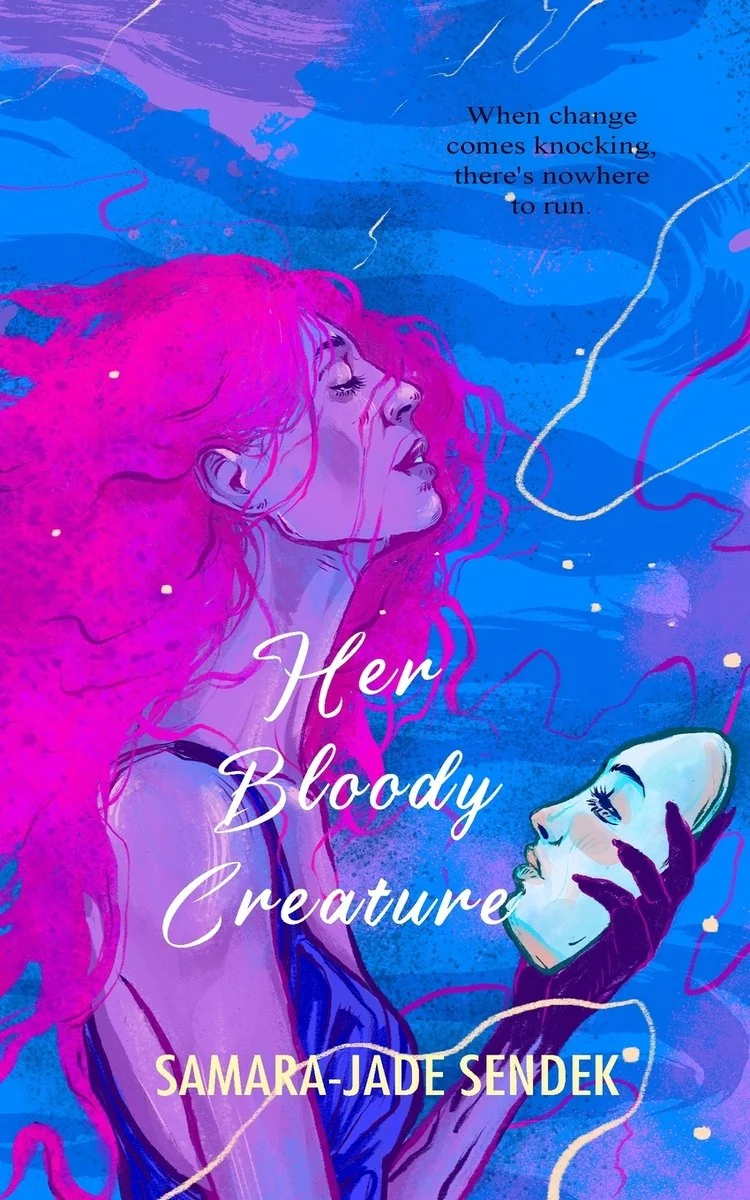
Her Bloody Creature
A story about five people losing their humanity due to boredom and unexpected change.
Sendek explores the dark side of comfort through a group of friends whose stable lives collapse under the weight of stagnation. The narrative does not rely on jump scares but on the gradual erosion of sanity. As quiet routines break down, madness takes hold. The characters face consequences for their desire for peace, realizing too late that change is inevitable. Their transformation into beasts serves as a metaphor for the loss of control. The book examines how small triggers, like a friend's secret or a stranger's gift, can dismantle a structured life. It is a study in psychological horror where the monster is born from within.
Published in 2026 by Samara-Jade Sendek, this self-published work enters the contemporary horror market. It engages with gothic fiction traditions, specifically the theme of transformation and the monster within. The text reflects modern anxieties about routine and stagnation, presenting a supernatural twist on domestic unease.


📝 Description: Her Bloody Creature
💎 Our verdict on Her Bloody Creature
📖 Why choose it
Why this book is worth reading
Readers who appreciate slow-burn psychological horror and existential dread will find value in this examination of stagnation. Those interested in how comfort can curdle into danger, particularly through the erosion of sanity rather than jump scares, will engage with its themes. It appeals to fans of stories where the monster is born from within, exploring the loss of control in confined social settings. The book suits audiences who enjoy subtle triggers dismantling structured lives and those who prefer introspective narratives over fast-paced action or clear moral resolutions. It offers a mirror to the fragility of identity for readers seeking depth.
⭐ Reader reviews
Reader rating
Sendek crafts a disturbing study of how routine becomes a cage, effectively portraying the gradual erosion of humanity among five friends. The narrative avoids cheap thrills, instead relying on the unsettling realization that change is inevitable and often catastrophic. By focusing on the internal decay of characters who initially seek peace, the book delivers a potent critique of domestic stability. It succeeds in creating intimacy through close internal voices, making the horror feel personal rather than distant. This approach suits readers comfortable with ambiguity and slow-burn tension who enjoy gothic elements within modern, confined settings.