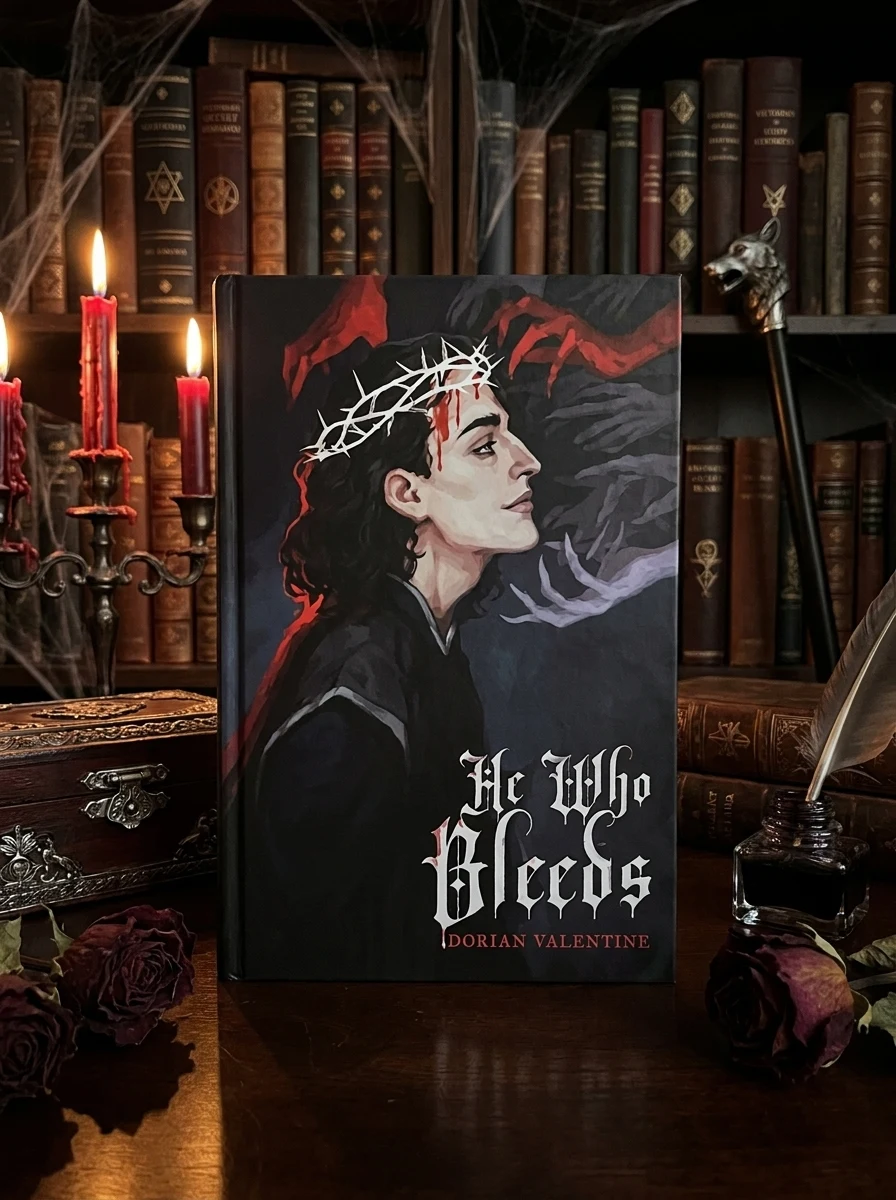
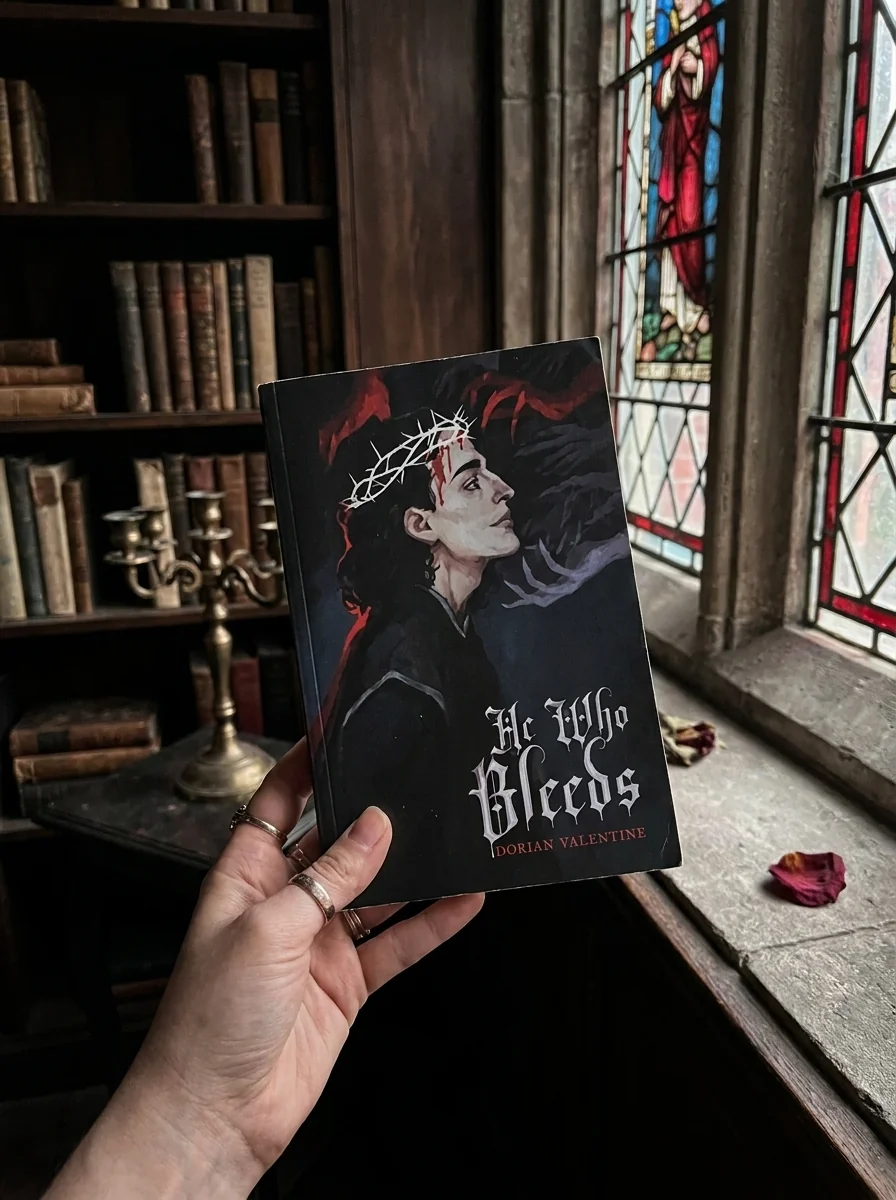

He Who Bleeds
A 1874 London horror novel about a devilspawn seeking revenge through art.
Valentine explores the intersection of religious guilt and supernatural desire. Lord Aurelien Saint-Orlant struggles with his dual nature as a pious man and a sinner. The discovery of his origins as a devilspawn alters his path. He is no longer bound by human morality but by a broken contract. His relationship with an incubus lover becomes central to his plan for vengeance. The narrative focuses on the creation of macabre art through violent retribution. This approach highlights the tension between divine expectation and demonic impulse. The story examines how power dynamics shift when contracts fail. It does not shy away from the brutal consequences of such failures.
The narrative is set in London in 1874. It engages with Victorian concepts of piety and sin. The work draws on gothic fiction traditions and supernatural horror tropes. It reflects the era's anxieties about class and morality within the upper echelons of society.


📝 Description: He Who Bleeds
💎 Our verdict on He Who Bleeds
📖 Why choose it
Why this book is worth reading
Readers seeking a fusion of erotic romance, historical horror, and theological dread will find this volume compelling. It appeals to those who enjoy complex character dynamics within a Victorian framework, offering no simple moral resolutions. The narrative targets an audience comfortable with explicit content and grim subject matter, exploring the tension between divine expectation and demonic impulse. By focusing on Lord Aurelien’s struggle with his dual nature, the book provides a deep dive into identity and vengeance. It is ideal for enthusiasts of dark fantasy who appreciate macabre art as a vehicle for retribution. The specific 1874 London setting grounds the supernatural elements in a tangible historical reality, enhancing the horror.
⭐ Reader reviews
Reader rating
Valentine constructs a visceral exploration of religious guilt and supernatural desire through Lord Aurelien’s fractured existence. The narrative effectively juxtaposes pious devotion with hedonistic sin, creating a tense atmosphere where power dynamics shift dramatically upon contract failure. The integration of an incubus lover adds necessary depth to the quest for vengeance, avoiding shallow tropes in favor of complex relational dynamics. While the explicit content and brutal consequences may alienate some, they serve the story’s core themes of macabre creation and freedom. This is a refined entry in the queer gothic subgenre, offering a sophisticated look at demonic impulse versus human morality without resorting to light entertainment or easy answers.
You might also like
See more →







Have a question about this item?
Ask about the edition, condition, delivery or anything else — we reply by email or phone, usually within a day.
