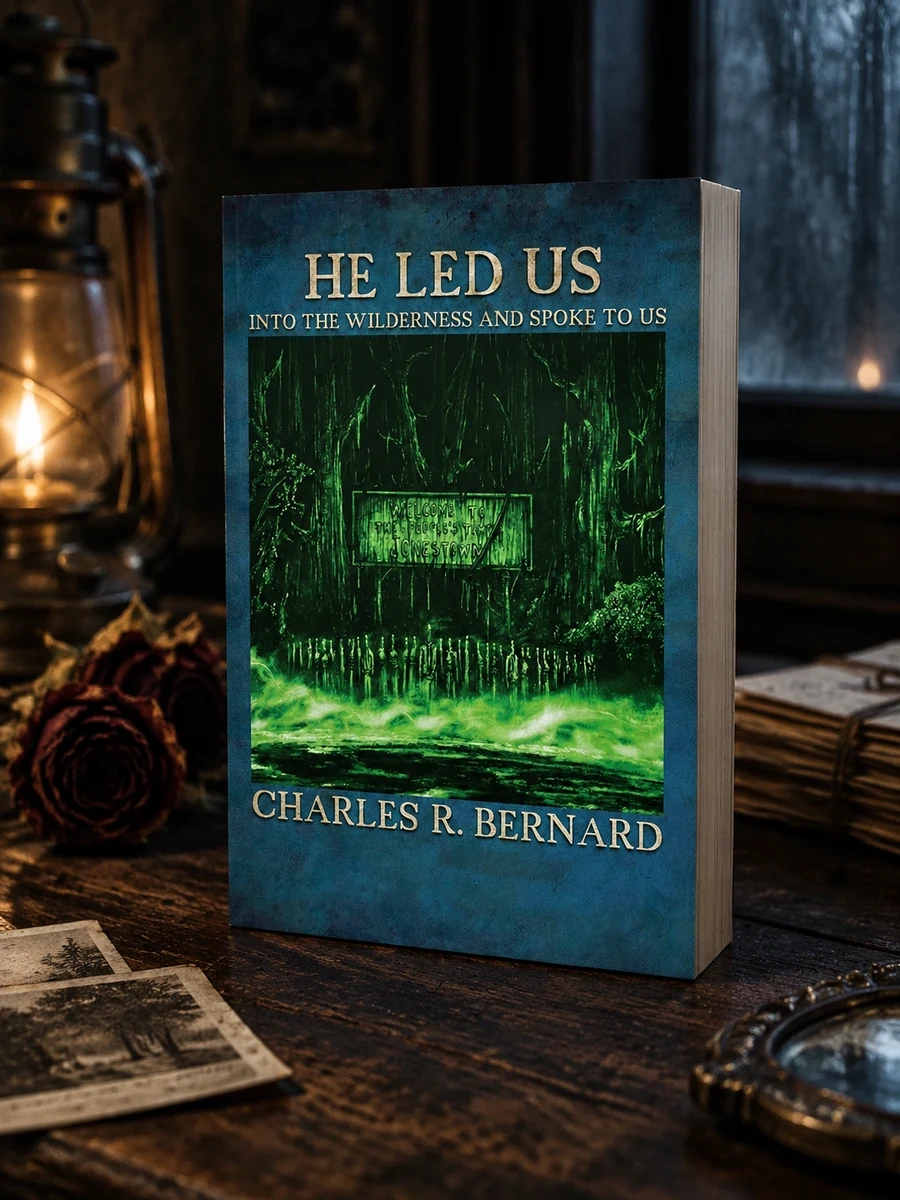
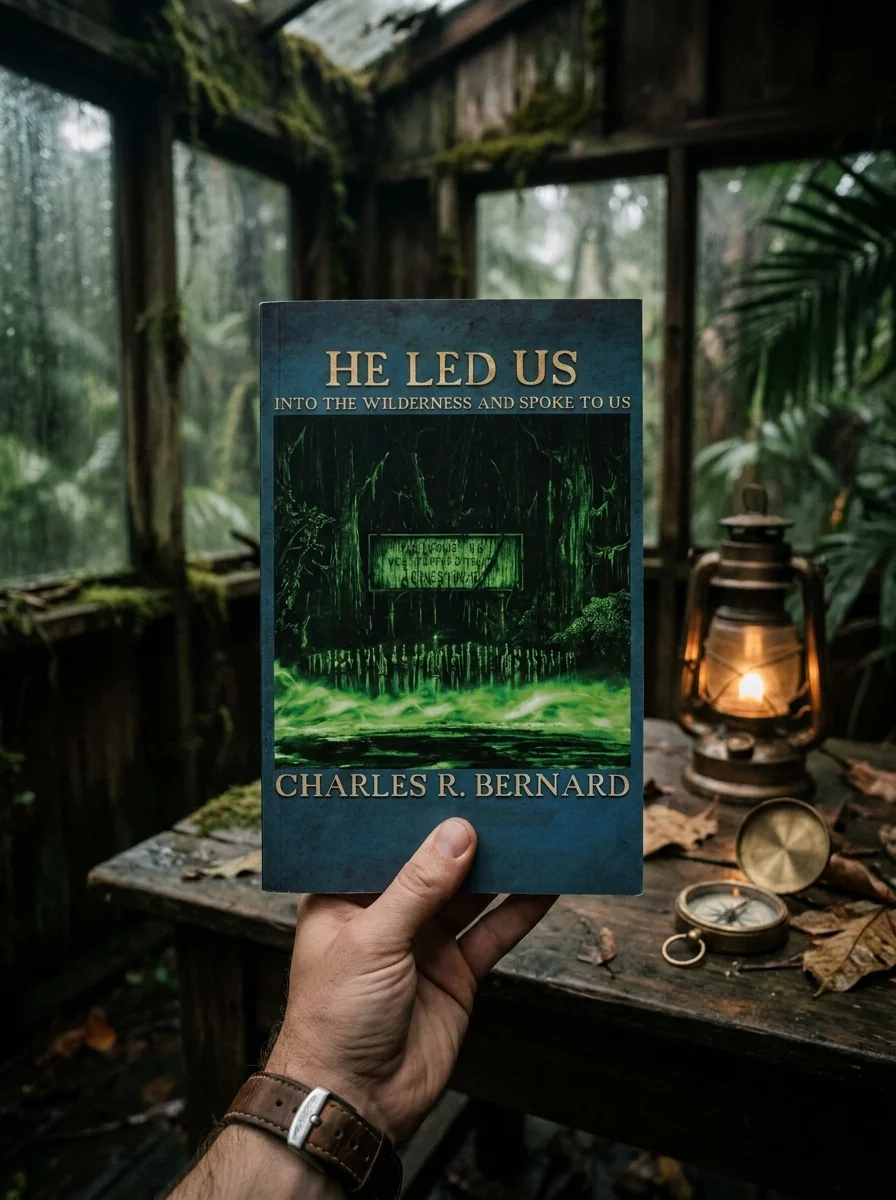
He Led Us Into the Wilderness and Spoke to Us
A cosmic horror tale following Dickie Rutledge from Vietnam to Jonestown.
Dickie Rutledge tells his story of moving from Vietnam to Jonestown in Guyana. He shares this account with Bill, a non-human being, over one night. Their talk covers places like San Francisco and the A Shau Valley. The narrative combines real events with supernatural themes. It shows how religious faith can lead to mass death. The text depicts a world where dark forces exist just outside reality. Bernard uses this setup to look at human depravity.
The book sits at the intersection of historical fiction and cosmic horror. It draws on the real-world events of the Vietnam War and the Jonestown tragedy in Guyana. The narrative bridges the gap between documented political violence and supernatural terror, placing these earthly events within a framework of unearthly power and malign influence.


📝 Description: He Led Us Into the Wilderness and Spoke to Us
💎 Our verdict on He Led Us Into the Wilderness and Spoke to Us
📖 Why choose it
Why this book is worth reading
This title is essential for readers who appreciate the intersection of political history and supernatural fear, offering a unique perspective on how ideology connects to cosmic horror. It appeals specifically to those who enjoy narratives that blend real historical tragedy with metaphysical dread, such as the events in Vietnam and Guyana presented here. The book requires focus due to its complex examination of how human depravity and religious devotion interact with hidden powers. Those seeking clear history or simple fantasy may find the disturbing mood off-putting, but it rewards those willing to engage with its intricate look at the coexistence of ideology and horror.
⭐ Reader reviews
Reader rating
Charles Bernard effectively frames a confession across violent settings, moving from the A Shau Valley to Jonestown through the lens of cosmic horror. The narrative blends historical events with supernatural themes, depicting dark forces just outside reality while exploring human depravity. By using Bill as a non-human interlocutor, the text examines how religious faith leads to mass death and moral decay. This approach suits readers who enjoy stories mixing real tragedy with metaphysical dread rather than those wanting simple fantasy. The book demands focus due to its complex tone and disturbing mood, offering a profound look at the connection between devotion, death, and hidden powers behind the visible world.
📖 Read on the blog
🏛 Books from this publisher Madness Heart Press




You might also like
See more →

Have a question about this item?
Ask about the edition, condition, delivery or anything else — we reply by email or phone, usually within a day.
