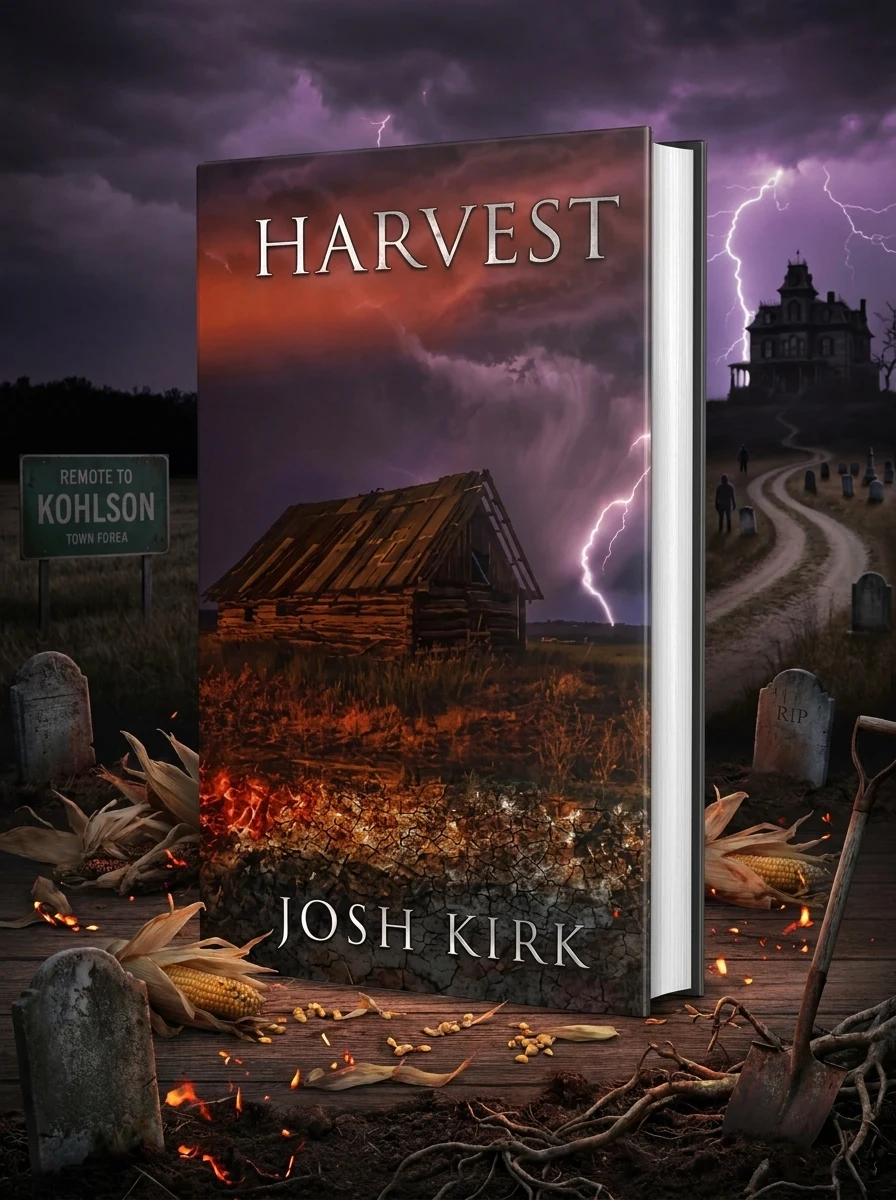
Harvest
A man discovers his wife's grave is part of a deadly rural conspiracy in Kohlson.
Kirk writes a suspenseful tale where routine grief turns into survival horror. Adam Collins expects a quiet visit to his wife's resting place but encounters a hidden agenda controlled by powerful figures. The story examines how remote communities can harbor dangerous secrets. It focuses on the psychological toll of isolation and the physical danger posed by those who exploit the dead. The narrative does not offer easy escapes or clear moral victories. Instead, it presents a grim reality where the past refuses to stay buried. This approach appeals to readers who prefer grounded horror over fantastical elements.
The novel is set in Kohlson, a fictional remote American town with few residents and businesses. It draws on the tradition of rural horror where isolated communities hide dark practices. The story reflects anxieties about wealth disparity and the exploitation of vulnerable populations in forgotten places.


📝 Description: Harvest
💎 Our verdict on Harvest
📖 Why choose it
Why this book is worth reading
Readers who prefer grounded horror over fantastical elements will find this book engaging due to its focus on psychological toll and physical danger. Adam Collins’ journey from routine grief to survival horror offers a grim reality where the past refuses to stay buried. The narrative appeals to those interested in how remote communities harbor dangerous secrets and exploit the dead. It provides intense atmospheric tension rather than extensive exposition, making it suitable for fans of small-town conspiracies and supernatural threats. Those seeking complex historical analysis or lighthearted entertainment may find the tone too intense, but the story delivers a suspenseful tale where routine grief turns into a life-or-death struggle against powerful figures.
⭐ Reader reviews
Reader rating
Kirk constructs a tense narrative where the boundary between living and dead becomes dangerously thin in Kohlson. The book excels in building atmospheric tension through rural isolation and hidden local traditions rather than relying on exposition. It effectively examines the psychological toll of isolation and the physical dangers posed by those who exploit the deceased. Readers enjoying small-town conspiracies and supernatural threats will find this work compelling. However, the tone is intense and lacks easy escapes or clear moral victories. This approach suits audiences preferring grounded horror over fantastical elements. The story avoids lighthearted entertainment, focusing instead on a grim reality where powerful figures control hidden agendas. It is a solid choice for those who appreciate suspenseful tales of survival against entrenched local evils.