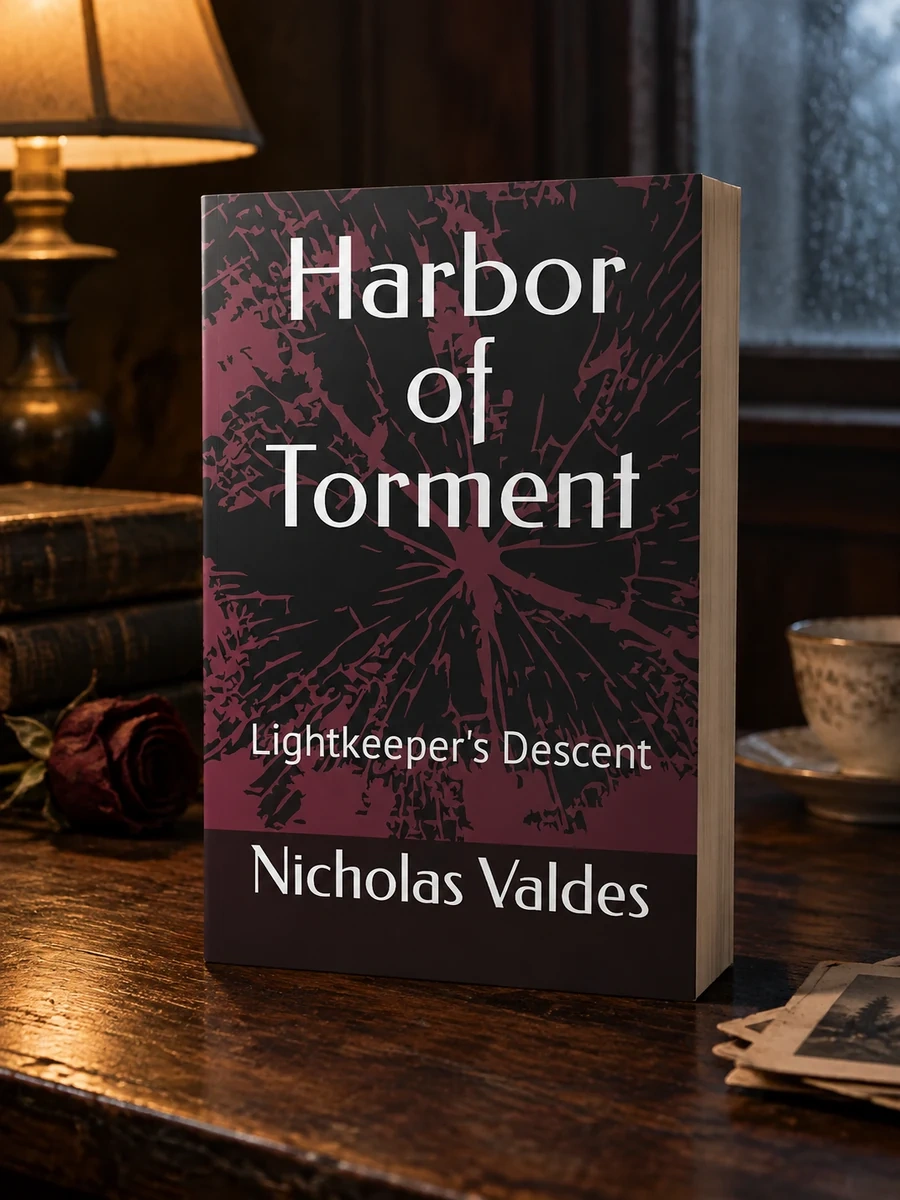
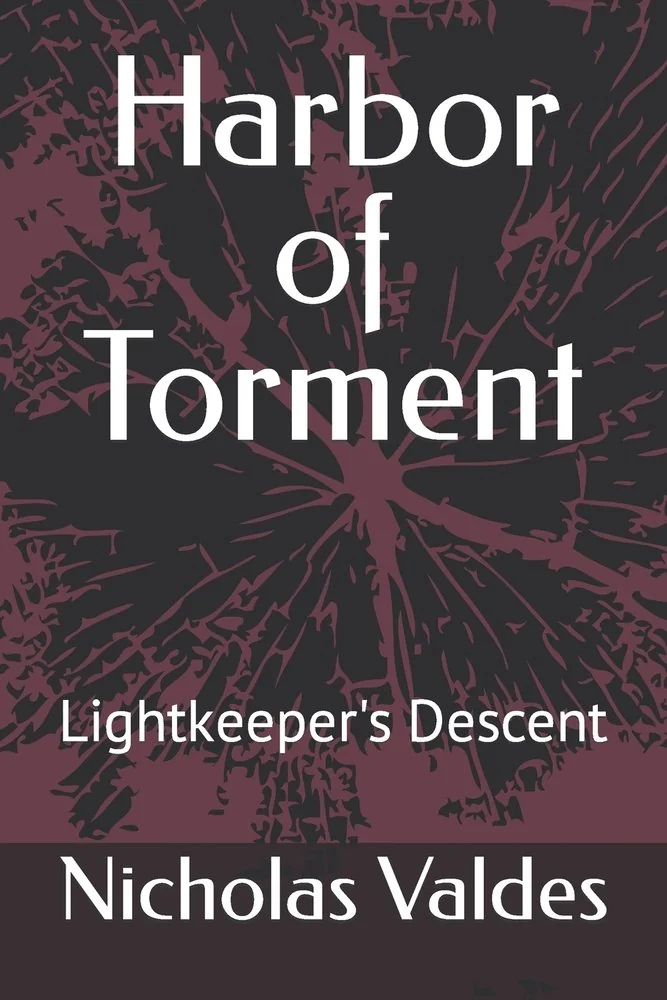
Harbor of Torment: Lightkeeper's Descent
A psychological horror novel about grief and alcoholism manifesting as terrifying reality.
This revised edition reimagines the author’s first title to focus intensely on the protagonist's mental state. Jameson fights a losing battle against his own psyche, where PTSD and addiction twist his perception of the world around him. The story avoids conventional horror tropes in favor of exploring the terror of losing one's grip on reality. Valdes crafts a narrative where the true antagonist is the mind itself. The text does not rely on external monsters but rather on the internal collapse of a man already broken by loss and substance abuse. This creates a claustrophobic atmosphere that mirrors Jameson's isolation. The book serves as a grim look at how trauma can rewrite one's experience of existence.
Published independently in late 2023, this work fits within the modern tradition of psychological horror that prioritizes mental health struggles over supernatural elements. It reflects a contemporary interest in how internal trauma manifests as external horror.


📝 Description: Harbor of Torment: Lightkeeper's Descent
💎 Our verdict on Harbor of Torment: Lightkeeper's Descent
📖 Why choose it
Why this book is worth reading
Readers seeking a grim, introspective exploration of the human psyche under extreme duress will find value in this text. It is ideal for those interested in psychological horror who prioritize emotional depth and atmospheric tension over conventional jump scares or monster hunts. The book offers a claustrophobic immersion into a protagonist's disorienting experience, making it suitable for audiences who appreciate slow-burn narratives that examine how grief and addiction can rewrite one's existence. Those willing to engage with a story where the mind itself is the antagonist will gain from its focused examination of mental collapse.
⭐ Reader reviews
Reader rating
Valdes crafts a claustrophobic narrative that eschews external monsters for the terror of losing one's grip on reality. By portraying PTSD and alcoholism as horrific manifestations, the text draws effectively on gothic traditions where internal demons become threats. The approach suits readers interested in psychological horror and character-driven stories that prioritize emotional depth. It avoids easy resolutions, immersing the reader in a disorienting experience that mirrors the protagonist's isolation. This is not for those seeking clear-cut supernatural explanations but rather for those who appreciate a study of personal demons consuming an individual's sense of self under extreme duress.
📖 Read on the blog
🏛 Books from this publisher Independently Published








You might also like
See more →


Have a question about this item?
Ask about the edition, condition, delivery or anything else — we reply by email or phone, usually within a day.
