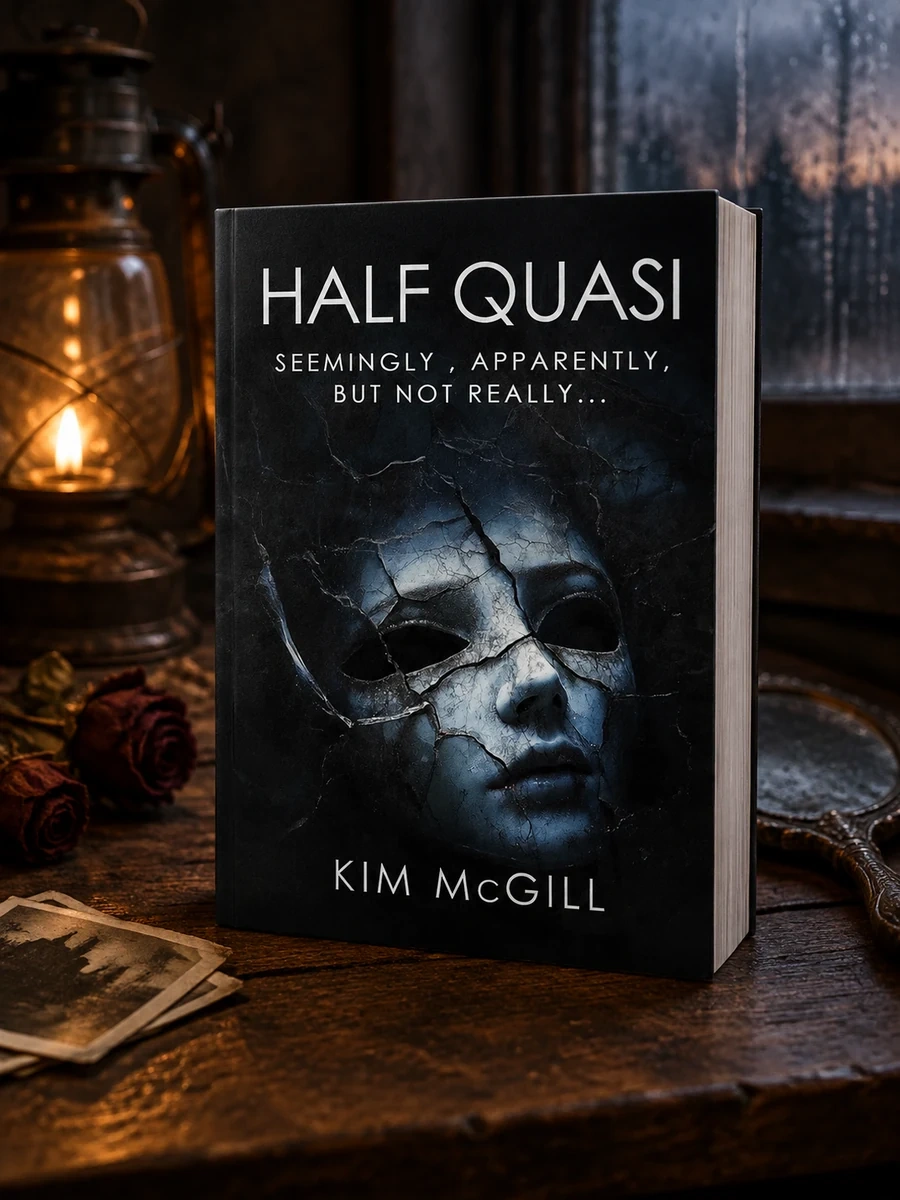
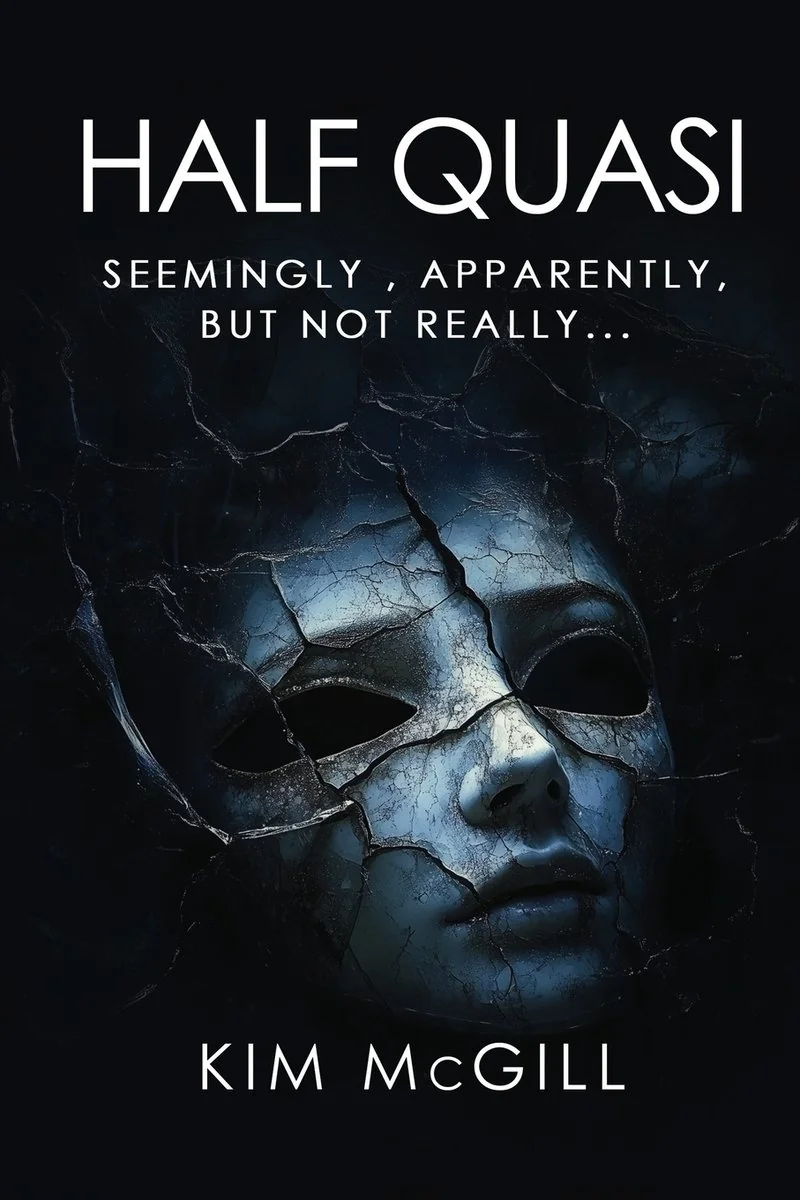
Half Quasi: Seemingly, Apparently, but not Really...
A psychological horror novel about a woman losing herself to parasitic alter-egos.
Grace’s mind has been rewired to see the world through beauty and mystique. This shield blinds her to horrors others ignore. When time dissolves, her health fails, and the illusion tears away. She discovers a labyrinth of fractured alter-egos lurking within. These disturbed echoes are parasitic and refuse to let go. They spin her into delirium, where neurosis becomes an escape. The story tracks her descent as she clings to these tormentors. McGill examines the cost of such pretense-bliss. It is a tale of internal horror where the self is invaded by its own echoes.
Published in 2025 by Kim McGill, this work sits within the tradition of gothic and supernatural fiction. It draws on themes of mental fragmentation and parasitic identity. The narrative explores the boundary between mystique and sinister truth, reflecting contemporary interests in psychological horror and the instability of self-perception.


📝 Description: Half Quasi: Seemingly, Apparently, but not Really...
💎 Our verdict on Half Quasi: Seemingly, Apparently, but not Really...
📖 Why choose it
Why this book is worth reading
Readers drawn to the intricacies of the human psyche and the gothic exploration of mental instability will find this narrative compelling. It offers a unique perspective on horror that originates not from external monsters, but from the invasion of the self by its own fractured echoes. Those interested in stories where neurosis serves as an escape rather than a puzzle to be solved will appreciate the atmospheric descent into delirium. The book provides a haunting examination of pretense and the cost of maintaining an illusion of beauty amidst underlying terror, appealing to those who enjoy complex, unresolved psychological landscapes over straightforward plot-driven scares.
⭐ Reader reviews
Reader rating
Kim McGill delivers a sophisticated entry in the psychological horror genre, focusing on Grace’s internal dissolution rather than external threats. The narrative effectively utilizes the concept of a shimmering veil to mask terror, creating a tense atmosphere where beauty and horror are intertwined. The portrayal of parasitic alter-egos as active intruders adds a layer of visceral dread to the mental fragmentation. This approach suits readers who appreciate gothic fiction’s emphasis on mood and mental state over clear resolutions. By embracing neurosis as a haunting form of escape, the text avoids conventional closure, offering instead a lingering sense of unease that lingers long after the veil lifts.
📖 Read on the blog
✍️ More books by this author Kim McGill


🏛 Books from this publisher Kim McGill
You might also like
See more →




Have a question about this item?
Ask about the edition, condition, delivery or anything else — we reply by email or phone, usually within a day.
