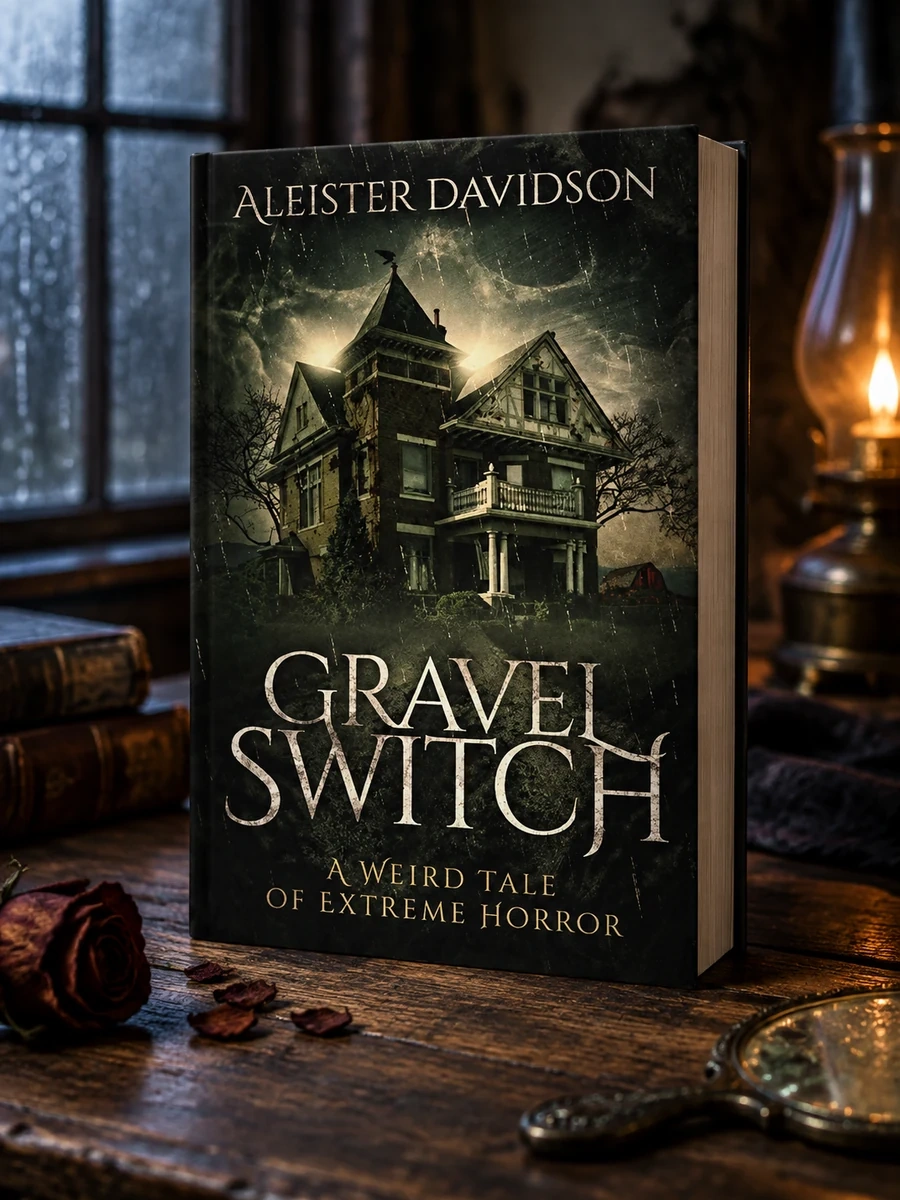

Gravel Switch: A Weird Tale of Extreme Horror
A couple faces a demon house and a local cult in this extreme horror tale.
This work focuses on the gradual disintegration of Hank’s mind after moving to Gravel Switch. The narrative tracks his descent into addiction and paranoia as he loses grip on reality. Amy serves as the grounded counterpoint, recognizing the genuine threat posed by the house and its worshippers. The plot involves their entanglement with local criminal elements, adding a layer of gritty realism to the supernatural events. Davidson constructs a claustrophobic atmosphere where the home itself becomes an antagonist. The story does not rely on jump scares but rather on the slow erosion of trust in one’s own perceptions.
Published in 2017 by Aleister J. Davidson Author, this book sits within the contemporary American horror genre. It draws on gothic and supernatural fiction traditions to explore rural isolation and mental instability.


📝 Description: Gravel Switch: A Weird Tale of Extreme Horror
💎 Our verdict on Gravel Switch: A Weird Tale of Extreme Horror
📖 Why choose it
Why this book is worth reading
Readers who crave intense, atmospheric terror will find this book rewarding. It appeals to those who enjoy psychological decay narratives where the mind itself is the battlefield. Fans of gothic horror and cosmic dread will appreciate the slow erosion of reality and the claustrophobic setting. The gritty realism provided by the criminal elements adds a unique layer for those tired of pure supernatural fare. It is ideal for audiences seeking heavy, uncompromising storytelling that explores societal decay and possession without offering easy escapes or lighthearted moments.
⭐ Reader reviews
Reader rating
Davidson excels at constructing a claustrophobic atmosphere where the home itself becomes an antagonist. The narrative effectively tracks Hank’s descent into paranoia and addiction, blurring the line between hallucination and waking nightmare. Amy serves as a crucial grounded counterpoint, heightening the tension through her solitary confrontation with genuine threats. By intertwining supernatural cult worship with local organized crime, the story achieves a gritty realism that supports its psychological horror elements. The focus on the slow erosion of trust in one’s own perceptions creates a pervasive sense of dread. It is best suited for readers who prefer intense psychological terror and dark, atmospheric storytelling over jump scares or conventional plot resolutions.