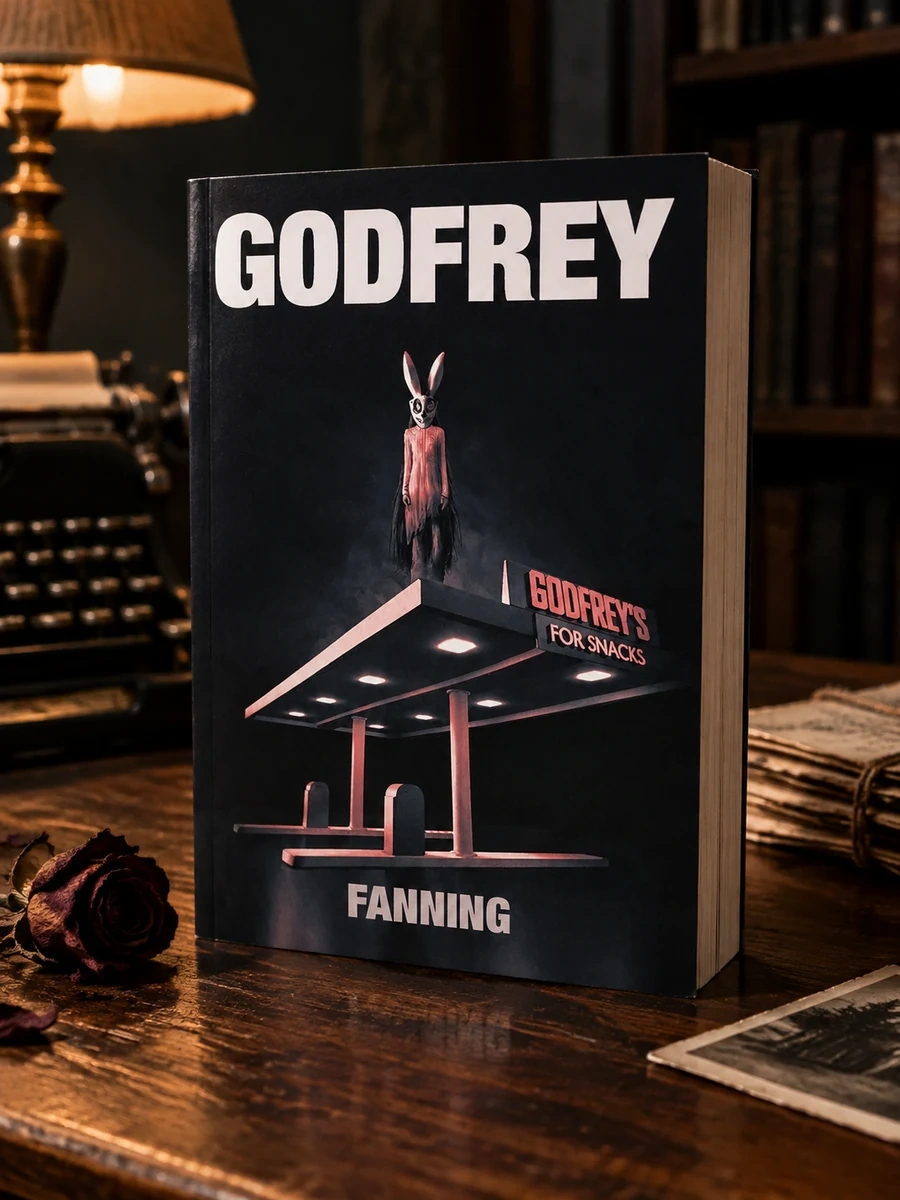
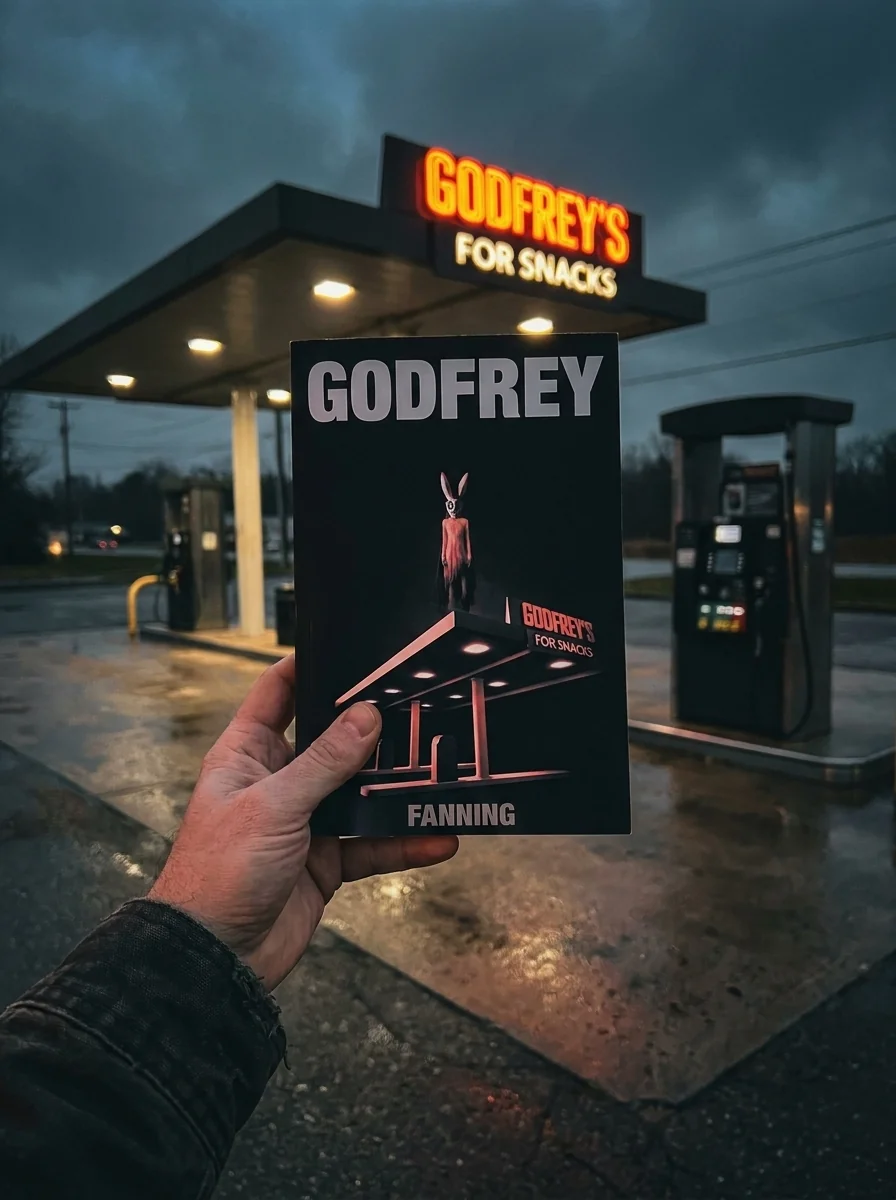
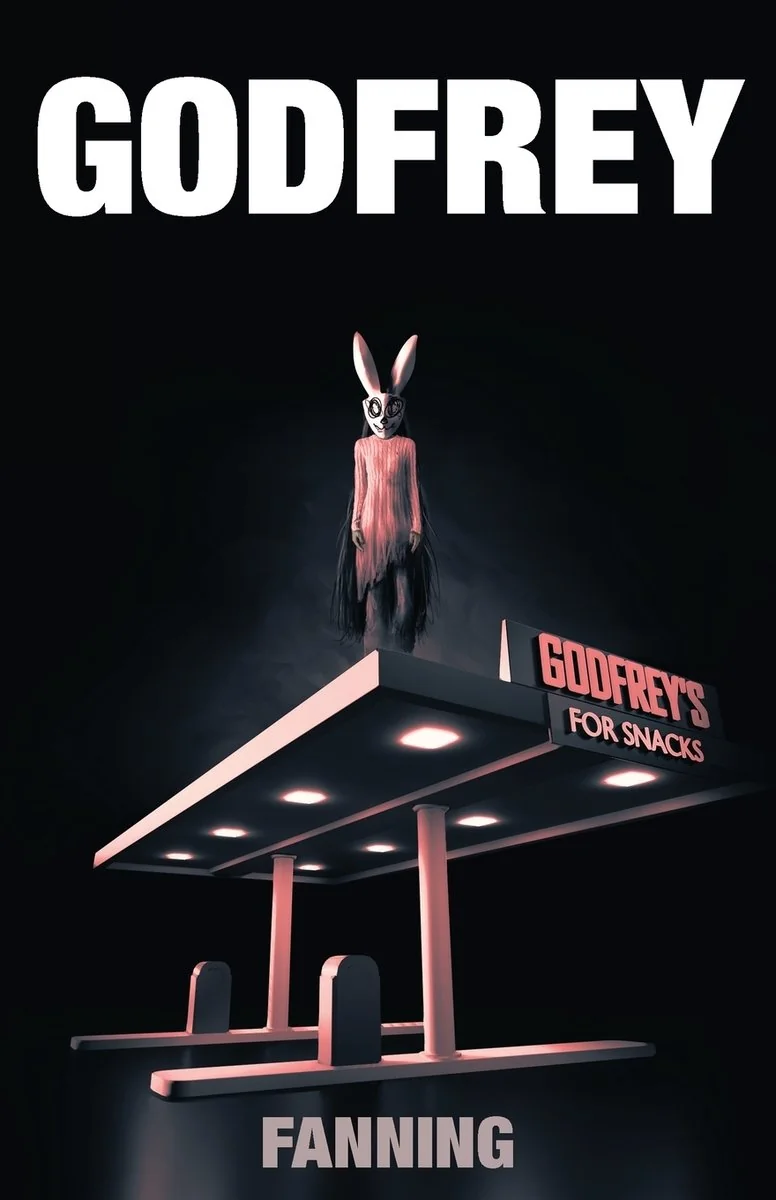
Godfrey
A surreal novella about a woman trapped in a gas station's endless cycle of death.
This novella examines the weight of immediate judgment and eternal recurrence. Avery’s experience inside Godfrey's gas station becomes a prison of her own making. The text explores how quickly she condemned two employees, leading to her entrapment. Fanning uses the setting to mirror the internal constriction of guilt. The Return acts as a force that erases existence rather than punishing it. This approach shifts the horror from physical danger to ontological dread. The narrative does not offer escape but demands accountability for past actions. The story asks what remains when time loses its forward motion. It presents a stark view of consequence without redemption.
Published in late 2025 by Fanning, this work sits within the contemporary American horror tradition. It draws on gothic fiction and supernatural themes. The novella format allows for intense focus on psychological states. It reflects modern anxieties about identity and permanence through a surreal lens.


📝 Description: Godfrey
💎 Our verdict on Godfrey
📖 Why choose it
Why this book is worth reading
Readers who appreciate the weight of consequence without redemption will find this novella compelling. It offers a stark exploration of guilt and eternal recurrence through a surreal lens. Those interested in how time loses forward motion may engage with its philosophical underpinnings. The book demands accountability for past actions rather than offering escape. Fans of atmospheric horror over gore will appreciate the confined setting mirroring internal constriction. It suits those who enjoy abstract narratives that prioritize mood and theme. The story invites reflection on what remains when existence is erased. It provides a unique perspective on judgment through its repetitive structure.
⭐ Reader reviews
Reader rating
Fanning crafts a haunting examination of immediate judgment and ontological dread within the claustrophobic confines of Godfrey's gas station. The novella excels in using its setting to mirror the protagonist's internal guilt, creating a palpable sense of entrapment. By focusing on the Return as a force that erases existence rather than punishing it, the text shifts horror from physical danger to psychological terror. The repetitive structure effectively conveys the futility of Avery's attempts to escape her own making. This approach appeals strongly to fans of literary horror who value atmosphere and philosophical depth. However, those seeking fast-paced action or traditional ghost stories may find the abstract nature too demanding. The narrative lacks redemption, presenting a stark view of consequence that lingers long after reading.
You might also like
See more →







Have a question about this item?
Ask about the edition, condition, delivery or anything else — we reply by email or phone, usually within a day.
