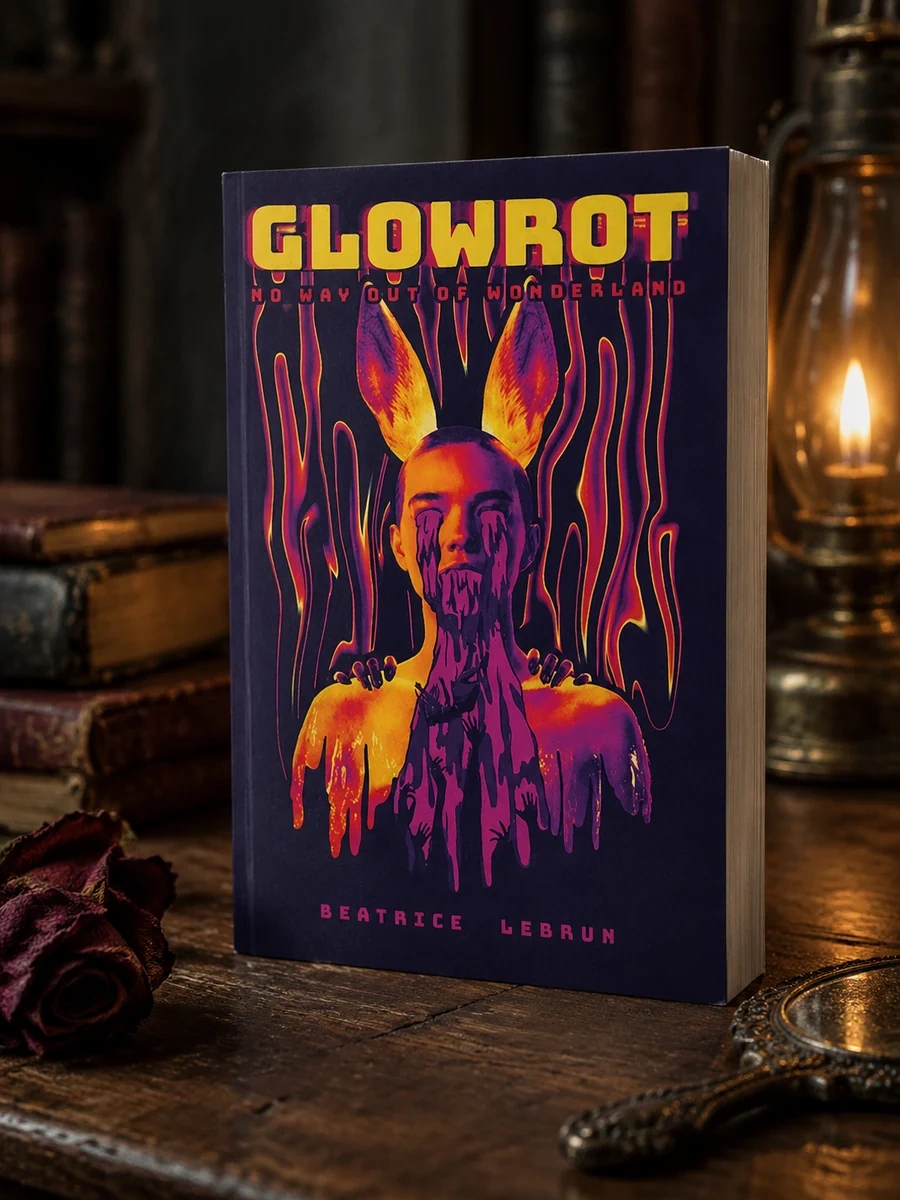

Glowrot: No Way Out Of Wonderland
A Venezuelan author twists Alice in Wonderland into a queer horror story about obsession.
Beatrice Lebrun writes this novel as a blend of found family dynamics and toxic longing. The protagonist Bo navigates a surreal nightclub that mirrors her internal decay. She confronts a shadow entity denying her reality while she pursues an unreachable connection. The work focuses on the psychological unraveling of a bisexual Latina character. It utilizes nonbinary representation to deepen the exploration of identity and desire. The structure relies on dream logic and liminal spaces rather than linear progression. Readers who enjoy atmospheric dread and complex emotional landscapes will appreciate this approach.
This 2025 publication by Venezuelan author Beatrice Lebrun sits within contemporary queer speculative fiction. It draws on the Alice in Wonderland tradition while addressing modern issues of identity and dissociation. The work reflects current discussions around nonbinary representation and the horror genre's evolution.


📝 Description: Glowrot: No Way Out Of Wonderland
💎 Our verdict on Glowrot: No Way Out Of Wonderland
📖 Why choose it
Why this book is worth reading
Readers seeking atmospheric dread and complex emotional landscapes will find resonance in this narrative. Those interested in queer fiction and gothic surrealism appreciate the unique blend of found family dynamics with toxic longing. The book offers a deep exploration of nonbinary representation and identity, utilizing dream logic to depict internal decay. It suits those who enjoy psychological unraveling rather than traditional adventure. The ambiguous tone challenges conventional resolution, inviting engagement with unsettling themes of obsession and dissociation. This work rewards patience with its intricate portrayal of desire and reality.
⭐ Reader reviews
Reader rating
Lebrun effectively twists Alice in Wonderland into a queer horror story about obsession. The surreal nightclub setting mirrors the protagonist's internal decay, functioning as a parasite on desire. By focusing on psychological unraveling and liminal spaces, the text avoids linear progression for dream logic. This approach deepens the exploration of identity and delusional longing. While traditional adventure seekers may struggle with the ambiguous tone, fans of atmospheric horror will appreciate the nuanced portrayal of toxic obsession. The narrative successfully merges queer fiction with gothic surrealism, offering a disturbing yet compelling look at how desire warps perception.
You might also like
See more →





Have a question about this item?
Ask about the edition, condition, delivery or anything else — we reply by email or phone, usually within a day.
