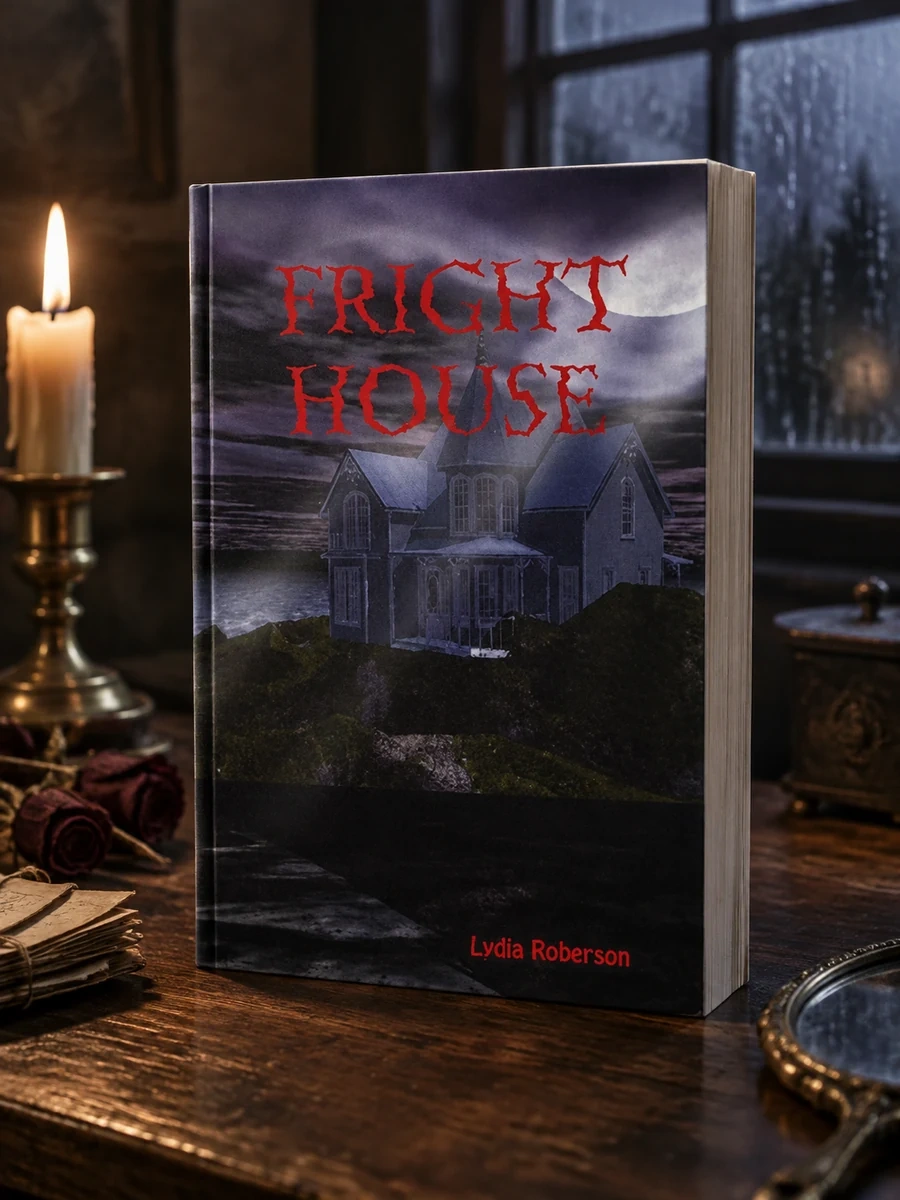

Fright House
A collection of ten short horror stories by Lydia Roberson exploring fear and morality.
This volume combines classic supernatural elements with psychological depth. Readers encounter characters trapped in deadly environments, from skin that acts independently to lovers who refuse to stay dead. The narrative structure moves through various encounters with witches, ghosts, and internal tormentors. Each story functions as a lesson on confronting fear rather than merely providing entertainment. The inclusion of The Evil Walls adds a layer of ambiguity regarding the source of haunting. Roberson uses these scenarios to guide readers toward understanding their own anxieties. The work stands as a practical tool for those wishing to face their phobias through fiction.
Published in 2007 by Lydia Roberson, this book sits within the American tradition of short-form horror and gothic fiction. It draws on supernatural tropes to explore psychological fears. The work reflects a period where independent publishers released genre fiction focused on moral lessons and personal confrontation with fear.


📝 Description: Fright House
💎 Our verdict on Fright House
📖 Why choose it
Why this book is worth reading
Readers seeking a practical approach to confronting their own phobias will find value in this unique collection. Roberson uses traditional horror scenarios not merely for shock, but as moral lessons and tools for understanding personal anxieties. Those who appreciate gothic fiction with psychological depth, rather than straightforward action or non-fiction, will gain insight into the nature of fear. The work appeals to those willing to engage with unsettling narratives about skin, death, and witchcraft to explore the boundaries of safety within one's own home. It is ideal for individuals interested in how fiction can guide them toward facing their internal tormentors and moral dilemmas through the lens of the supernatural.
⭐ Reader reviews
Reader rating
Roberson’s collection excels in weaving classic supernatural elements with profound psychological depth, creating an atmosphere of sustained dread. The stories function effectively as lessons on confronting fear, utilizing unsettling scenarios like independent skin and restless lovers to explore morality. The inclusion of 'The Evil Walls' adds necessary ambiguity, challenging the reader to question the source of haunting. This approach suits readers who appreciate gothic horror with moral undertones rather than those seeking simple thrills. By relying on traditional tropes to foster introspection, the book offers a structured way to examine personal anxieties. It is a compelling choice for enthusiasts of psychological horror who value narrative purpose over mere entertainment, providing a unique intersection of fear and self-discovery.
You might also like
See more →







Have a question about this item?
Ask about the edition, condition, delivery or anything else — we reply by email or phone, usually within a day.
