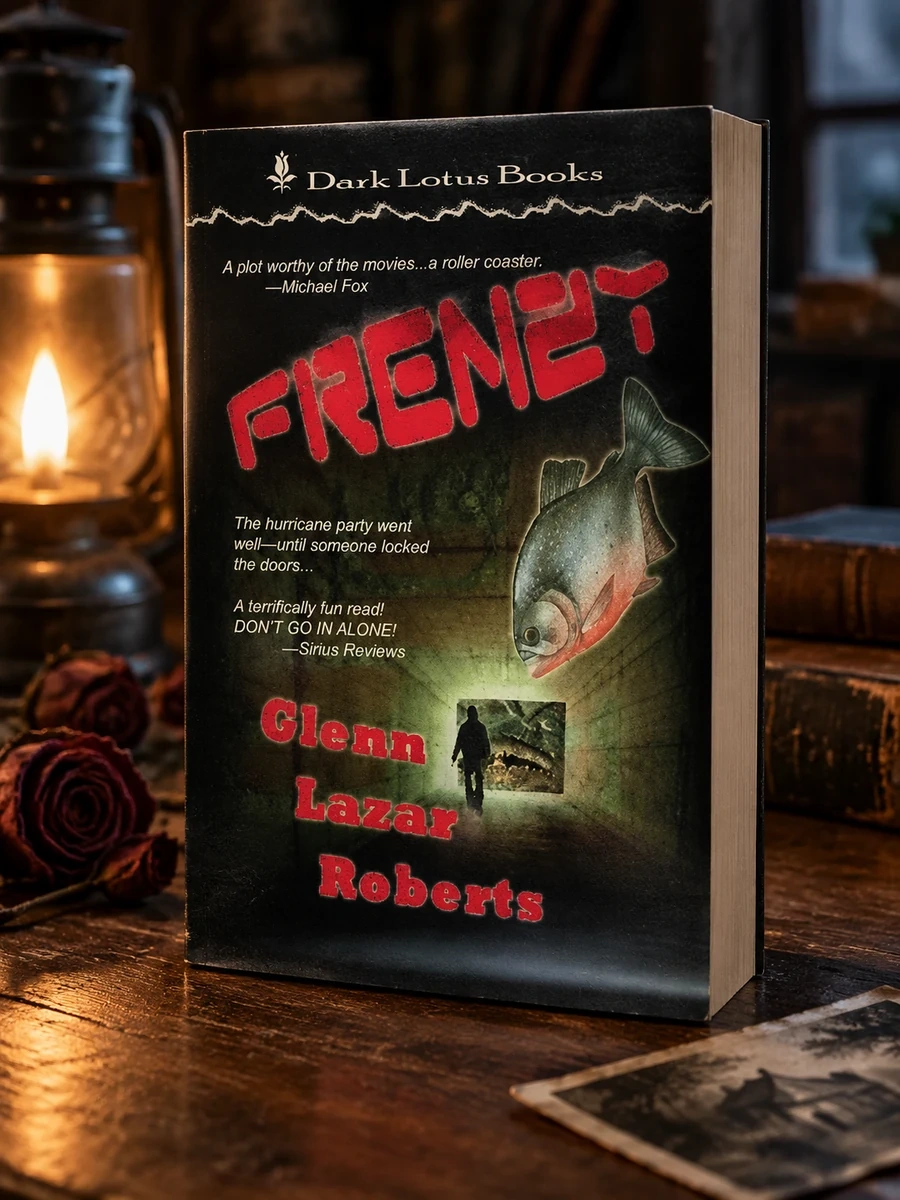

Frenzy
A hurricane party turns deadly when guests flee into a flooded maze with piranhas.
The narrative begins with a social gathering disrupted by severe weather. Guests seek refuge in an Institute basement, only to find their exit blocked by rising water. They must traverse a network of tunnels that are quickly filling up. The situation worsens when they discover one-minute piranhas have been released into the water. The story focuses on the immediate struggle for survival against both the environment and the animals. Roberts uses the setting to create a sense of inescapable dread. The plot moves from social ease to desperate flight. The tension arises from the limited visibility and the speed of the flooding. This approach keeps the focus on physical survival rather than emotional backstory.
Published in 2016 by Dark Lotus Books, this work sits within the modern horror tradition. It utilizes the trope of the isolated disaster scenario. The setting of an Institute basement suggests institutional secrecy. The use of piranhas adds a specific biological threat to the natural disaster element.


📝 Description: Frenzy
💎 Our verdict on Frenzy
📖 Why choose it
Why this book is worth reading
Readers who crave immediate, high-stakes survival scenarios will find this book particularly engaging. It offers a relentless pace that prioritizes physical danger over emotional introspection, making it ideal for those who enjoy contained thrillers focused on environmental hazards. Fans of creature features and disaster narratives will appreciate the clear, mechanical precision of the trap set within the labyrinthine tunnels. The narrative provides a straightforward escape from complex character development, delivering instead pure tension derived from flooding waters and predatory fish. It is perfect for readers seeking a quick, intense read that focuses on the primal struggle against both nature and engineered terror.
⭐ Reader reviews
Reader rating
Roberts delivers a tightly focused survival horror that excels in creating immediate dread through physical constraints. The transition from social ease to desperate flight is handled with efficient pacing, keeping the reader anchored in the visceral reality of the flooding tunnels. By minimizing emotional backstory, the text maintains a sharp focus on the mechanical precision of the trap and the speed of the aquatic predators. This approach suits readers who prefer action-driven horror over slow-burn psychological depth. While it may feel too straightforward for those seeking complex character arcs or supernatural ambiguity, it stands as a competent entry in the disaster narrative genre, offering clear thrills through the interaction of human panic and environmental peril.
You might also like
See more →







Have a question about this item?
Ask about the edition, condition, delivery or anything else — we reply by email or phone, usually within a day.
