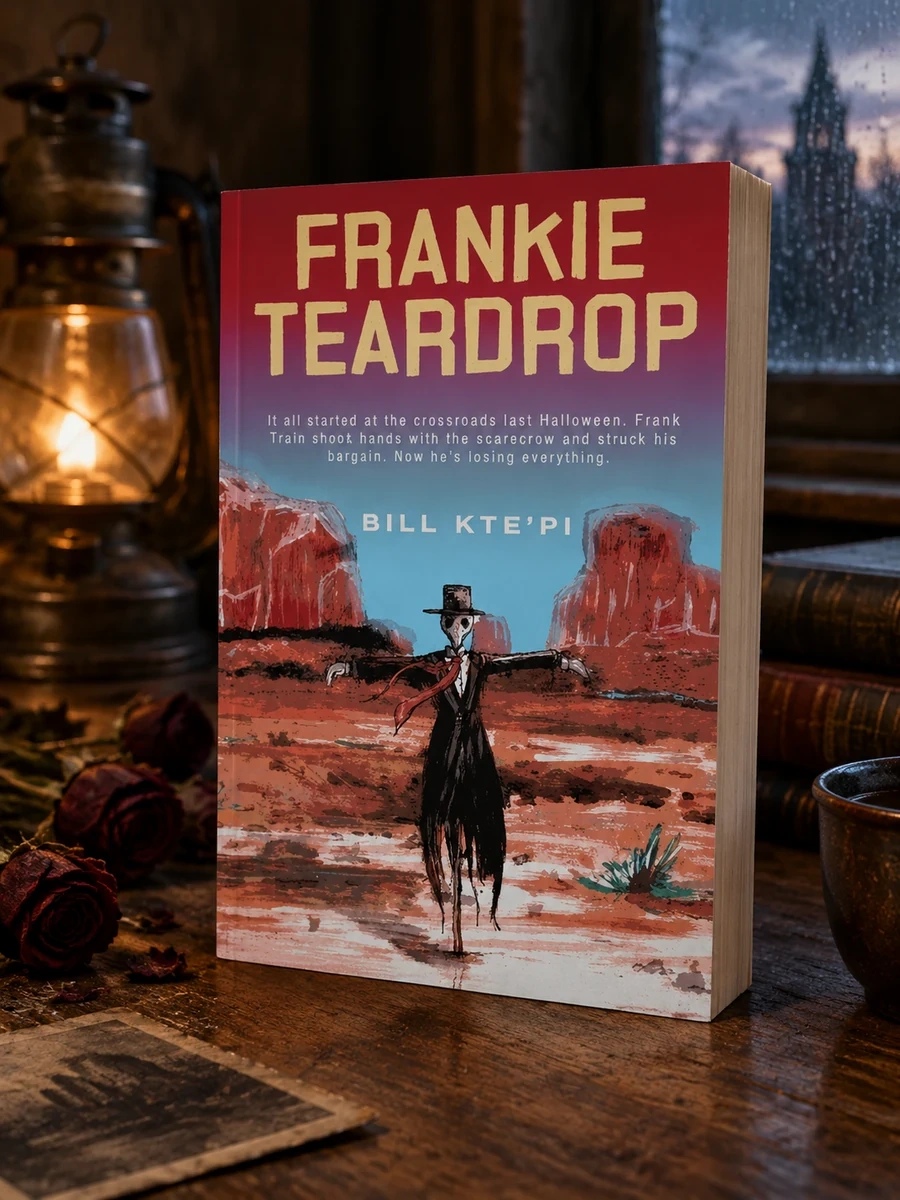

Frankie Teardrop
A father races to save his son from a demonic pact made with a living scarecrow.
Bill Kte'pi crafts a story where personal loss intersects with supernatural horror. Frank Train faces a series of tragedies marked by a specific symbol. He recalls a deal struck with a scarecrow on Halloween night. His son Ricky changes behavior, suggesting the pact's influence grows stronger. Frank's brother also fights similar demons. The narrative focuses on the aftermath of this agreement. It explores how past choices haunt the living. The tone is heavy and introspective. Kte'pi uses the crossroads legend to ground the horror in rural tradition.
The work draws on American rural traditions, specifically the legend of the crossroads scarecrow. It engages with gothic fiction and supernatural horror genres popular in contemporary independent publishing. The setting implies a connection to cowboy heritage and tumbleweed landscapes.


📝 Description: Frankie Teardrop
💎 Our verdict on Frankie Teardrop
📖 Why choose it
Why this book is worth reading
Readers who appreciate dense, atmospheric horror that prioritizes psychological dread over jump scares will find much to admire in this narrative. It suits those interested in how past choices haunt the living and how rural folklore can ground supernatural terror. The book offers a heavy, introspective experience for fans of gothic traditions where familial bonds are fractured by unseen forces. Those who enjoy symbolic imagery and character-driven plots over extensive world-building will gain from its exploration of broken promises. It is ideal for readers willing to engage with ambiguous endings that emphasize lingering dread rather than clear resolutions or fast-paced action.
⭐ Reader reviews
Reader rating
Bill Kte'pi crafts a harrowing tale where personal loss intersects seamlessly with supernatural horror. The narrative effectively uses the crossroads legend to ground its terror in rural tradition, creating a heavy and introspective tone. Frank Train’s struggle against a demonic pact initiated on Halloween night drives the plot forward with relentless psychological weight. The text relies on character interaction and symbolic imagery rather than action, rewarding patients readers who enjoy dense atmospheric writing. It excels in depicting how the past actively intrudes upon the present, making the scarecrow a central figure of inevitable consequence. This is a sophisticated entry for fans of cosmic and gothic horror who value mood over speed.