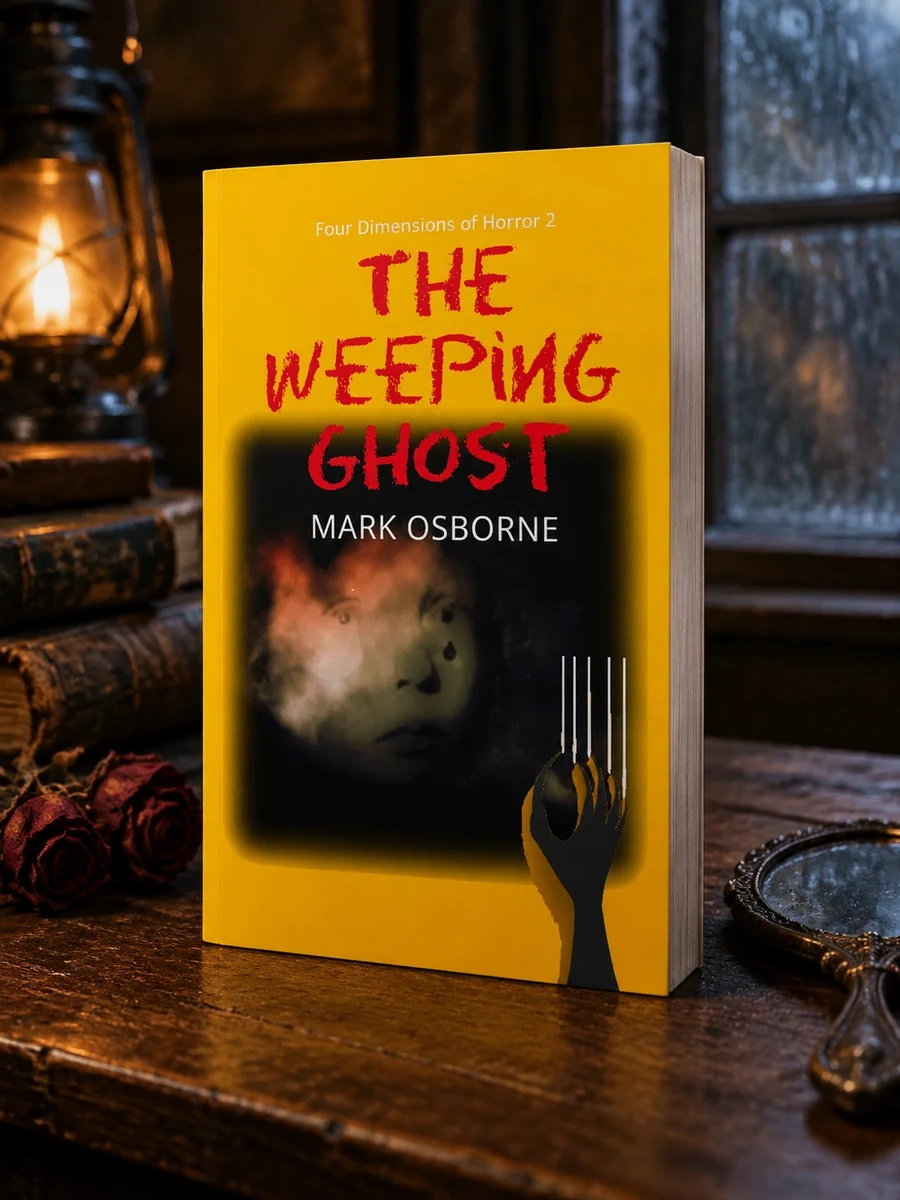
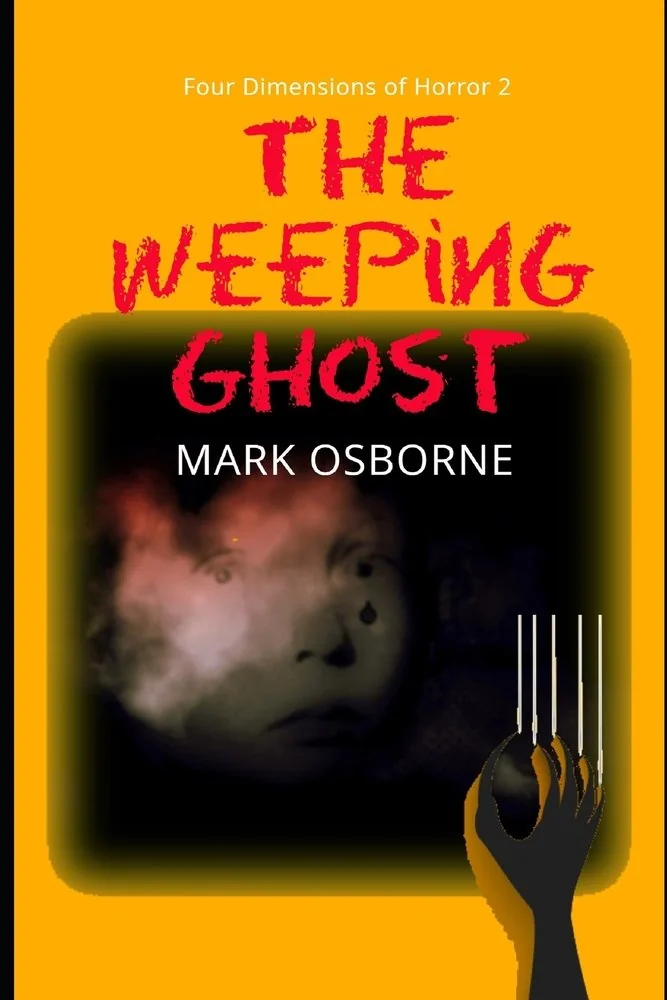
Four Dimensions of Horror 2 the Weeping Ghost
A fictional ghost story based on the cursed painting legend by Bruno Amadio.
The narrative begins in 1915 with disappearances in Deadwood, Pinestork. A burnt house yields a survivor portrait resembling a lost child. This object moves to Britain, fueling myths of fire immunity. The plot advances through time to feature a blind girl threatened by the painting’s spirit. Osborne uses the Bruno Amadio artwork as the catalyst for supernatural events. The tale relies on the tension between the visible art and the invisible ghost warning the protagonist. It connects the orphaned children of the war era to modern horror tropes involving cursed artifacts.
The work engages with British urban legends derived from Bruno Amadio’s post-World War II paintings. It references the real-world myth of the crying boy surviving house fires. Osborne sets part of the narrative in 1915 Deadwood, Pinestork, before moving to Britain where the folklore developed.


📝 Description: Four Dimensions of Horror 2 the Weeping Ghost
💎 Our verdict on Four Dimensions of Horror 2 the Weeping Ghost
📖 Why choose it
Why this book is worth reading
Readers who appreciate the intersection of historical folklore and supernatural dread will find this narrative compelling. It offers a distinct exploration of the 'cursed object' subgenre, specifically focusing on how art becomes a vessel for malevolent spirits. Those interested in the psychological weight of war-era orphanhood and its manifestation in modern horror will engage with the thematic links between past trauma and present danger. The book appeals to fans who enjoy atmospheric tales where the tension arises from the ambiguity between visible art and invisible threats, rather than straightforward action or historical documentation.
⭐ Reader reviews
Reader rating
Osborne effectively utilizes the Bruno Amadio painting legend as a catalyst for supernatural events, creating a tale that relies heavily on the tension between the visible artwork and the invisible ghost. The narrative structure, moving from 1915 Deadwood to Britain, provides a rich gothic backdrop for the story of the blind girl threatened by the image’s spirit. While it does not claim factual accuracy, it succeeds in constructing a cohesive supernatural fiction that honors its source material's eerie reputation. It suits readers seeking atmospheric horror and haunted object narratives over historical non-fiction, delivering a focused exploration of fear rooted in cultural myth rather than random violence.
📖 Read on the blog
🏛 Books from this publisher Independently Published








You might also like
See more →
Have a question about this item?
Ask about the edition, condition, delivery or anything else — we reply by email or phone, usually within a day.
