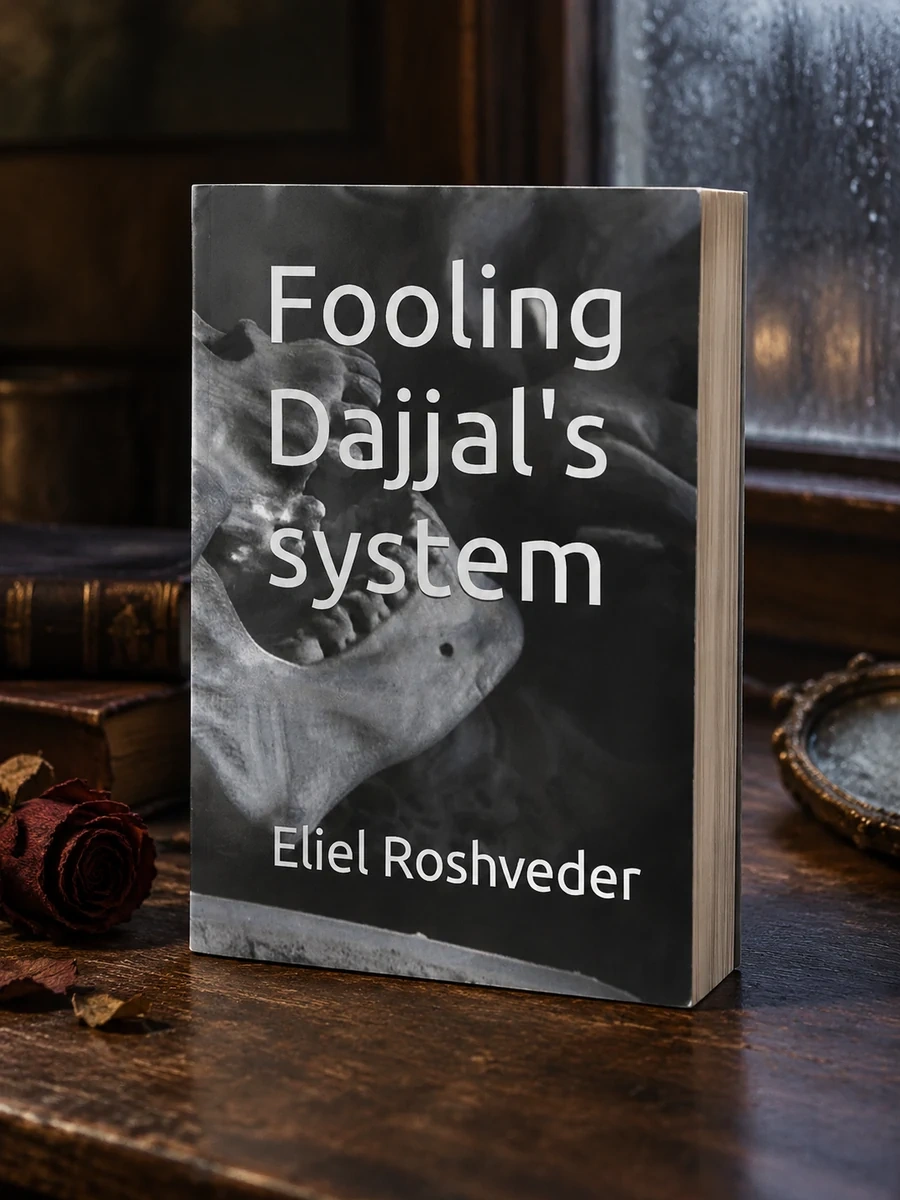
Fooling Dajjal's system
A story about two sisters debating religious marks and divine rescue.
The narrative focuses on the ideological struggle between Ruth and Yedda regarding the Beast's mark. Ruth argues against the acceptance of mind control and electronic currency systems linked to lithium leakage. Her theological stance eventually influences Yedda to reject the Dajjal. The plot moves from internal debate to external intervention through prayer. Eliot serves as the answer to Ruth’s pleas for help. His background as a Brazilian Jew with Canadian parents is noted specifically. The work does not offer general horror tropes but concentrates on this specific theological conflict and its physical consequences.
This text draws on Jewish traditions involving the Dajjal and Christian concepts of the Beast. It blends these with modern fears of electronic money and mind control implants. The author Eliel Roshveder structures the narrative around these specific theological and technological anxieties.


📝 Description: Fooling Dajjal's system
💎 Our verdict on Fooling Dajjal's system
📖 Why choose it
Why this book is worth reading
Readers interested in the intersection of religious doctrine and technological dystopia will find this narrative compelling. It offers a unique perspective on the concept of mind control, framing it not merely as sci-fi speculation but as a spiritual battle. Those who appreciate dense, ideological debates over conventional plot twists will value the focus on Ruth and Yedda’s struggle. The book is ideal for audiences seeking horror that challenges theological boundaries and explores the physical consequences of faith in a secular world. It provides a distinct alternative to standard monster stories, focusing instead on the erosion of autonomy through systemic religious marks.
⭐ Reader reviews
Reader rating
Roshveder delivers a highly specific exploration of apocalyptic fear, eschewing typical gore for intellectual and spiritual tension. The narrative succeeds in grounding abstract theological concepts in visceral physical stakes, particularly regarding the lithium implant. While the focus remains tightly on the sisters' ideological conflict, this intensity may alienate readers seeking broad action or diverse characters. However, for those drawn to psychological horror rooted in religious symbolism, the text offers a rigorous examination of control and resistance. The character of Eliot serves primarily as a narrative device rather than a fully realized figure, keeping the spotlight squarely on the internal debate. It is a niche but potent entry in the genre.
📖 Read on the blog
✍️ More books by this author Eliel Roshveder







🏛 Books from this publisher Independently Published






You might also like
See more →





Have a question about this item?
Ask about the edition, condition, delivery or anything else — we reply by email or phone, usually within a day.
