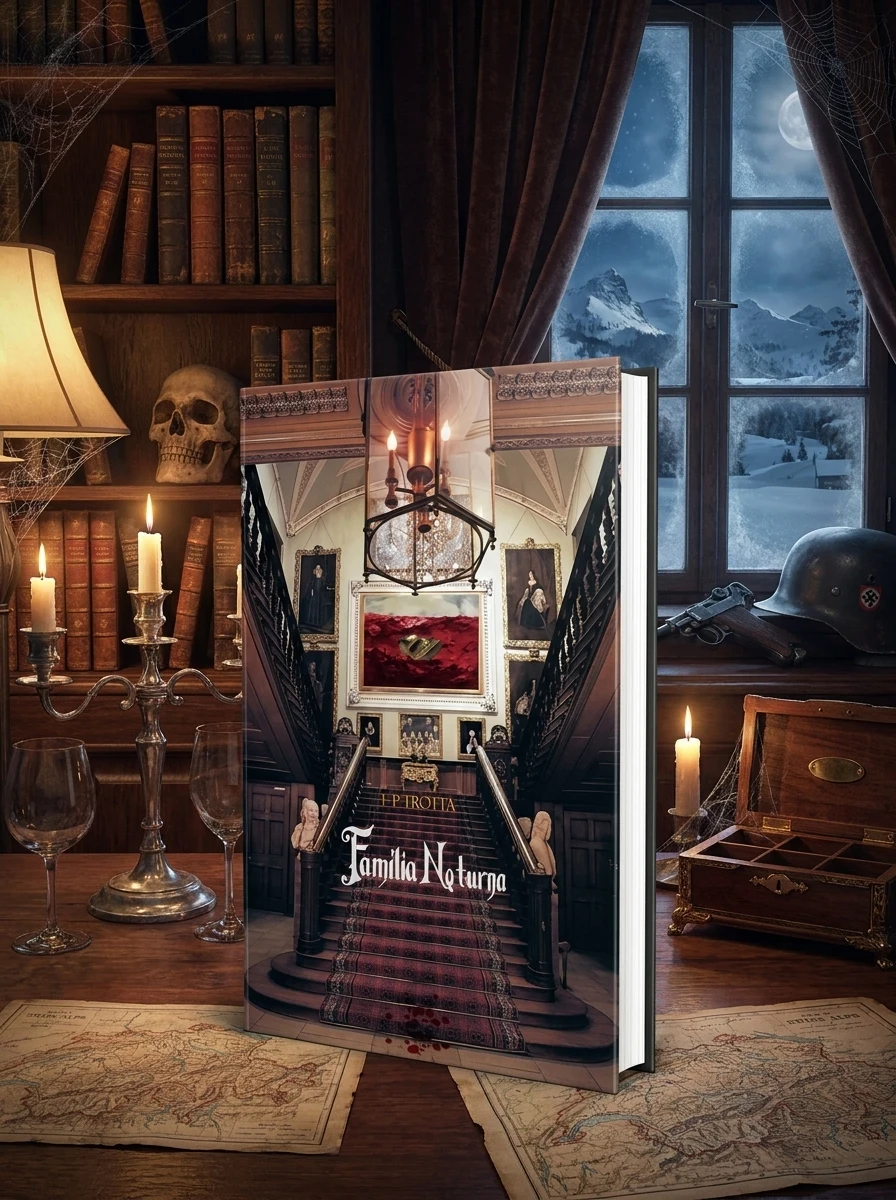
Familia Noturna
A family murders radical guests weekly in a Swiss Alps mansion during WWII.
Trotta examines the psychological decay of a wealthy family isolated in Switzerland. The narrative focuses on how their inherited wealth and position enable a cycle of ritualistic killing. Each week, they select a target from the political right, blending personal vendetta with historical context. The story highlights the difficulty of keeping such secrets during a time of widespread persecution. It does not glorify the violence but rather portrays it as a corrosive force that binds the family together through shared trauma and fear.
The book is set in the Swiss Alps during the Second World War. It engages with the historical context of the Holocaust and the political tensions of the era. The setting provides a stark contrast between the isolation of the estate and the global conflict unfolding nearby.


📝 Description: Familia Noturna
💎 Our verdict on Familia Noturna
📖 Why choose it
Why this book is worth reading
This book offers a grim examination of inherited guilt and violent complicity for readers who appreciate atmospheric horror intertwined with historical context. It appeals to those interested in the psychological decay of wealthy families isolated by their own secrets during global conflict. Readers seeking lighthearted entertainment will find it unsuitable, as it provides no resolution or comfort. Instead, it delivers a corrosive narrative where ritualistic killing binds the family through shared trauma. It is ideal for audiences who enjoy moral ambiguity and the heavy burden of concealing atrocities amidst widespread persecution, rather than those looking for academic study or non-fiction history.
⭐ Reader reviews
Reader rating
Trotta constructs a sinister tale that effectively blends gothic horror with historical fiction, focusing on the psychological decay of an isolated family. The narrative avoids glorifying violence, instead portraying it as a corrosive force that unites the characters through fear and shared trauma. This approach suits readers who enjoy atmospheric tension within a WWII setting and are interested in the moral complexities of survival during the Holocaust. By organizing the work as a continuous narrative rather than an anthology, Trotta maintains a steady, grim tone throughout. The book does not offer comfort but rather a deep dive into inherited guilt. It is best suited for those who can handle dark themes without expecting traditional resolution or lighthearted relief.
📖 Read on the blog
🏛 Books from this publisher Lulu.com



You might also like
See more →

Have a question about this item?
Ask about the edition, condition, delivery or anything else — we reply by email or phone, usually within a day.
