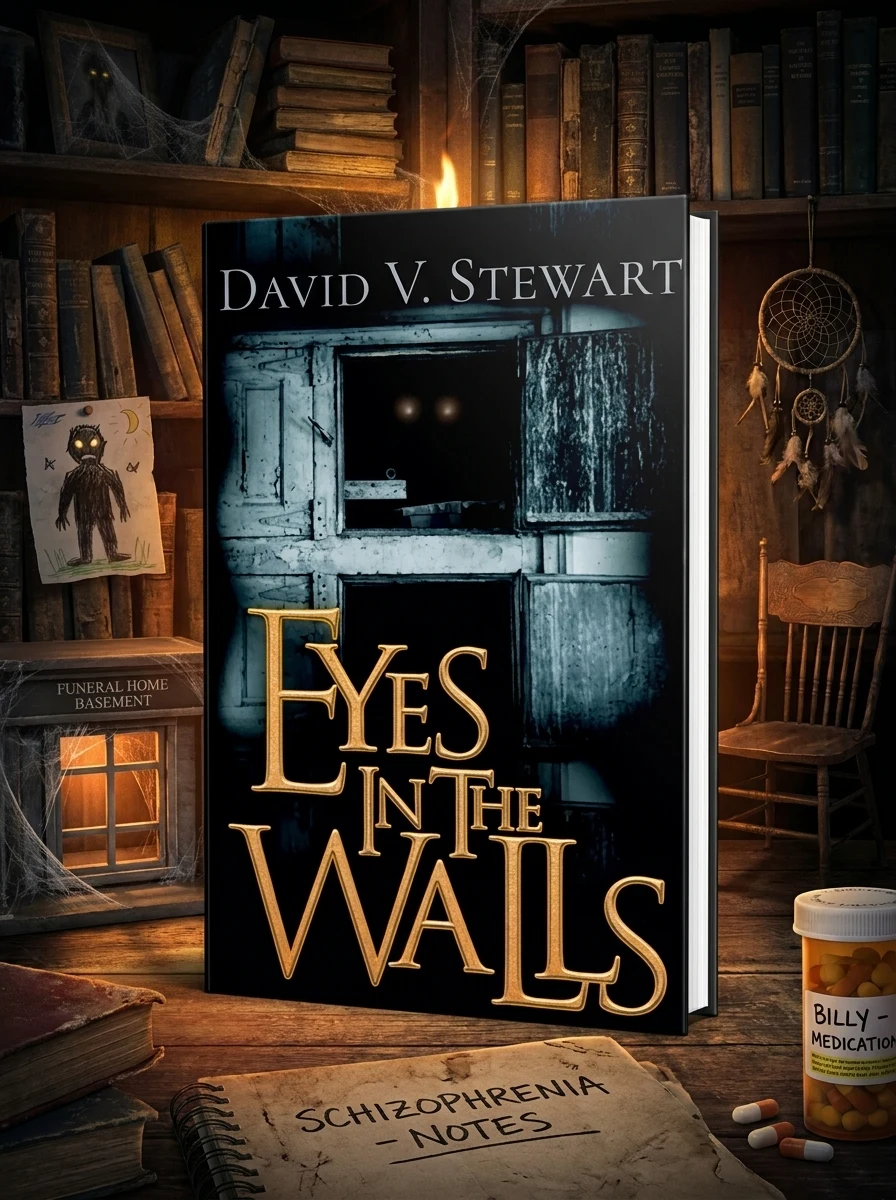
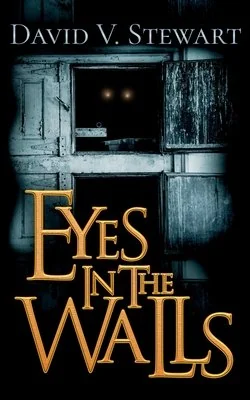
Eyes in the Walls
A boy fights a basement entity that adults dismiss as delusion.
Stewart crafts a psychological horror story where reality blurs for the protagonist. Billy sees a creature in the funeral home basement, but medical professionals label it schizophrenia. The entity attacks through dreams and worsens with medication. Friends validate his experience, forming a small alliance against an invisible enemy. The narrative examines how isolation fuels fear and how belief becomes a weapon against madness.
Published in 2019 by Independently Published, this work sits within the tradition of American horror fiction. It draws on gothic elements of haunted domestic spaces and supernatural entities. The story reflects contemporary anxieties about mental health diagnosis and the validity of children's perceptions in adult-dominated worlds.


📝 Description: Eyes in the Walls
💎 Our verdict on Eyes in the Walls
📖 Why choose it
Why this book is worth reading
Readers drawn to the intersection of psychological terror and supernatural dread will find this book compelling. It offers a visceral exploration of isolation, particularly how childhood vulnerability is exploited by adult disbelief. Those who enjoy stories where reality is questioned and sanity is eroded by an invisible enemy will appreciate the tight focus on Billy’s internal siege. The narrative appeals to fans of gaslighting tropes where the protagonist must rely on a small alliance to survive. It provides a chilling examination of how fear can be weaponized, making it ideal for those seeking intensity over traditional resolution or lighthearted entertainment.
⭐ Reader reviews
Reader rating
Stewart crafts a claustrophobic tale that effectively blurs the line between schizophrenia and genuine supernatural presence. By centering the narrative on a young boy dismissed by medical professionals, the book creates a potent sense of helplessness and urgency. The focus remains tightly on Billy’s psychological siege, making the horror feel intimate and inescapable. The dynamic between Billy and his validating friends adds necessary emotional weight to the struggle against an invisible enemy. While not for those seeking clear resolutions or gentle tones, it succeeds as a grim study of madness and isolation. It is best suited for readers who appreciate dark fantasy elements rooted in psychological realism and the terror of being unheard.