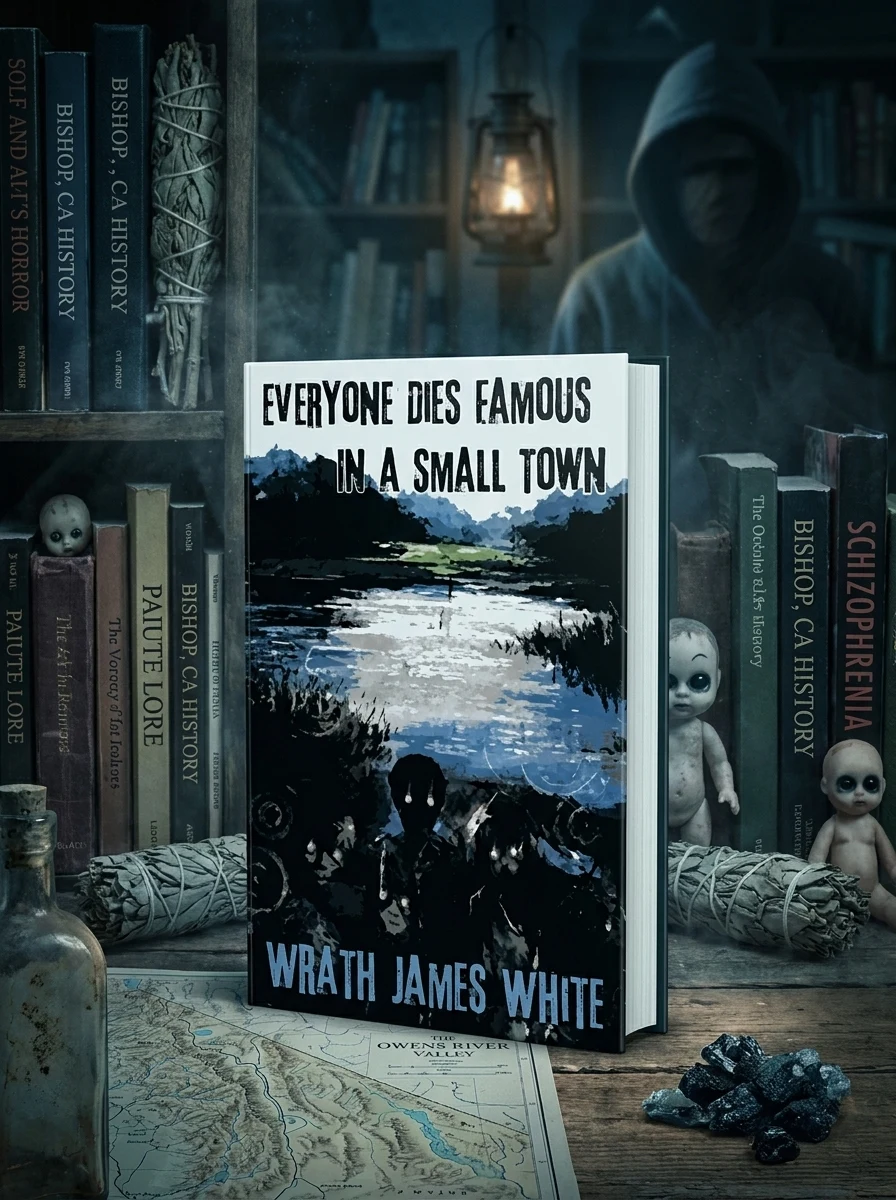
Everyone Dies Famous in a Small Town
A schizophrenic woman faces real Pahoha spirits in Bishop, California.
This narrative focuses on Mika Shaw’s deteriorating mental state in Eastern Sierras. As her friends meet gruesome ends, she questions if her visions are symptoms or prophecies. The story integrates Paiute lore about water-babies that drown the living by impersonating the dead. White uses this folklore to create a sense of inescapable doom. The plot does not rely on police procedurals but on Mika’s isolated perspective. Those who prefer structured plots or clear distinctions between sanity and madness should avoid this title. It remains a tight exploration of fear and perception without offering hope.
The story is set in Bishop, California, within the Eastern Sierras. It incorporates Paiute beliefs about malevolent water spirits called Pahoha. These entities inhabit the Owens River and are described as having pale skin and black eyes. The narrative relies on these specific regional traditions to drive the horror elements.


📝 Description: Everyone Dies Famous in a Small Town
💎 Our verdict on Everyone Dies Famous in a Small Town
📖 Why choose it
Why this book is worth reading
Readers who appreciate the disorienting power of unreliable narrators will find this title compelling. It appeals to those interested in folk horror elements rooted in specific regional mythology rather than traditional mystery plots. The book offers a tight exploration of fear and perception for those willing to navigate Mika Shaw’s fractured existence without seeking comfort or resolution. It is ideal for audiences who enjoy psychological decay and the blurred line between internal delusion and external threat. Those who prefer grounded realism or clear distinctions between sanity and madness should avoid this work. It serves readers who want an inescapable sense of doom driven by isolated perspective rather than structured investigative procedures.
⭐ Reader reviews
Reader rating
White crafts a tense atmosphere of dread by intertwining psychological decay with supernatural horror. The narrative effectively uses Paiute lore to create a sense of inescapable doom, grounding the fear in specific regional mythology. By focusing on Mika’s isolated perspective, the story avoids traditional police procedurals, offering instead a raw look at deteriorating mental states. The text examines the blurred line between internal delusion and external threat with precision. It suits readers who enjoy unreliable narrators and folk horror elements. Those seeking clear resolutions or grounded realism will find it unsuitable. However, for those comfortable with ambiguity and psychological intensity, it delivers a potent, unrelenting experience of fear and perception without offering hope.
📖 Read on the blog
✍️ More books by this author Wrath James White






🏛 Books from this publisher Madness Heart Press




You might also like
See more →

Have a question about this item?
Ask about the edition, condition, delivery or anything else — we reply by email or phone, usually within a day.
