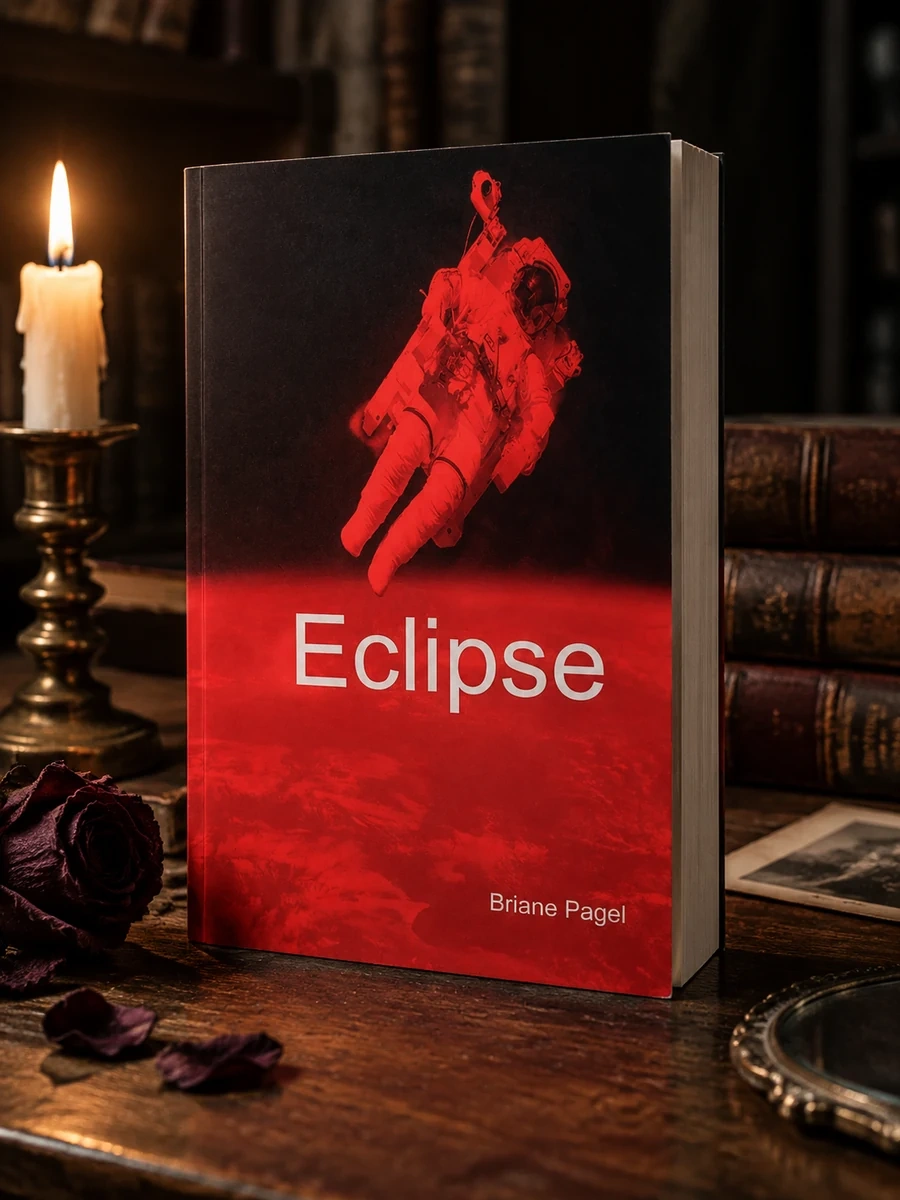
Eclipse
A psychological horror story about an astronaut drifting in space after a mission fails.
The narrative follows Claudius, who drifts through space staring at a tiny rock. He reflects on his childhood and the mission that turned into murder. The text presents multiple versions of events as his mind creates a changing landscape. Pagel uses this structure to blur the line between reality and delusion. The story focuses on psychological tension rather than physical danger. Claudius questions whether he caused the disaster or if something else is wrong. This ambiguity drives the plot forward. The book examines how isolation affects the human psyche. It draws on gothic traditions of internal horror. The ending remains uncertain, leaving Claudius’ fate unresolved. Readers interested in mind-bending narratives will find this engaging. Those who prefer clear moral frameworks may struggle with the ambiguity.
Published in 2009 by Lulu Press, this work sits within contemporary independent horror fiction. It draws on gothic and supernatural traditions while exploring modern anxieties about space exploration and mental health. The book reflects a period where digital publishing allowed niche voices to reach audiences directly.


📝 Description: Eclipse
💎 Our verdict on Eclipse
📖 Why choose it
Why this book is worth reading
Readers who appreciate complex character studies within psychological horror will find this engaging, particularly those drawn to unreliable narrators trapped in isolation. The book offers a slow-burn tension that prioritizes internal monologue over external threats, appealing to fans of mind-bending narratives where reality and delusion blur. It suits those interested in how isolation affects the human psyche and who enjoy ambiguous endings that leave fate unresolved. Those seeking clear moral frameworks or fast-paced action may struggle, but enthusiasts of cosmic horror’s indifference will find the shifting perspectives and personal revelations deeply unsettling and rewarding.
⭐ Reader reviews
Reader rating
Pagel constructs a twisting landscape shaped by Claudius’ mind, challenging readers to discern reality from hallucination as he questions his own sanity. The narrative excels in its examination of the fragility of the human mind through internal monologue rather than physical danger. By presenting multiple versions of events, the text creates profound psychological tension without offering easy answers. This approach suits readers who enjoy complex character studies within horror and appreciate the terror of isolation. While the ambiguity may frustrate those preferring clear resolutions, the work effectively draws on gothic traditions to deliver a personal and unsettling exploration of madness in the void.
📖 Read on the blog
🏛 Books from this publisher Lulu Press





You might also like
See more →



Have a question about this item?
Ask about the edition, condition, delivery or anything else — we reply by email or phone, usually within a day.
