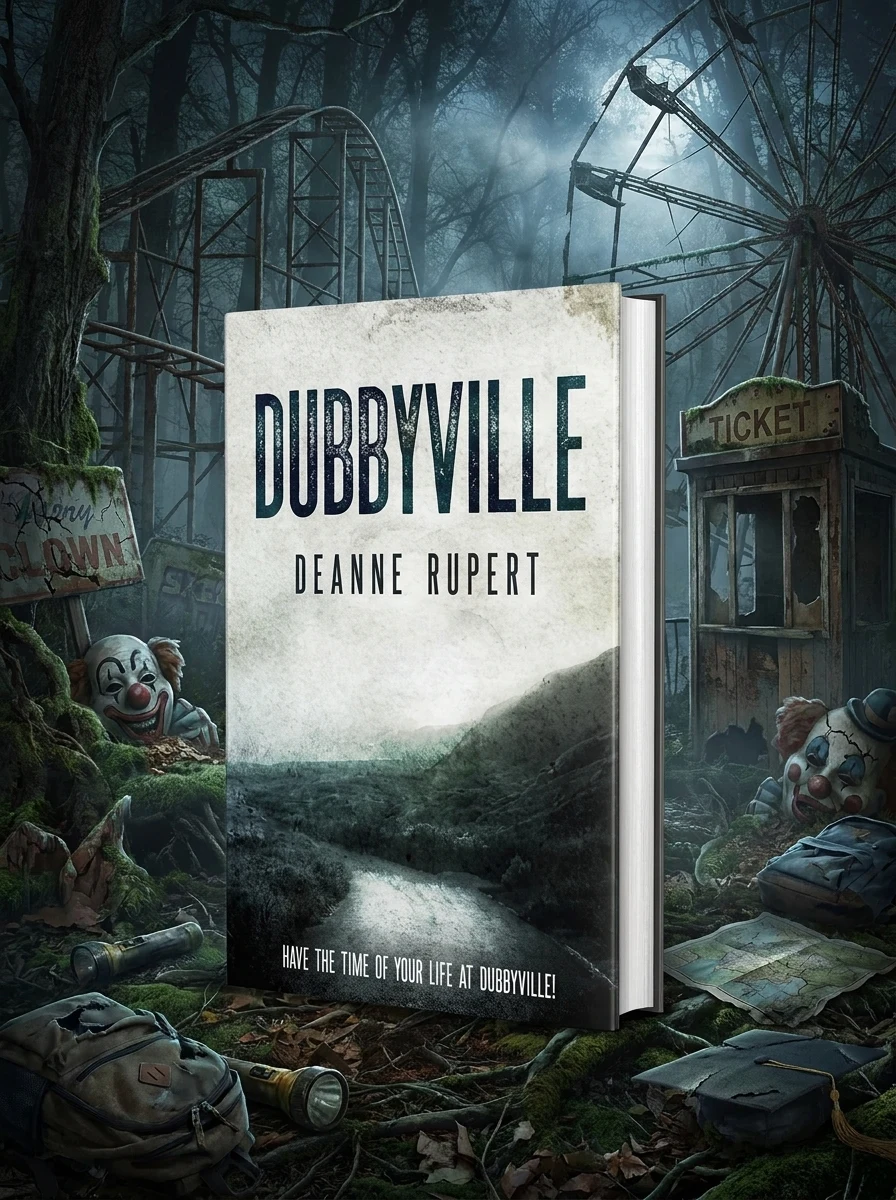
Dubbyville
Four friends confront a haunted amusement park's legacy in western Pennsylvania.
The narrative centers on the 2018 return of Kristen, Jenny, Dana, and Emmy to the site of Dubbyville. They aim for closure but face a hostile force that traps them in a life-or-death situation. The plot relies on their deteriorating trust as they attempt to escape the woods. Rupert structures the tension around their internal conflicts rather than external action sequences alone. The story highlights how shared history can become a liability when survival is at stake. The characters must decide if their bond is strong enough to withstand the terror of the land that rejected Charles Dubby decades ago.
The story bridges the gap between the 1971 opening and 1986 closure of a Pennsylvania amusement park, contrasting that era with the 2018 return of the protagonists. It engages with themes of lost Americana and the lingering impact of closed recreational spaces on personal relationships.


📝 Description: Dubbyville
💎 Our verdict on Dubbyville
📖 Why choose it
Why this book is worth reading
Readers who appreciate psychological horror over visceral gore will find this narrative compelling. The book offers a tense examination of group dynamics under extreme duress, making it ideal for those interested in how shared history can become a liability during survival scenarios. It appeals to fans of isolated setting tales where past sins threaten present lives. Those who enjoy narratives focusing on the corruption of nostalgic ideals and the fracture of friendship under pressure will gain satisfaction from its bleak tone. It is best suited for audiences seeking stories that prioritize internal conflict and psychological tension over traditional monster hunts or clear moral resolutions.
⭐ Reader reviews
Reader rating
Deanne Rupert delivers a focused supernatural tale rooted in the specific timeline of an amusement park’s operation and its modern aftermath. The narrative excels in building tension through the deteriorating trust among four friends rather than relying on external action sequences alone. By highlighting how shared history becomes a liability, the story effectively examines the limits of friendship when survival is at stake. The tone remains appropriately bleak, rejecting lighthearted summer read conventions for a more serious exploration of trauma. This approach suits readers who enjoy narratives about group dynamics under duress and the corruption of nostalgic ideals, offering a compelling look at how an enemy that refuses to play fair drives the plot toward a conclusion prioritizing psychological fracture.
📖 Read on the blog
🏛 Books from this publisher Createspace Independent Publishing Platform




You might also like
See more →




Have a question about this item?
Ask about the edition, condition, delivery or anything else — we reply by email or phone, usually within a day.
