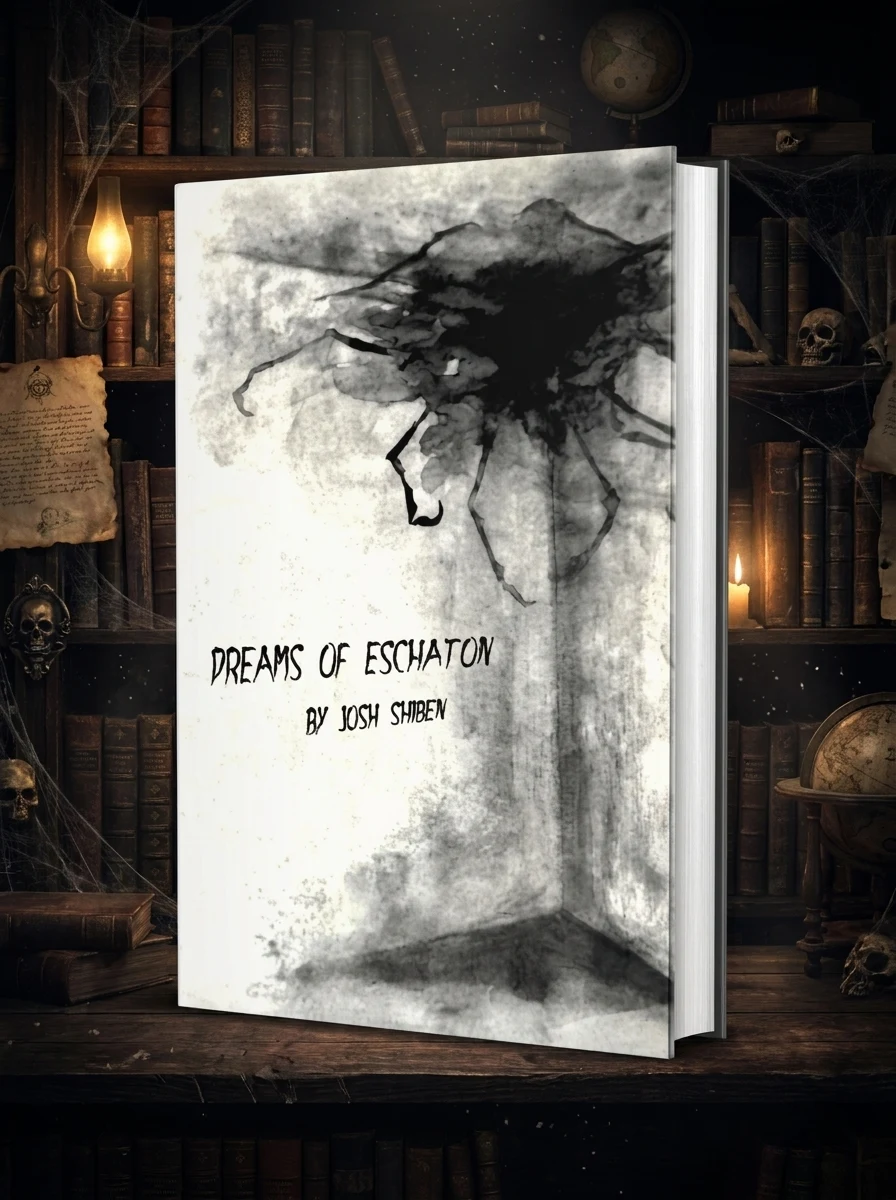
Dreams of Eschaton
A detective investigates a nightmare predicting the apocalypse and an ancient conspiracy.
The narrative follows Detective David Burfict as he grapples with a prophetic nightmare that signals the end of humanity. Humbel uses this premise to examine the intersection of personal sanity and global catastrophe. The story does not rely on external action but rather on the psychological unraveling of the protagonist. It questions whether human agency can stop predetermined destruction or if individuals are merely pawns in a larger design. The tone remains consistently dark, focusing on despair and madness as central motifs.
This work sits within the contemporary independent publishing landscape of horror fiction. It engages with gothic traditions of psychological terror and supernatural dread. The narrative reflects modern anxieties about fate and madness through the lens of a detective thriller.


📝 Description: Dreams of Eschaton
💎 Our verdict on Dreams of Eschaton
📖 Why choose it
Why this book is worth reading
Readers who appreciate character-driven horror mysteries will find value in this exploration of psychological unraveling. The narrative offers a deep dive into the intersection of personal sanity and global catastrophe, appealing to those interested in the impact of prophetic dreams on a detective figure. It is ideal for audiences seeking narratives about madness and ancient conspiracies where the threat is both internal and external. Those who enjoy dark tones focusing on despair rather than straightforward procedural police dramas will gain insight into whether human agency can halt predetermined destruction or if individuals are merely pawns in a larger design.
⭐ Reader reviews
Reader rating
Humbel structures this narrative around psychological tension and existential dread, effectively drawing upon horror traditions to explore themes of death and madness. By focusing on the protagonist's internal state rather than external action sequences, the book creates a consistent tone of despair suitable for its apocalyptic setting. It suits readers interested in character-driven mysteries where the threat is both internal and external. The work avoids historical specificity to maintain focus on the psychological impact of prophetic dreams. This approach aligns with gothic fiction traditions that emphasize atmosphere over exposition, making it a compelling choice for those who enjoy dark, heavy narratives without easy answers.