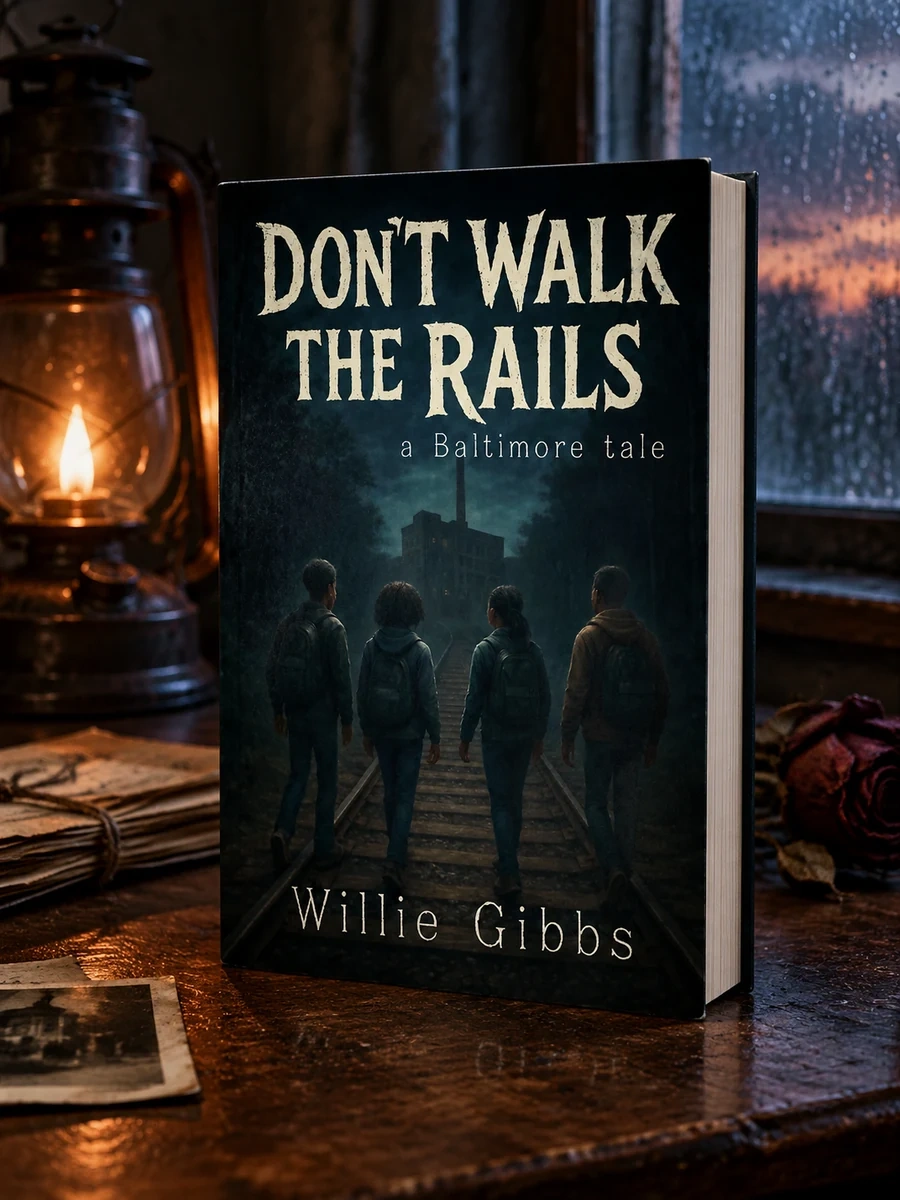
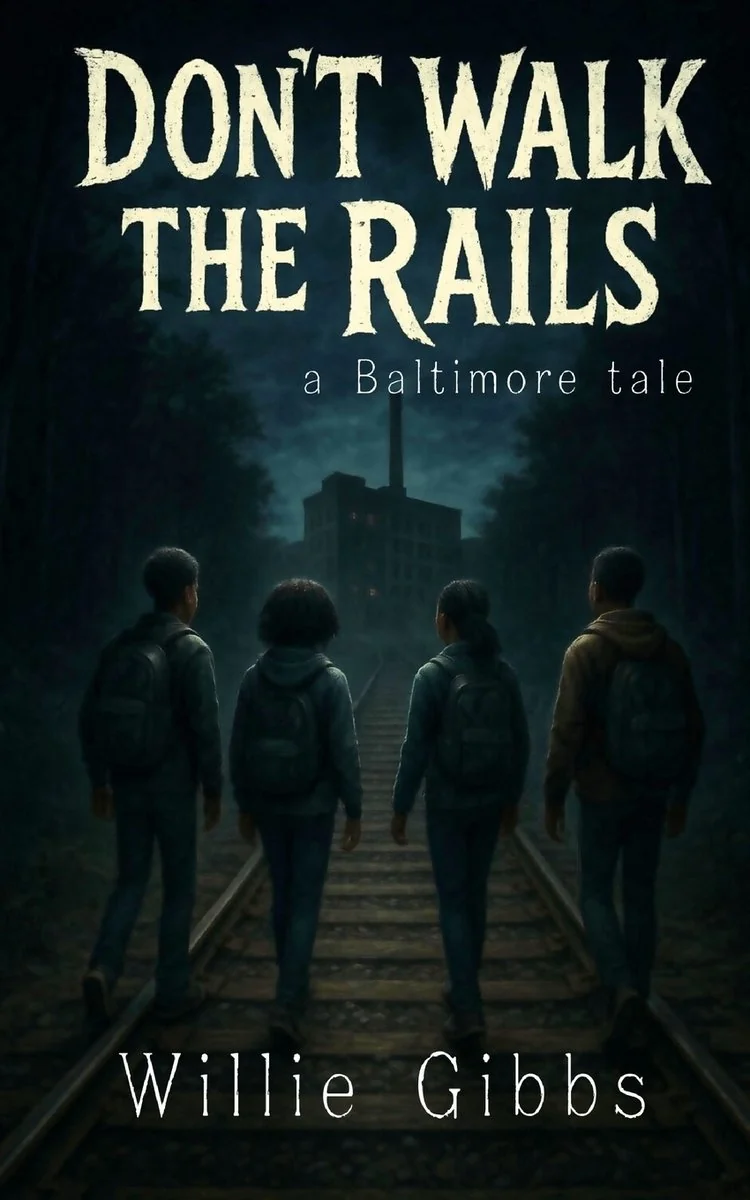
Don't Walk the Rails
A group challenges an urban legend and faces a terrifying reality on Baltimore tracks.
Gibbs focuses on the psychological shift from arrogance to fear as the protagonists realize their dare is real. The abandoned ACME Mattress Factory serves as the primary setting for this descent into horror. The author avoids traditional jump scares in favor of a creeping sense of being observed. This approach aligns with classic supernatural fiction where the threat is unseen until it is too late. The story relies on the atmosphere of the rusted steel and fading memories of the location to drive the plot forward.
The book sits within the tradition of Baltimore City urban legends, specifically those involving train tracks and the Bunny Man. Published in 2025 by Gibbs Publishing Conglomerate, it reflects contemporary interest in local folklore and abandoned industrial sites as sources of horror.


📝 Description: Don't Walk the Rails
💎 Our verdict on Don't Walk the Rails
📖 Why choose it
Why this book is worth reading
Readers who appreciate the slow-burn tension of psychological horror and urban folklore will find this narrative compelling. The book offers a visceral exploration of how arrogance dissolves into terror when facing the unseen. It appeals to those who enjoy stories where youthful skepticism is shattered by supernatural reality, providing a chilling look at isolation and impending doom without relying on cheap jump scares or resolved endings.
⭐ Reader reviews
Reader rating
Willie Gibbs crafts a deeply unsettling atmosphere in Baltimore's shadowy outskirts, effectively utilizing the decaying ACME Mattress Factory as a vessel for dread. The narrative excels in portraying the psychological shift from teenage arrogance to pure fear, relying on the rusted steel and fading memories of the location to drive the plot. By avoiding traditional jump scares, Gibbs creates a creeping sense of being observed that lingers long after reading. This approach suits fans of classic supernatural fiction who prefer tension built through isolation and unseen threats rather than explicit violence or quick resolutions.
You might also like
See more →







Have a question about this item?
Ask about the edition, condition, delivery or anything else — we reply by email or phone, usually within a day.
