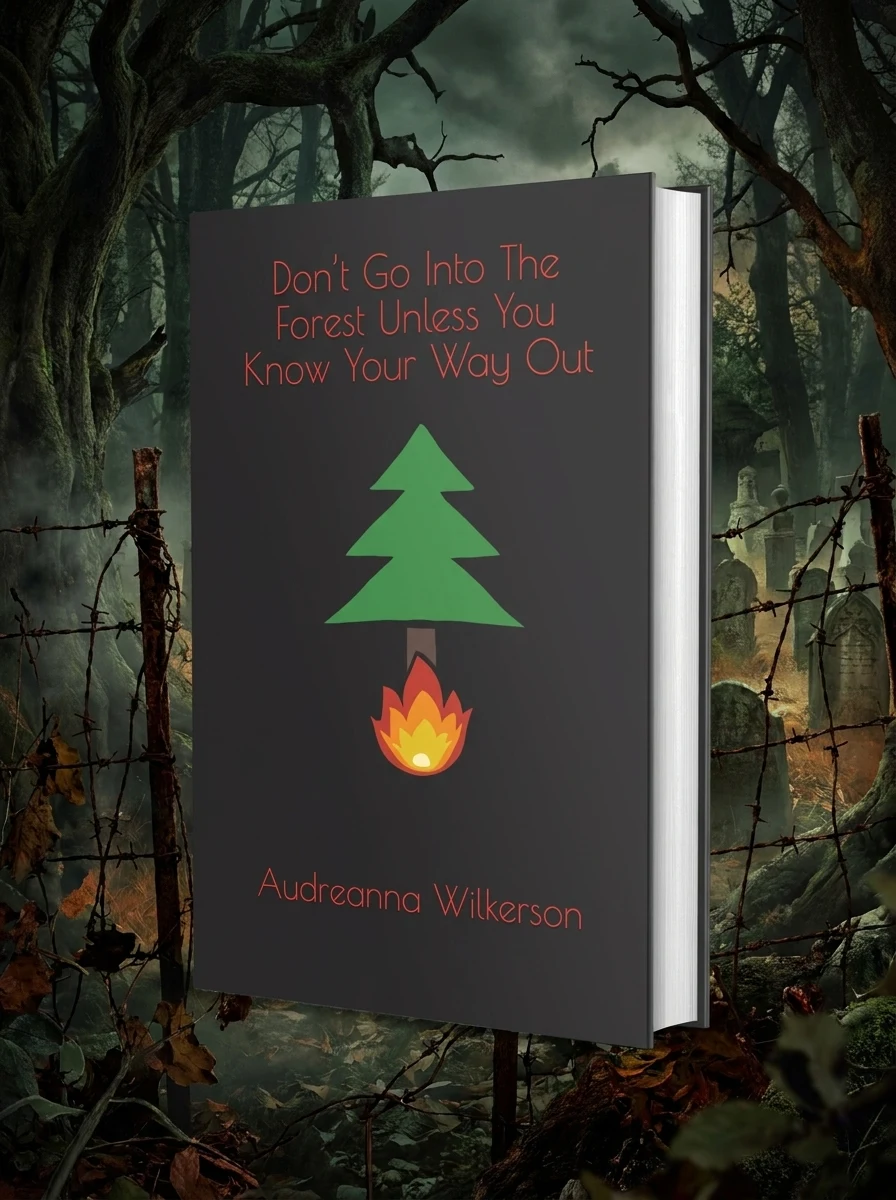
Don't Go Into the Forest Unless You Know Your Way Out
A first-person account of guilt and isolation at a haunted fence line.
A solitary person stands at a broken wire fence bordering a forest and a rumored burial site. This spot relates to the missing status of the speaker's relatives and friends. The writing looks at the guilt assigned to the speaker for these losses. It explores numbness and the wish to follow the dead. There is no neat ending; instead, it concentrates on the main character's mind. Wilkerson uses this place to show how pain keeps people stuck in regret loops. The book centers on this still moment, letting inner struggle beat outside action. It attracts those interested in dark emotions and the paranormal.
Published independently in 2018, this work fits within the contemporary landscape of self-published horror fiction. It draws on American traditions of rural gothic and supernatural storytelling. The setting suggests a timeless, isolated environment common in genre literature that explores fear and loss.


📝 Description: Don't Go Into the Forest Unless You Know Your Way Out
💎 Our verdict on Don't Go Into the Forest Unless You Know Your Way Out
📖 Why choose it
Why this book is worth reading
This book is essential for readers who prefer mood-driven fear and thick, thoughtful prose over plot-heavy suspense. It appeals to those interested in dark emotions, the paranormal, and the psychological weight of loss. The narrative offers a unique exploration of regret loops and emotional deadness, providing a tight, immersive experience for fans of mind-bending horror. Those seeking simple fixes or happy endings will find it lacking, but enthusiasts of silent sorrow and cultural symbols like barriers and tombs will appreciate its serious tone. It is ideal for individuals who want to delve into the burden of living when others have died, offering a calm yet urgent voice that lingers long after reading.
⭐ Reader reviews
Reader rating
Wilkerson delivers a chilling account focused on loneliness and remorse, utilizing a first-person perspective to map deep emotional deadness. The narrative centers on a solitary figure at a broken fence, using this static moment to highlight inner struggle over external events. By avoiding neat endings, the text concentrates on the main character's mind, creating a tight feeling of isolation. Fans of psychological horror will connect with the exploration of guilt and numbness. However, readers seeking fun ghost stories may dislike the serious tone. The work successfully uses classic spooky symbols to generate fear, making it a strong choice for those who appreciate thick prose and the long-lasting pain of loss rather than dramatic plot twists.
📖 Read on the blog
🏛 Books from this publisher Independently Published








You might also like
See more →

Have a question about this item?
Ask about the edition, condition, delivery or anything else — we reply by email or phone, usually within a day.
