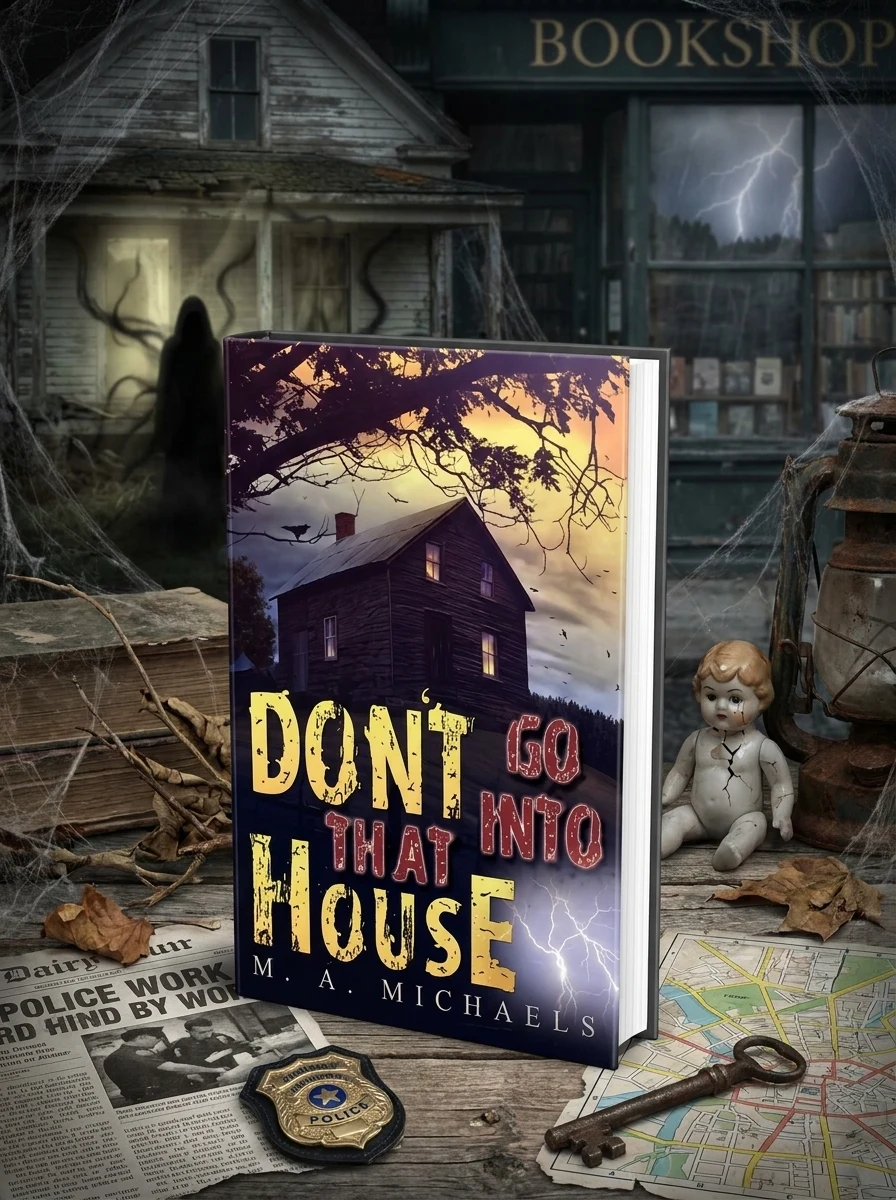
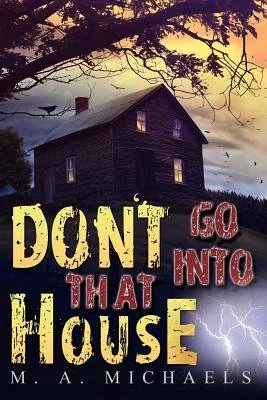
Don't go into that House!
A detective moves to a haunted farmhouse with his nieces, facing an ancient evil.
M A Michaels constructs a story where personal loss collides with supernatural horror. Detective Glass attempts to heal from urban stress and family tragedy by relocating to the countryside. His plan is disrupted when he discovers the old farmhouse is not empty. The Watcher, an entity that has waited nineteen years for its moment, begins to act. The narrative follows Glass as he realizes his new home is a trap. He must protect his nieces while facing a darkness that has been dormant for nearly two decades. The book examines how grief can blind individuals to immediate danger. It also explores the burden of responsibility when one becomes the sole guardian against evil. The tension builds through the contrast between Glass’s desire for peace and the violent reality of the breach.
This work sits within the American horror tradition, specifically focusing on rural gothic elements. It draws on the period of late twentieth-century domestic suspense, where the home becomes a site of terror rather than safety. The narrative reflects a time when urban professionals sought escape in the countryside, only to find that past sins follow them.


📝 Description: Don't go into that House!
💎 Our verdict on Don't go into that House!
📖 Why choose it
Why this book is worth reading
Readers who enjoy the intersection of personal grief and supernatural suspense will find this narrative compelling. It appeals to those interested in the psychological weight of guardianship, exploring how a detective’s burden extends beyond criminal cases into familial protection. The book offers a focused tension between urban decay and rural isolation, ideal for fans of domestic drama mixed with horror. Those seeking immediate threats within confined spaces rather than complex political intrigue will appreciate the concentrated focus on survival against an ancient entity.
⭐ Reader reviews
Reader rating
M A Michaels effectively constructs a tense atmosphere by contrasting Detective Glass’s desire for peace with the violent reality of supernatural intrusion. The narrative excels in examining how grief can blind individuals to immediate danger, making the horror feel personal and grounded. The story focuses heavily on the burden of responsibility when one becomes the sole guardian against evil. This approach suits readers who prefer character-driven suspense over expansive world-building. The tension builds steadily through the contrast between the protagonist's past urban life and his current rural isolation. It is a solid entry for fans of haunted house tales that prioritize psychological stakes.
You might also like
See more →







Have a question about this item?
Ask about the edition, condition, delivery or anything else — we reply by email or phone, usually within a day.
