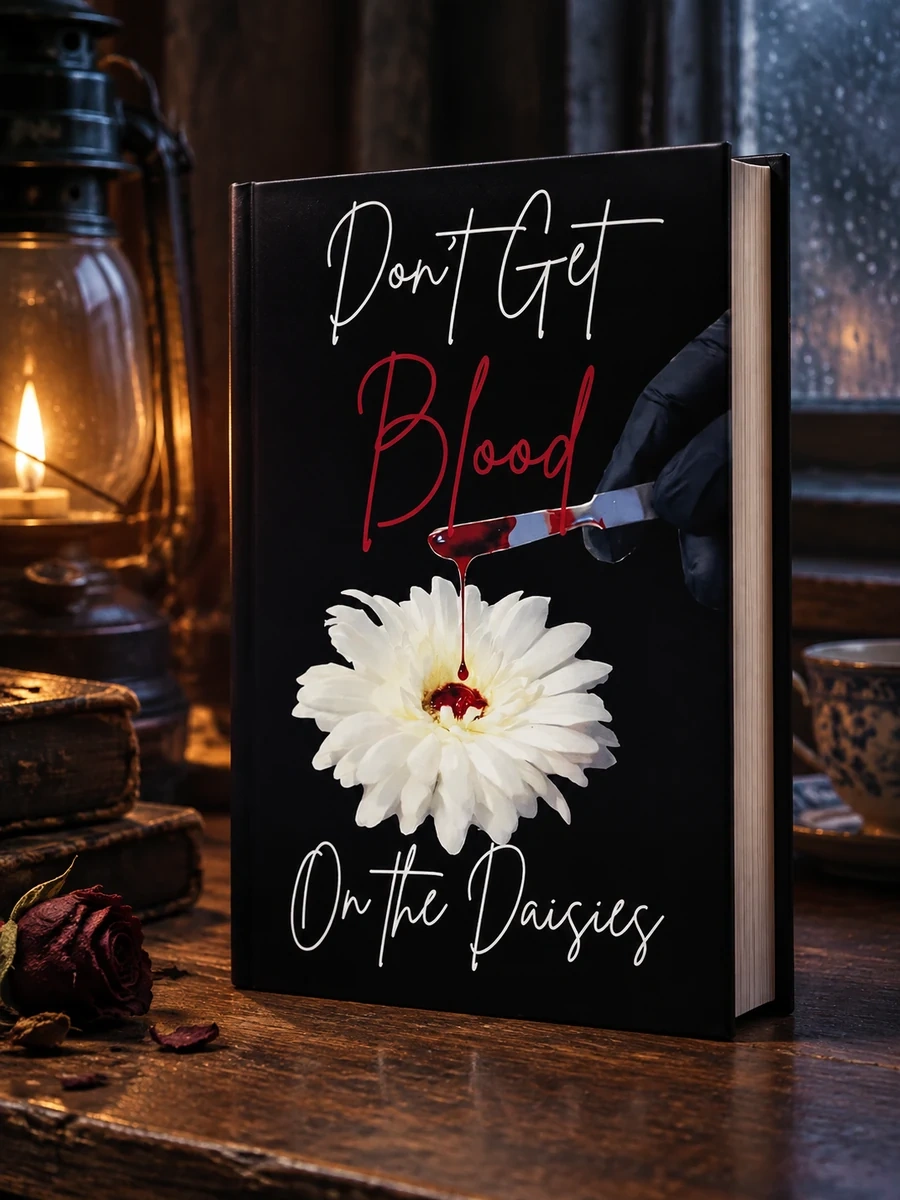

Don't Get Blood on the Daisies
A dual narrative exploring trauma, control, and psychological abuse.
Stephanie’s journey toward reclaiming her identity intersects with Michael’s descent into obsession. His grief over his father’s death warps his view of women and his mother. This distortion manifests as a need for power rather than love. Their online connection starts as hope but turns into a trap of manipulation. The story tracks how private resentment becomes public abuse. It shows the fragility of autonomy when faced with calculated domination. The consequences of their choices are severe and lasting. Nelson avoids easy answers, focusing instead on the complexity of damaged minds.
Published in 2026 by Jennifer Nelson, this work sits within contemporary literary fiction. It addresses modern themes of online connection and digital intimacy. The narrative reflects current understandings of psychological trauma and its long-term effects on identity and relationships.


📝 Description: Don't Get Blood on the Daisies
💎 Our verdict on Don't Get Blood on the Daisies
📖 Why choose it
Why this book is worth reading
Readers interested in literary fiction that meticulously dissects the psychological aftermath of abuse will find profound value in this work. It offers a tense, unflinching exploration of vulnerability, manipulation, and the fragility of human autonomy when faced with calculated domination. Those who appreciate deep dives into internal landscapes rather than fast-paced external action will gain insight into how private resentment festers and transforms into public abuse. The novel deliberately avoids easy answers, presenting instead a complex look at damaged minds, unresolved grief, and the corrosive effects of trauma. It is best suited for readers who are willing to navigate unsettling emotional terrain and examine the dark intersections of control, attention, and power.
⭐ Reader reviews
Reader rating
Jennifer Nelson’s novel presents a gripping dual narrative that tracks Stephanie’s journey toward reclaiming her identity alongside Michael’s descent into obsession and control. The book excels at blurring the line between attention and power, demonstrating how silence and eroded trust can lead to irreversible consequences. By focusing heavily on the internal landscapes of its characters, the text creates an atmosphere of pervasive domestic dread. It avoids easy resolutions, making it an intellectually rewarding read for fans of character-driven psychological horror and deep domestic suspense. However, readers seeking lighthearted romance, straightforward plots, or traditional supernatural scares should look elsewhere, as this work is firmly anchored in the grim reality of human cruelty.
You might also like
See more →







Have a question about this item?
Ask about the edition, condition, delivery or anything else — we reply by email or phone, usually within a day.
