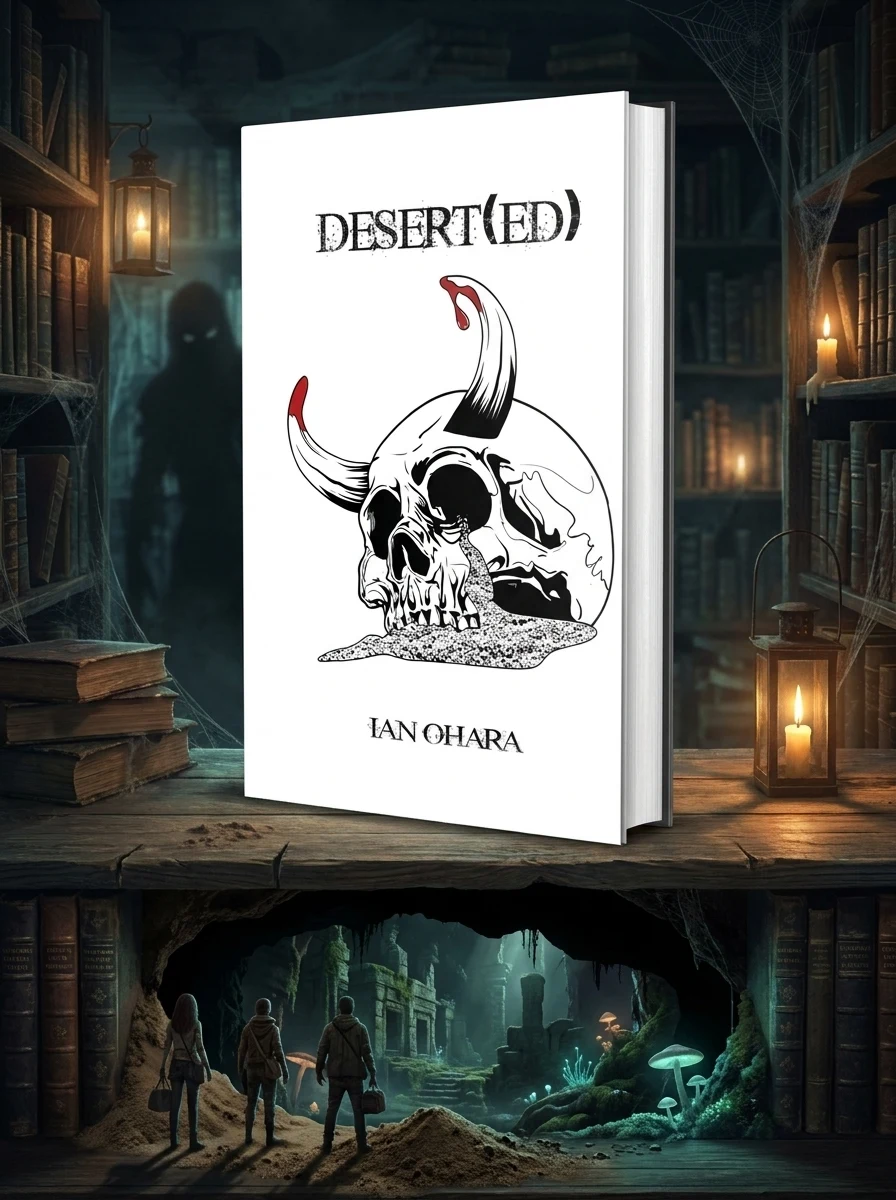

Desert(ed)
Three last survivors descend into an abandoned city to find food.
The narrative centers on three individuals who are among the final remnants of humanity. Their journey begins with a blind plunge into a dark hole, driven by the urgent need for sustenance. They have nothing left to lose, which pushes them toward this dangerous path. Upon reaching their destination, they discover a city that has been forgotten by time. The setting is characterized by its abandonment and the presence of lurking dangers in the shadows. O'Hara uses this confined space to heighten the sense of vulnerability. The characters must deal with the immediate physical threat of hunger while avoiding whatever hides in the dark. The story does not offer easy escapes or clear solutions. It focuses on the raw instinct to survive in a hostile, underground environment. The tone is bleak and tense, reflecting the desperation of the protagonists.
This 2018 publication by Ian O'Hara sits within the tradition of American horror fiction. It draws on post-apocalyptic tropes where society has collapsed. The story reflects contemporary anxieties about isolation and resource scarcity in a dying world.


📝 Description: Desert(ed)
💎 Our verdict on Desert(ed)
📖 Why choose it
Why this book is worth reading
Readers who thrive on intense, atmospheric tension and bleak survival scenarios will find this book compelling. It appeals to those interested in the psychological unraveling of characters under extreme duress rather than extensive world-building. The narrative offers a raw examination of human instinct when society vanishes, focusing on the immediate physical threat of starvation against an unseen predator. Those who prefer claustrophobic settings and high stakes over hopeful resolutions will appreciate the relentless pace. It is ideal for fans of horror that prioritizes mood and vulnerability, offering a grim but engaging look at the last remnants of humanity fighting for sustenance in a forgotten underground city.
⭐ Reader reviews
Reader rating
Ian O'Hara crafts a tightly wound narrative that excels in building claustrophobic dread through its confined subterranean setting. The book succeeds by stripping away exposition, forcing readers to experience the protagonists' desperation alongside them. The tone is consistently bleak and tense, effectively mirroring the characters' vulnerability as they navigate a hostile, forgotten city. This approach suits readers who enjoy psychological horror and survival tales where trust is scarce and danger lurks in every shadow. It avoids easy escapes or clear solutions, maintaining a heavy atmosphere of isolation. While it lacks extensive background details, the focus on raw instinct and immediate threat creates a gripping, immersive experience for those willing to endure its grim portrayal of human fragility.
You might also like
See more →






Have a question about this item?
Ask about the edition, condition, delivery or anything else — we reply by email or phone, usually within a day.
