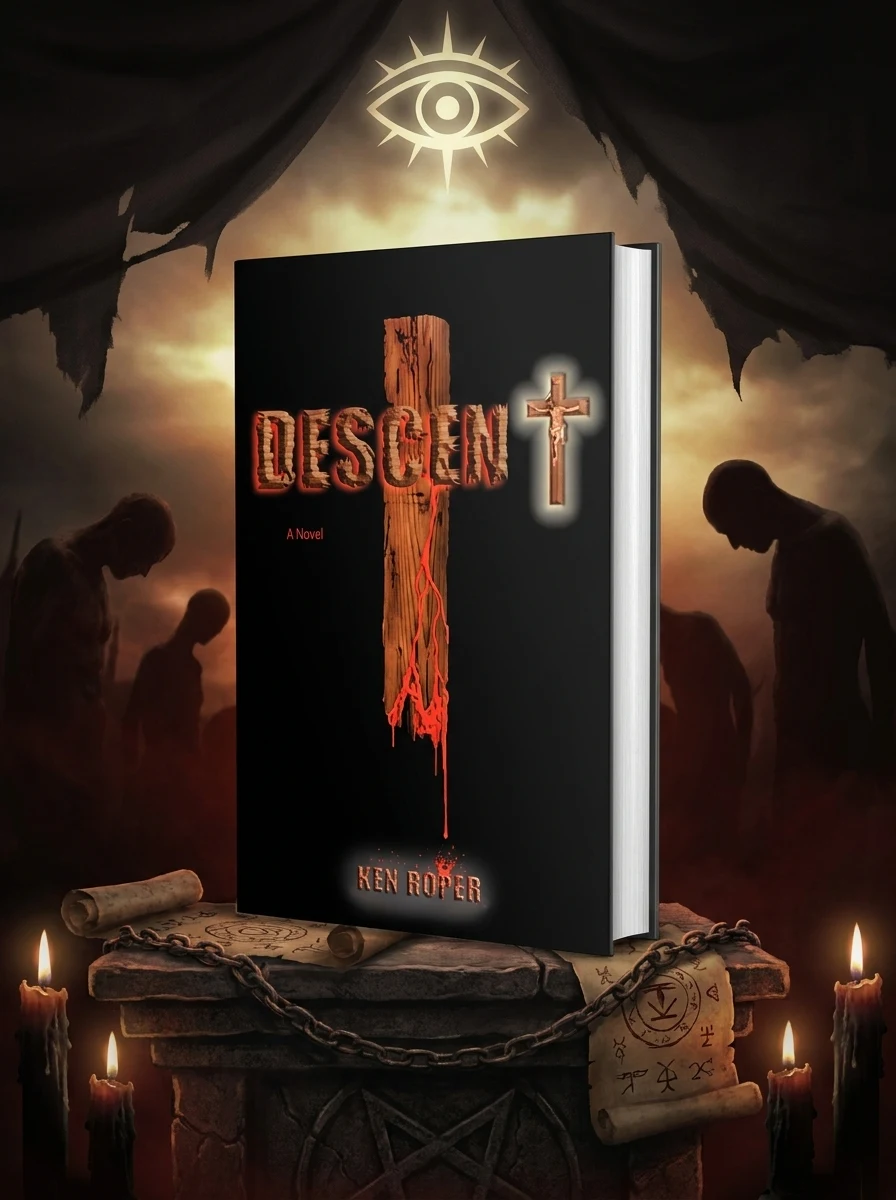
Descent
A theological horror monologue questioning divine justice and the nature of hell.
Roper’s Descent functions as a philosophical treatise wrapped in horror fiction. The narrator confronts the silence of the heavens, demanding to know if the Creator sees the horrors of the unholy realm. This inquiry extends to the fairness of eternal punishment. The text questions whether every soul suffers the same ultimate fate regardless of their specific sins. It challenges the reader to consider the spiritual barometer that judges the adulterer, murderer, rapist, and idolater alike. The work does not offer comfort or redemption. Instead, it presents a stark view of damnation where the narrator wonders how God can call Himself just while overseeing such terror. This perspective aligns with gothic literature’s focus on internal dread and existential crisis rather than external threats.
Published in 2008 by iUniverse, this work sits within the tradition of American gothic fiction. It engages with long-standing debates about the nature of God and the fairness of hell. The text reflects a period where independent publishers often released niche theological horror exploring the darker aspects of faith and judgment.


📝 Description: Descent
💎 Our verdict on Descent
📖 Why choose it
Why this book is worth reading
Readers drawn to the intersection of theology and horror will find this text compelling. It offers a stark, unflinching meditation on divine justice without providing comfort or redemption. Those who enjoy psychological horror that prioritizes intellectual engagement over visceral shocks will appreciate the focus on existential doubt. The book suits individuals interested in the mechanics of eternal punishment and the spiritual barometer of judgment. It is ideal for those willing to confront challenging questions about the nature of hell and the fairness of the Creator’s gaze, rather than seeking traditional narrative resolutions or monster-driven plots.
⭐ Reader reviews
Reader rating
Roper constructs a chilling atmosphere rooted in profound doubt rather than gore. The work excels in its rhetorical approach, forcing readers to engage with the mechanics of divine mercy. It stands as a powerful meditation on the anguish of the damned and the silence of the heavens. While it lacks plot progression, it succeeds in exploring the spiritual equality of sinners through intense theological inquiry. This book best suits fans of philosophical horror who appreciate gothic traditions of internal conflict. It challenges the reader to consider the measuring stick used by the Creator, offering a stark view of damnation that lingers long after the final thought.
📖 Read on the blog
🏛 Books from this publisher iUniverse





You might also like
See more →




Have a question about this item?
Ask about the edition, condition, delivery or anything else — we reply by email or phone, usually within a day.
