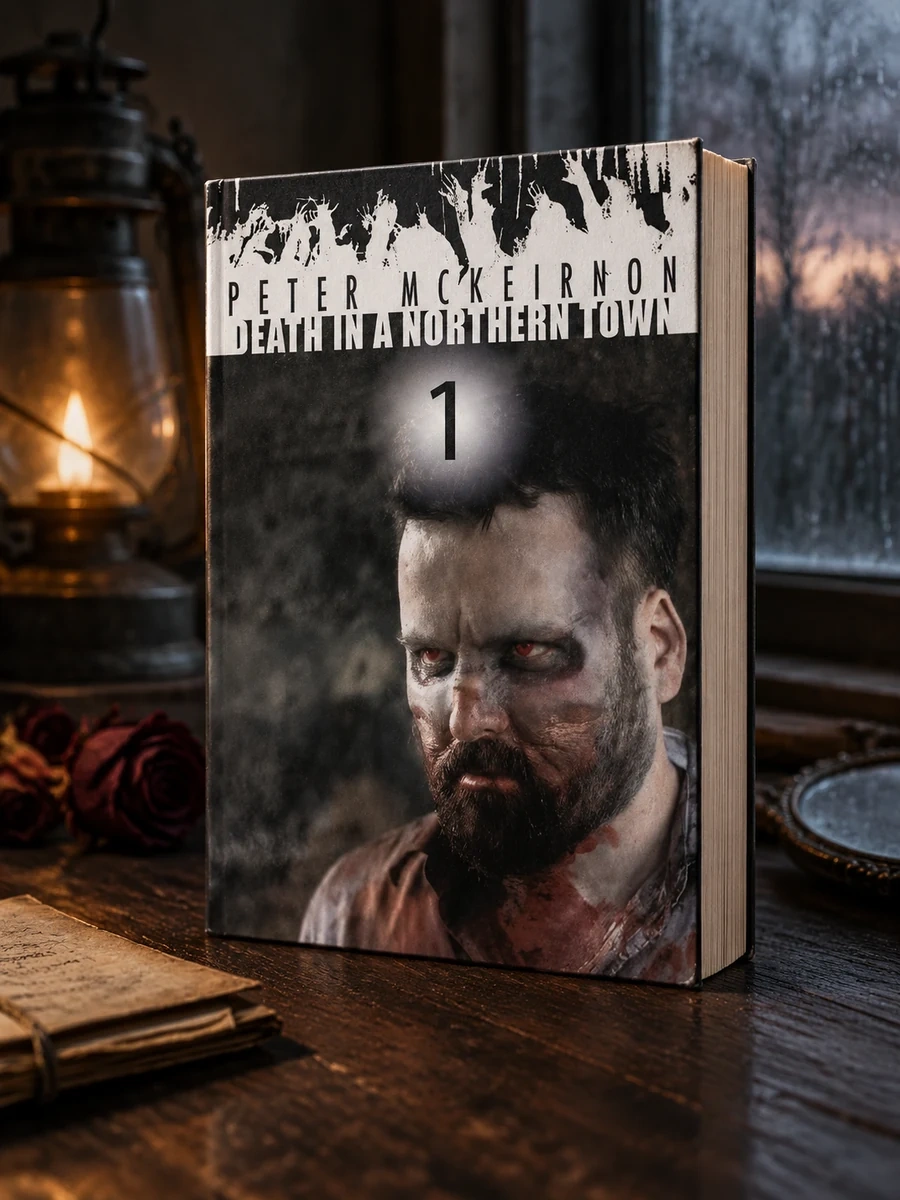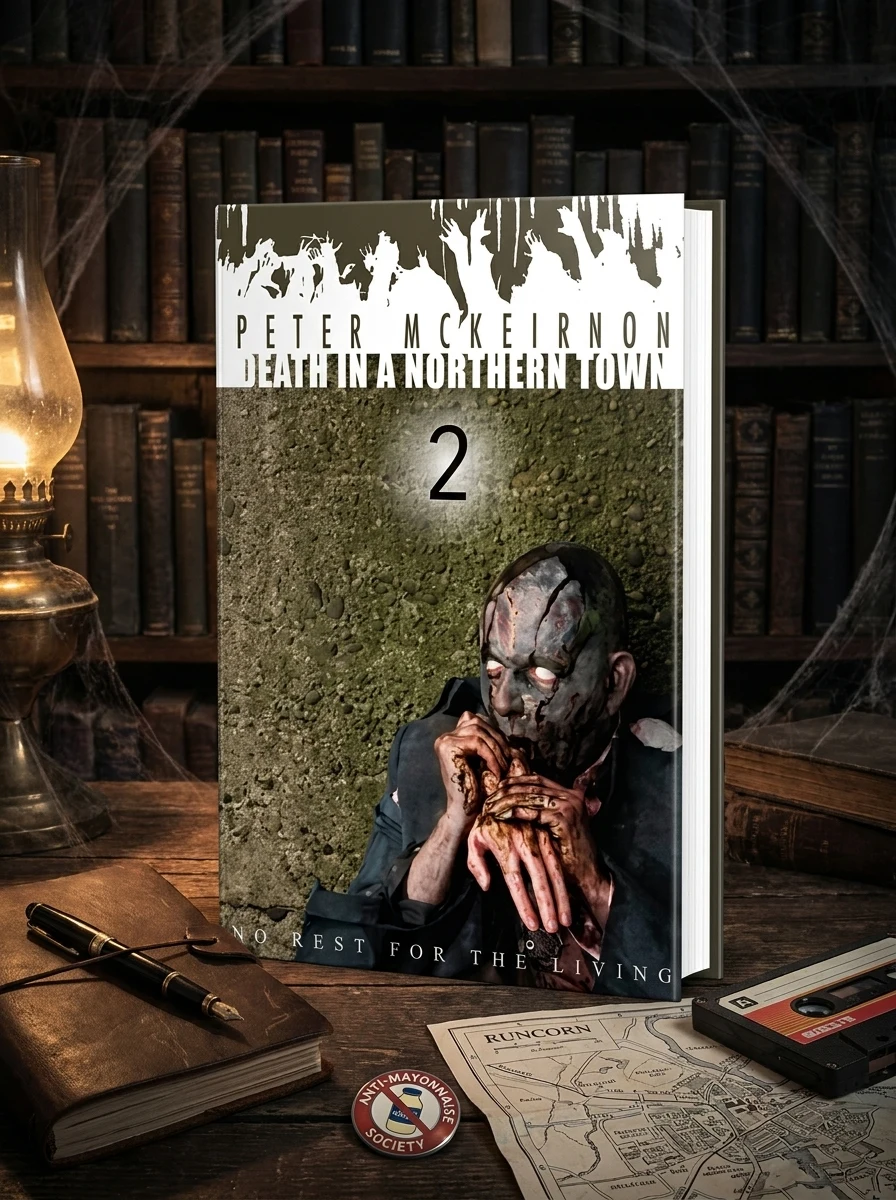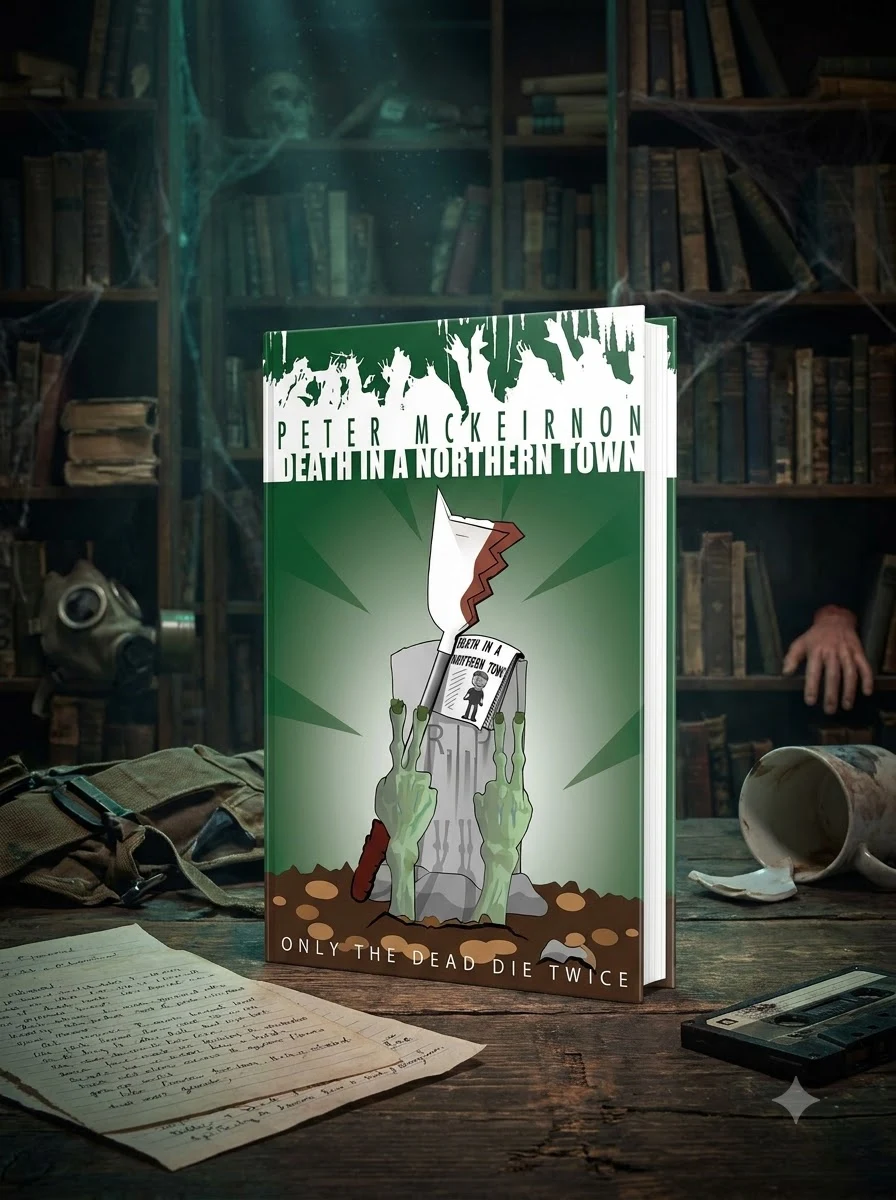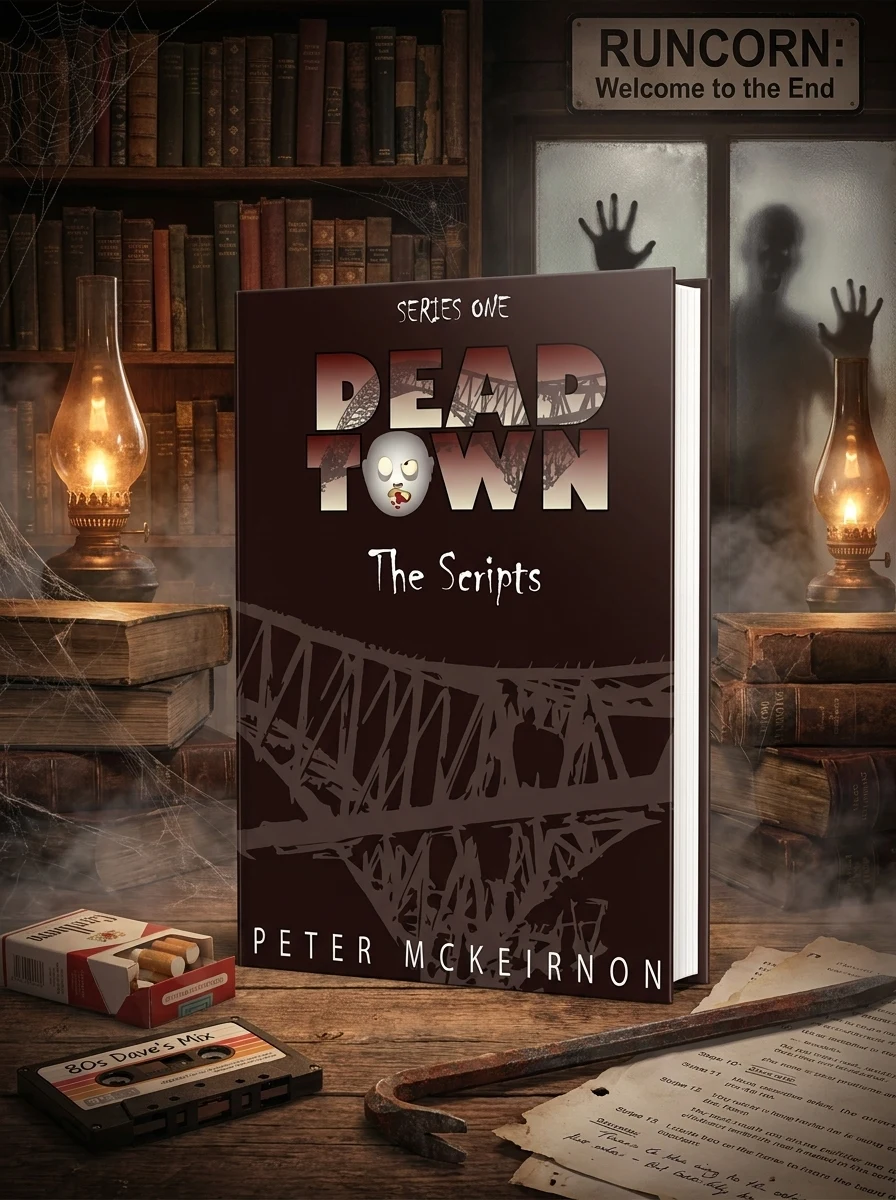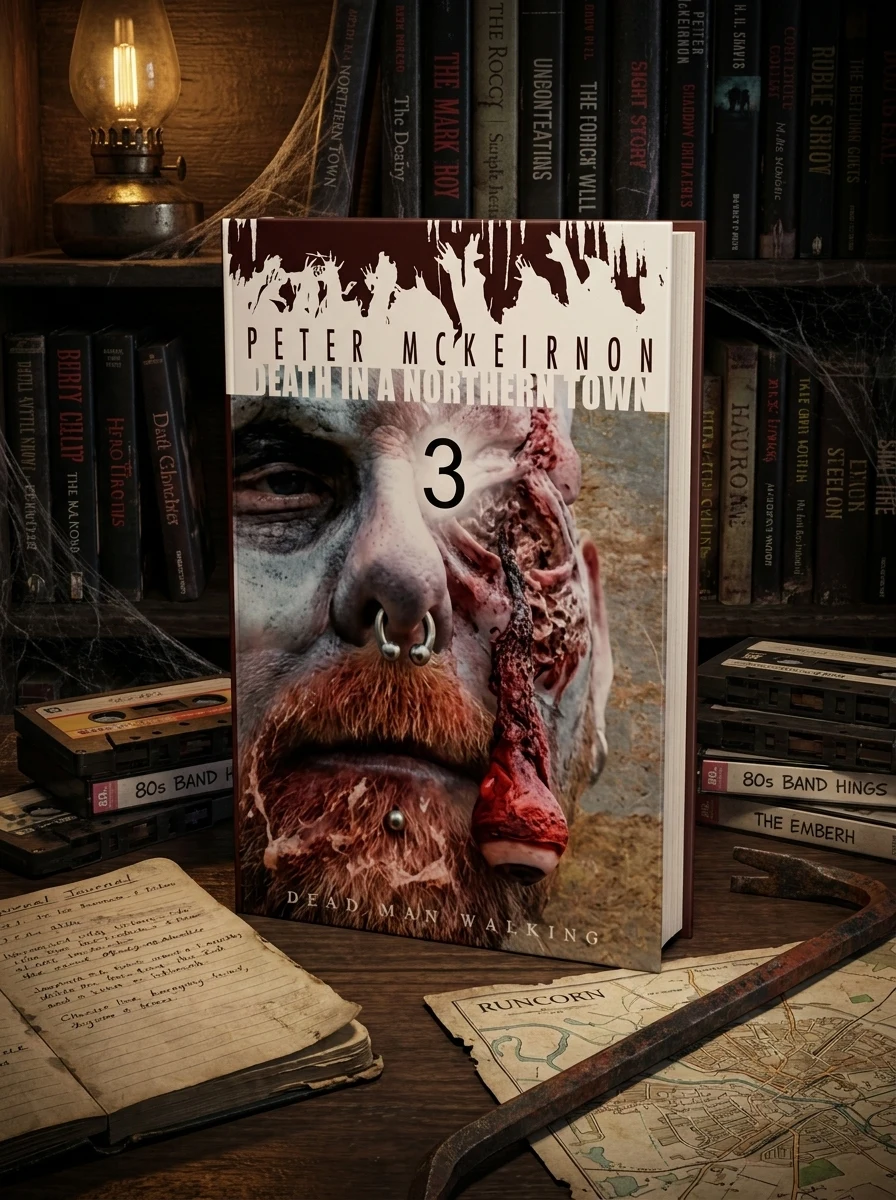
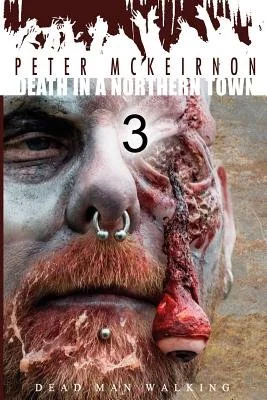
Death in a Northern Town 3: Dead Man Walking
A journal-style comedy horror novel set in zombie-infested Runcorn
John Diant documents his struggle to survive the apocalypse in Runcorn. His missing daughter and chaotic companions define his experience. The narrative relies on his voice to recount events. Allies like Dave provide comic relief amidst the dread. The brother’s exaggerated toughness contrasts with the grim reality. McKeirnon uses this format to ground the absurdity of the situation. The story focuses on daily survival rather than grand heroics. Readers encounter a world where humor is a coping mechanism. The tone remains consistent throughout the journal entries.
The book sits within the British comedy horror tradition, specifically drawing on northern English cultural references. It utilizes the setting of Runcorn and incorporates eighty-eighties music nostalgia as a key element of character identity and local flavor.


📝 Description: Death in a Northern Town 3: Dead Man Walking
💎 Our verdict on Death in a Northern Town 3: Dead Man Walking
📖 Why choose it
Why this book is worth reading
Readers who enjoy dark comedy mixed with supernatural horror elements will find this book engaging. It appeals to those interested in character-driven narratives set against apocalyptic backdrops, particularly fans of straightforward journal-style storytelling. The narrative relies on John Diant’s voice to recount events, using humor as a coping mechanism amidst the dread. Allies like Dave provide comic relief, while the brother’s exaggerated toughness contrasts with grim reality. Those seeking serious, high-stakes literary fiction or traditional gothic atmospheres might prefer other titles, as this work does not aim for solemnity but rather offers a gritty, humorous take on survival in a dead zone.
⭐ Reader reviews
Reader rating
McKeirnon effectively utilizes the journal format to ground the absurdity of a zombie-infested Runcorn. The consistent tone allows humor to function as a vital coping mechanism for both protagonist and reader. By focusing on daily survival rather than grand heroics, the narrative remains intimate and character-driven. The use of British northern humor adds a unique flavor to the standard apocalyptic trope. While it lacks the solemnity of traditional horror, its strength lies in its irreverent dialogue and relatable struggle. It is best suited for readers who appreciate dark comedy mixed with supernatural elements and do not require high literary ambition or gothic atmosphere.