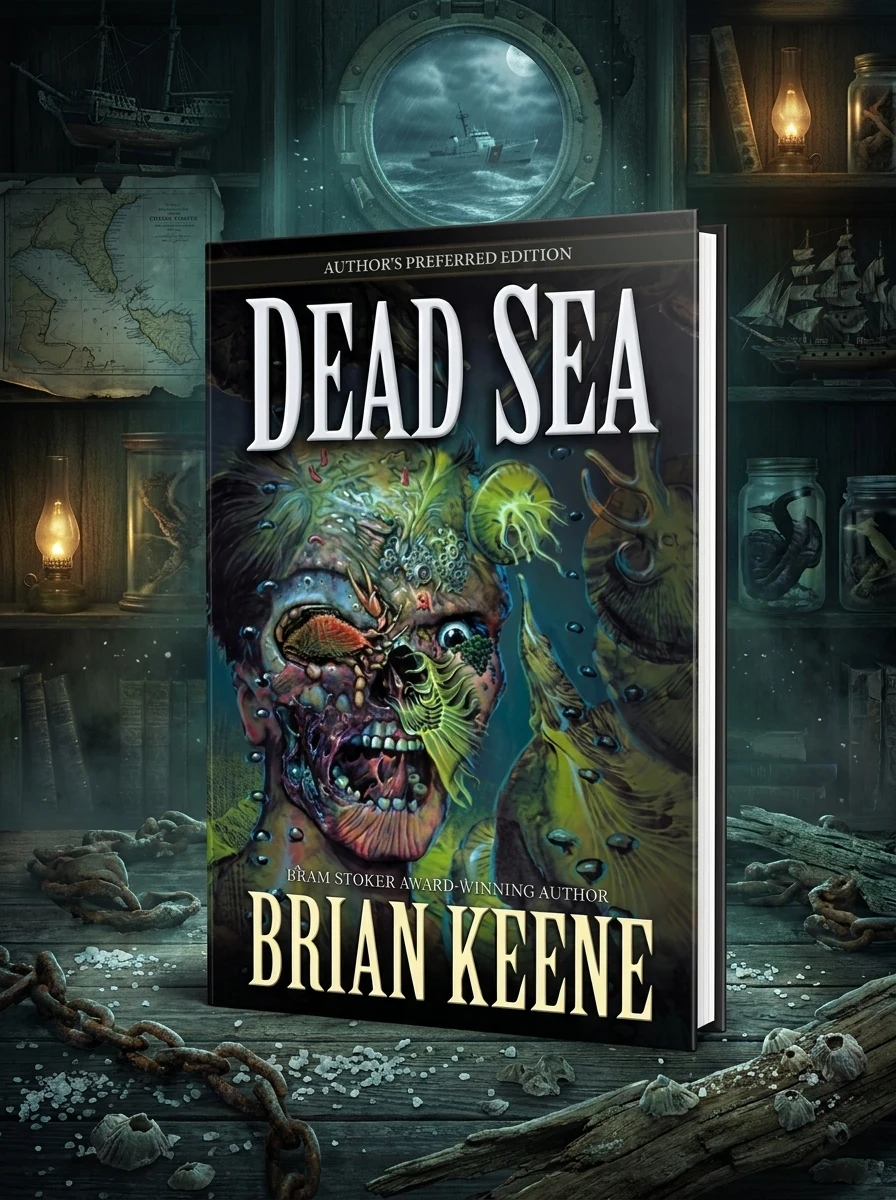
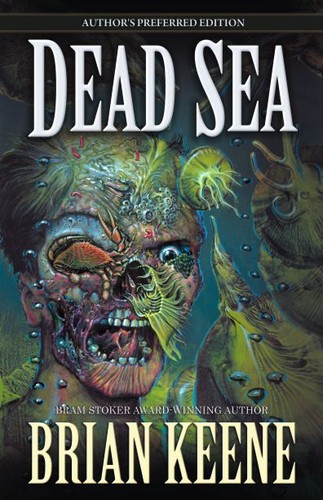
Dead Sea
Survivors flee zombies on a Coast Guard ship only to face isolation.
Dead Sea follows Lamar Reed and other survivors who board an abandoned Coast Guard vessel to escape the zombie plague. The ocean provides temporary safety but eventually becomes a prison. Keene details how the group’s dynamics fracture under the weight of their situation. The Author's Preferred version adds new content to this cult classic. The story focuses on the psychological breakdown of individuals when cut off from help. It examines the tension between hope and despair in a confined space. The narrative avoids external action, focusing instead on internal conflict. This approach distinguishes it from earlier entries in the genre.
Published by Deadite Press in 2011, this novel continues the zombie revival started by Keene's 2003 work The Rising. It builds on the momentum of his 2007 release, offering a fresh perspective on the genre by moving the conflict from land to sea. The book reflects the enduring appeal of survival horror in American popular culture.


📝 Description: Dead Sea
💎 Our verdict on Dead Sea
📖 Why choose it
Why this book is worth reading
Readers who crave intense survival scenarios and character-driven horror will find Dead Sea deeply rewarding. This book is ideal for those interested in the psychological breakdown of individuals when cut off from help, offering a claustrophobic study of fear rather than traditional monster hunts. It appeals to fans of post-apocalyptic fiction who value internal conflict over external action. By focusing on the tension between hope and despair within a confined space, the narrative provides a unique perspective on human dynamics under duress. Those seeking lighthearted adventure will likely find it too heavy, but enthusiasts of dark fantasy and psychological horror will appreciate the detailed examination of isolation and the fracture of group dynamics.
⭐ Reader reviews
Reader rating
Dead Sea distinguishes itself by avoiding external action to focus entirely on internal conflict, making it a standout in the zombie genre. The narrative effectively examines the psychological toll of confinement as survivors realize isolation can be as dangerous as the threat they fled. Keene’s ability to transform a familiar premise into a claustrophobic study of fear is impressive, emphasizing the fragility of social structures under extreme pressure. This approach offers a refreshing alternative to traditional monster hunts without a focus on human dynamics. It suits readers who enjoy intense survival scenarios and character-driven horror, delivering a tense exploration of how hope and despair interact in a prison-like environment.


![Don't F[Bleep]k with the Coloureds](/img/don-t-f-bleep-k-with-the-coloureds-53071.webp)