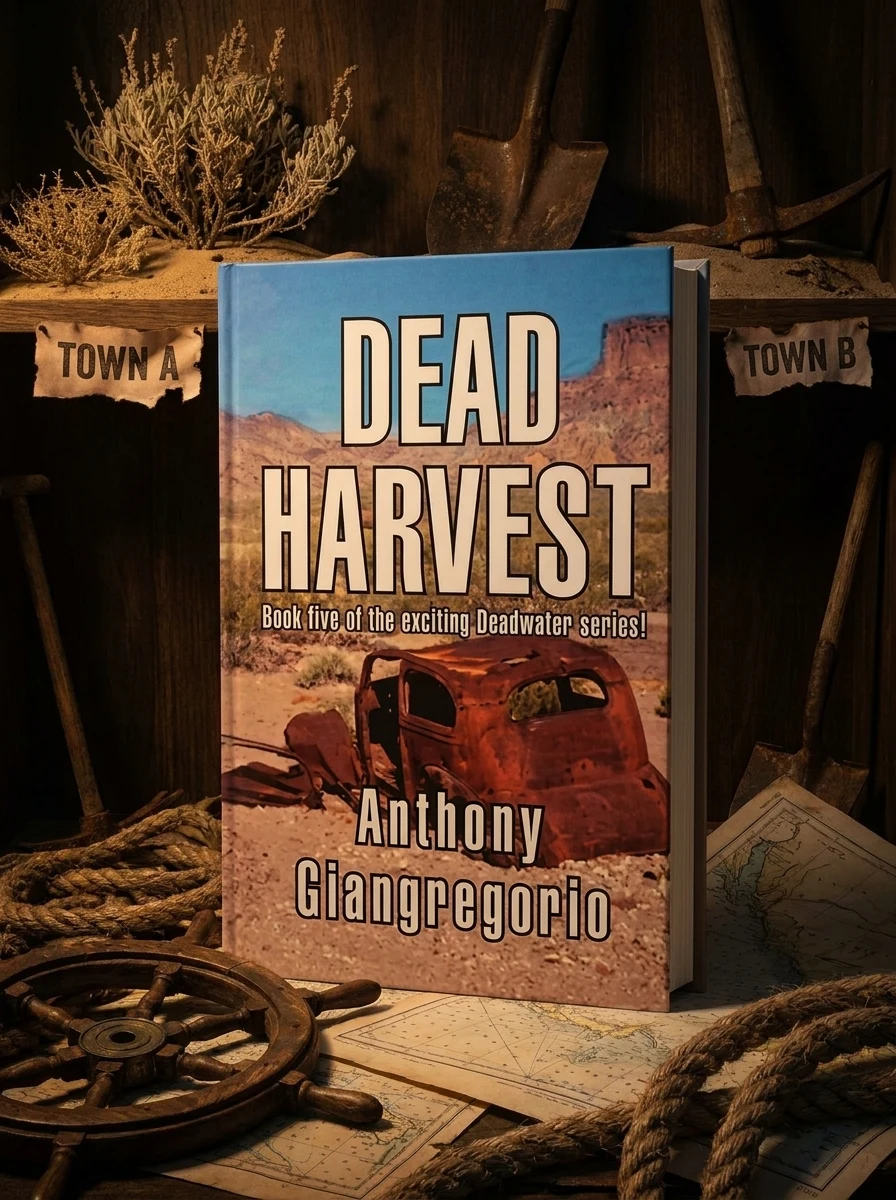

Dead Harvest (Deadwater Series Book 5)
A survival horror novel about separated friends facing undead threats in California.
Giangregorio constructs a narrative where rescue becomes a prelude to further danger. The cruise ship offers no true sanctuary. The subsequent storm fractures the group’s unity. They arrive on the California coast with false assumptions about their companions' fates. This misunderstanding fuels their entanglement in local feuds. The text examines how isolation breeds vulnerability to external manipulation. A ruler exploits this chaos to deploy the living dead. The plot relies on dramatic irony and mounting dread rather than action sequences. The characters must navigate a landscape where death is both literal and metaphorical. Their struggle is against both human adversaries and supernatural forces.
Published by Living Dead Press in 2009, this work sits within the US horror tradition of gothic fiction. It draws on supernatural themes prevalent in contemporary American speculative writing. The setting shifts from the open ocean to the coastal regions of California.


📝 Description: Dead Harvest (Deadwater Series Book 5)
💎 Our verdict on Dead Harvest (Deadwater Series Book 5)
📖 Why choose it
Why this book is worth reading
Readers who appreciate intricate plots driven by dramatic irony and mounting dread will find this book compelling. It appeals to those interested in how isolation breeds vulnerability and how human adversaries can be manipulated by supernatural forces. The narrative offers a grim tableau of life continuing amidst chaos, suitable for fans of psychological horror who enjoy watching characters navigate landscapes where death is both literal and metaphorical. It is ideal for audiences seeking a bleak tone rather than lighthearted adventure.
⭐ Reader reviews
Reader rating
Giangregorio excels at constructing a narrative where rescue serves only as a prelude to further danger, effectively subverting expectations of safety. The text examines how isolation fuels entanglement in local feuds, creating a tense atmosphere where characters struggle against both human adversaries and the living dead. By relying on dramatic irony rather than action sequences, the author builds a profound sense of dread. This approach suits readers who enjoy gothic traditions and psychological horror, offering a complex exploration of survival without easy escapes or comforting resolutions.