
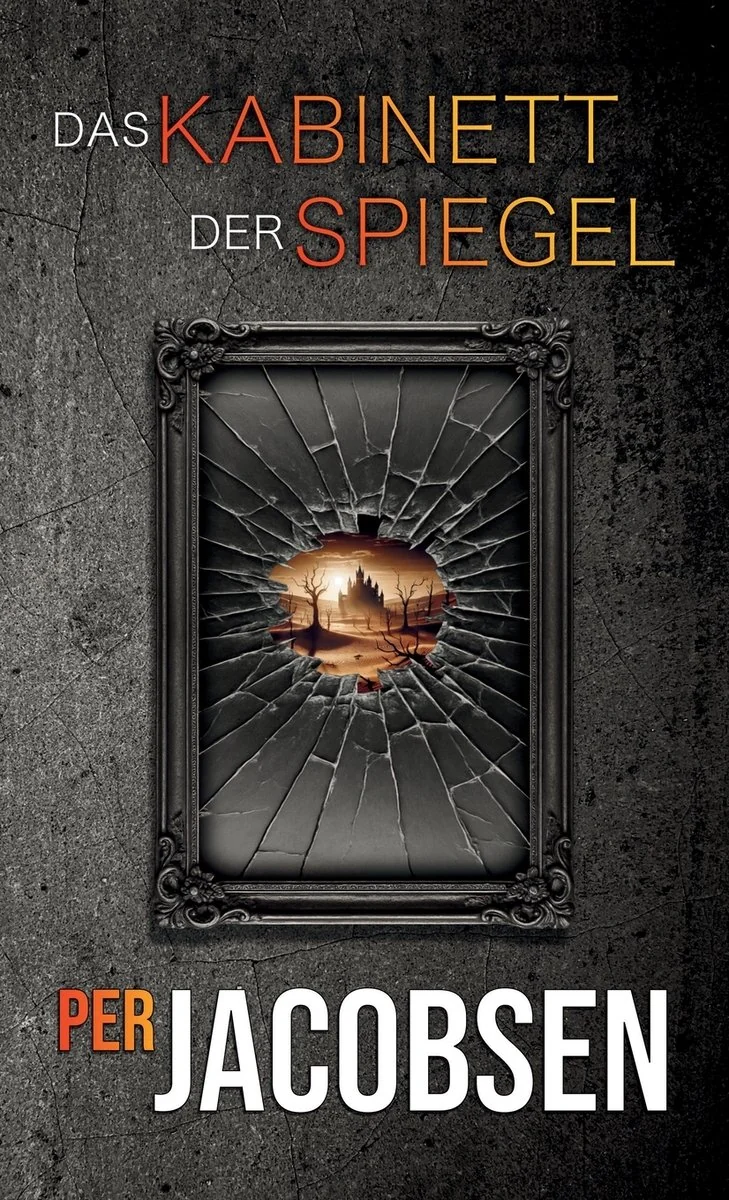
Das Kabinett der Spiegel
A teacher and student follow ghostly voices into a parallel world of mirrors.
The narrative centers on Michael Bendixen and Lisa Swan, two figures bound by recent tragedy. Their shared auditory experience in a school corridor leads them away from the ordinary world. They travel to Urari, a dimension where mirrors hold supernatural power. This place does not reflect light but rather the inner states of those who look into it. The story examines how grief can manifest as sensory phenomena. Jacobsen uses this premise to explore the lingering presence of the dead. The parallel world acts as a psychological landscape for processing loss. The characters must face what their reflections reveal about their unresolved emotions. The tone remains somber and introspective throughout the journey.
This work fits within contemporary horror fiction, specifically exploring gothic themes of mourning and the supernatural. It draws on traditions of psychological suspense where the boundary between life and death becomes porous. The narrative reflects modern anxieties about mental health and the persistence of memory after loss.


📝 Description: Das Kabinett der Spiegel
💎 Our verdict on Das Kabinett der Spiegel
📖 Why choose it
Why this book is worth reading
Readers who appreciate atmospheric dread and character-driven mysteries involving the afterlife will find this narrative deeply resonant. It offers a somber, introspective journey into how trauma blurs the line between reality and perception. Those interested in the lingering presence of the dead and the sensory manifestations of grief will connect with the precise exploration of unresolved loss. The book is ideal for those who prefer eerie silence and empty spaces over fast-paced action or traditional jump scares. It provides a unique lens on processing tragedy through a parallel world that reflects internal pain rather than external images.
⭐ Reader reviews
Reader rating
Jacobsen demonstrates remarkable precision in weaving gothic traditions with psychological horror, creating a tense atmosphere centered on the teacher-student dynamic. The premise of Urari serves as a powerful metaphor for grief, where mirrors reveal inner states rather than physical appearances. This approach allows for a deep examination of unresolved emotions and the uncanny nature of mourning. The narrative avoids cheap thrills, focusing instead on the weight of loss and the blurring of reality. It suits readers seeking character-driven mysteries and atmospheric dread. While it may not appeal to those wanting action, its introspective tone and exploration of trauma make it a compelling study for fans of literary horror and supernatural fiction.
📖 Read on the blog
✍️ More books by this author Per Jacobsen








🏛 Books from this publisher Humblebooks



You might also like
See more →





Have a question about this item?
Ask about the edition, condition, delivery or anything else — we reply by email or phone, usually within a day.
