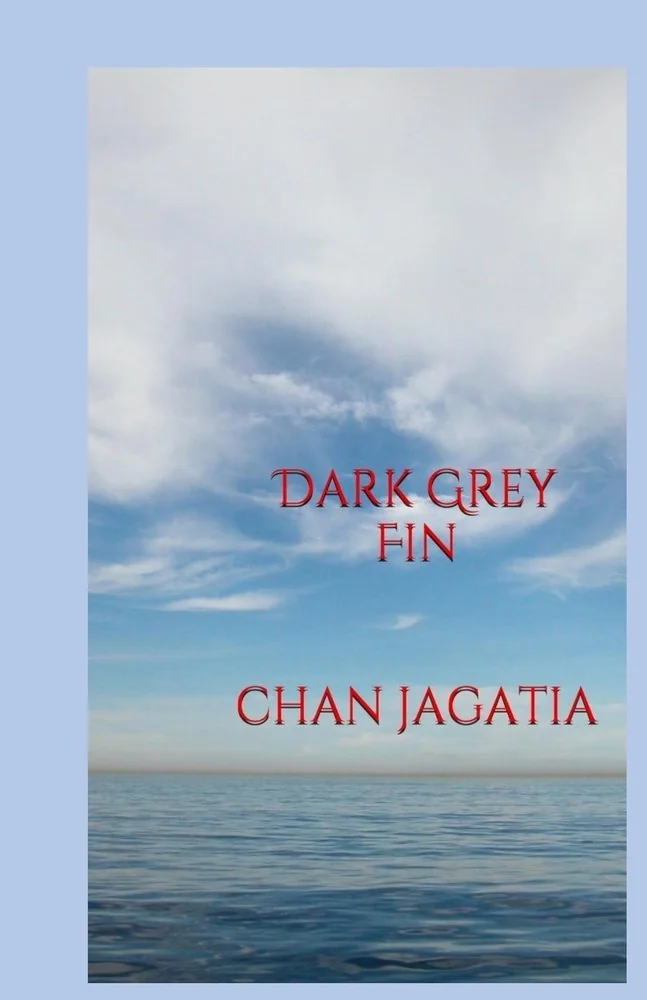
Dark Grey Fin
A novel about a Prime Minister's failed attempt to save extinct species after global collapse.
The narrative centers on the aftermath of an almost complete end to the world as known. A new world order arises, and life begins to flourish again in this altered state. The Great White Shark returns to the waters, marking a significant change in the ecosystem. A newly appointed Prime Minister for his district takes charge by building a complex to house species considered extinct. He claims to act in the interest of his people. This decision leads to disastrous consequences as the situation goes horribly wrong. Jagatia uses this premise to examine the fragility of human control over nature. The story does not offer easy answers about survival or evolution.
Published in 2016 by Createspace Independent Publishing Platform, this work reflects contemporary anxieties about environmental collapse and the resilience of the animal kingdom. It engages with the tradition of speculative fiction that imagines a new world order following the end of civilization as we know it.


📝 Description: Dark Grey Fin
💎 Our verdict on Dark Grey Fin
📖 Why choose it
Why this book is worth reading
Readers interested in speculative fiction that explores the fragility of human control over nature will find this narrative compelling. It appeals to those who enjoy post-apocalyptic scenarios where the focus shifts from survival to the consequences of ambition. The book is ideal for fans of ecological horror who want to see how biological reality clashes with political determination. Those seeking a story that examines the tension between human ambition and the inevitable resurgence of the natural world will appreciate its thematic depth. It offers a perspective on evolution and survival without providing easy answers, making it suitable for readers who prefer complex moral landscapes over simple resolutions.
⭐ Reader reviews
Reader rating
Chan Jagatia’s Dark Grey Fin effectively utilizes the backdrop of global collapse to examine the tension between human ambition and biological reality. The narrative stands out for its focus on ecological horror, particularly through the return of the Great White Shark as a symbol of shifting natural hierarchies. While the premise of housing extinct species is intriguing, the story avoids offering easy answers about survival or evolution, instead presenting a challenging exploration of fragility. It suits readers who enjoy post-apocalyptic scenarios and speculative fiction that questions human determination. However, those seeking traditional historical fiction or non-fiction accounts will likely find it unsatisfying. The tone remains serious and contemplative, making it a strong choice for fans of psychological and cosmic horror elements.