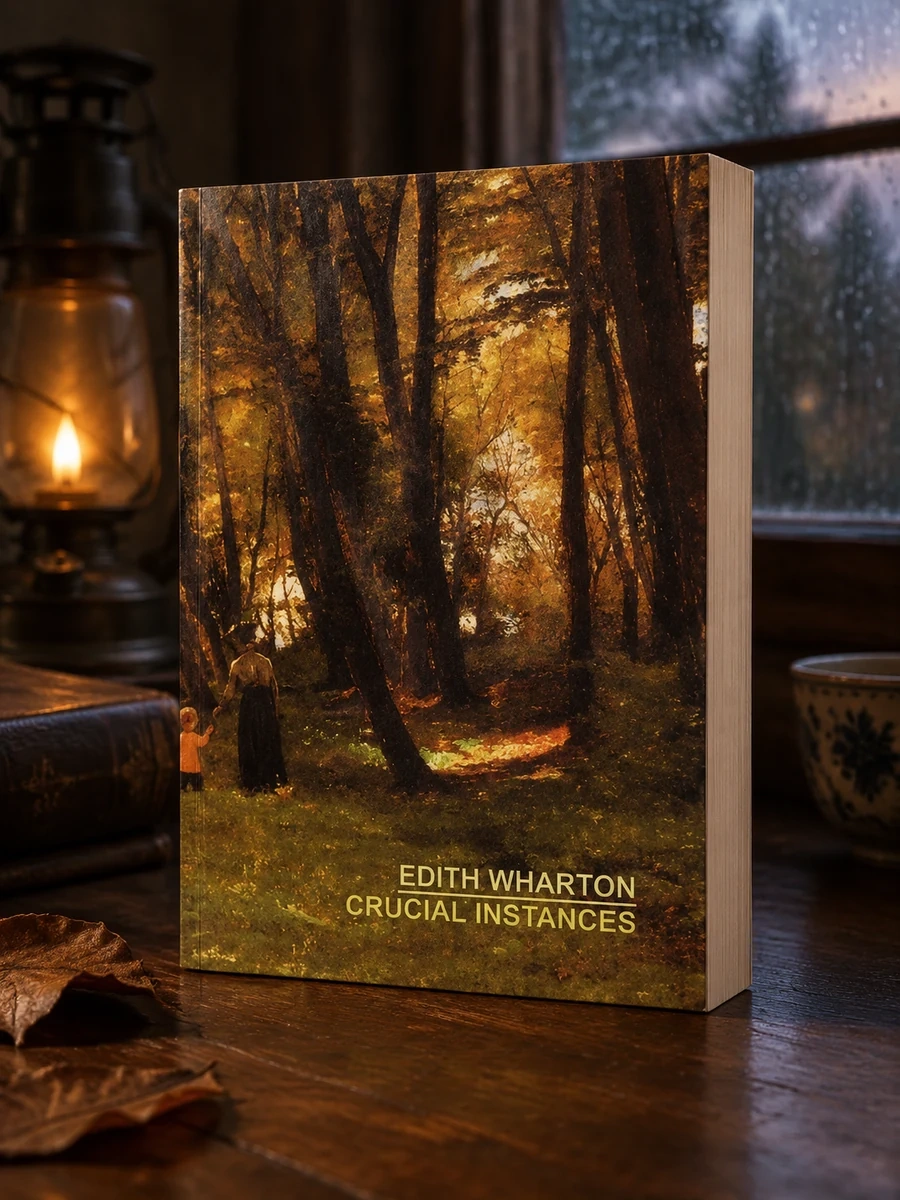

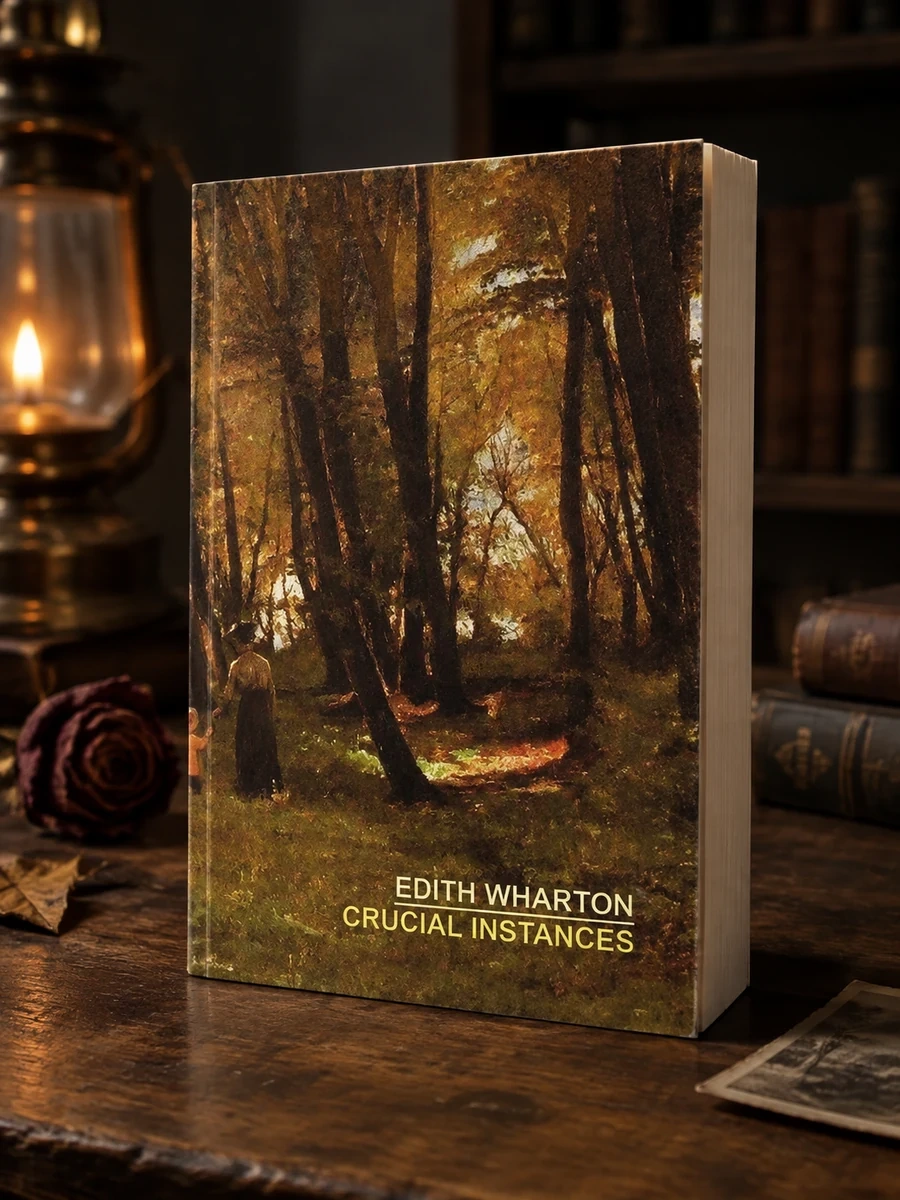
Crucial Instances
Edith Wharton's seven stories explore moral crises through love, betrayal, and art.
This collection focuses on the intersection of personal integrity and societal pressure. Wharton uses settings involving art and religious confession to highlight internal conflicts. The narrative structure relies on dialogue and quiet tension rather than overt supernatural events. Characters face choices that define their identities. The inclusion of Copy: A Dialogue suggests a focus on verbal interaction as a source of conflict. The Rembrandt points to the role of artistic value in moral judgment. Wharton’s background in high society informs her critique of these environments. The stories do not offer easy resolutions. They present complex human behavior without simplifying the ethical dilemmas involved.
The text draws on traditions of gothic and supernatural fiction while focusing on late nineteenth-century societal norms. Wharton’s work reflects the tension between individual desires and rigid class structures prevalent in her era. The stories utilize settings that emphasize isolation and judgment.


📝 Description: Crucial Instances
💎 Our verdict on Crucial Instances
📖 Why choose it
Why this book is worth reading
Readers who appreciate the slow burn of psychological tension over visceral gore will find this collection rewarding. It appeals to those interested in the intersection of art, morality, and societal pressure, offering a nuanced look at human behavior during moments of ethical dilemma. The focus on internal conflict and quiet dialogue provides a refreshing alternative to fast-paced horror tropes. Those who enjoy character studies where identity is defined by difficult choices will gain insight into Wharton’s critique of high society. It is ideal for individuals seeking intellectual engagement with horror themes, valuing the exploration of betrayal and integrity in a sophisticated narrative framework.
⭐ Reader reviews
Reader rating
Wharton delivers a masterclass in psychological horror through seven distinct narratives that prioritize internal conflict over external spectacle. By utilizing settings like art galleries and confessionals, she highlights the tension between personal integrity and societal demands. The reliance on dialogue creates a palpable quiet tension, making the moral crises feel immediate and profound. This work suits readers who value atmospheric depth and complex ethical dilemmas. It lacks the overt supernatural elements typical of genre horror, instead focusing on the terrifying weight of human choices. For those willing to engage with nuanced character studies, this collection offers a sophisticated exploration of the human condition within the gothic tradition.
📖 Read on the blog
✍️ More books by this author Edith Wharton


🏛 Books from this publisher Wildside Press
You might also like
See more →



Have a question about this item?
Ask about the edition, condition, delivery or anything else — we reply by email or phone, usually within a day.
