
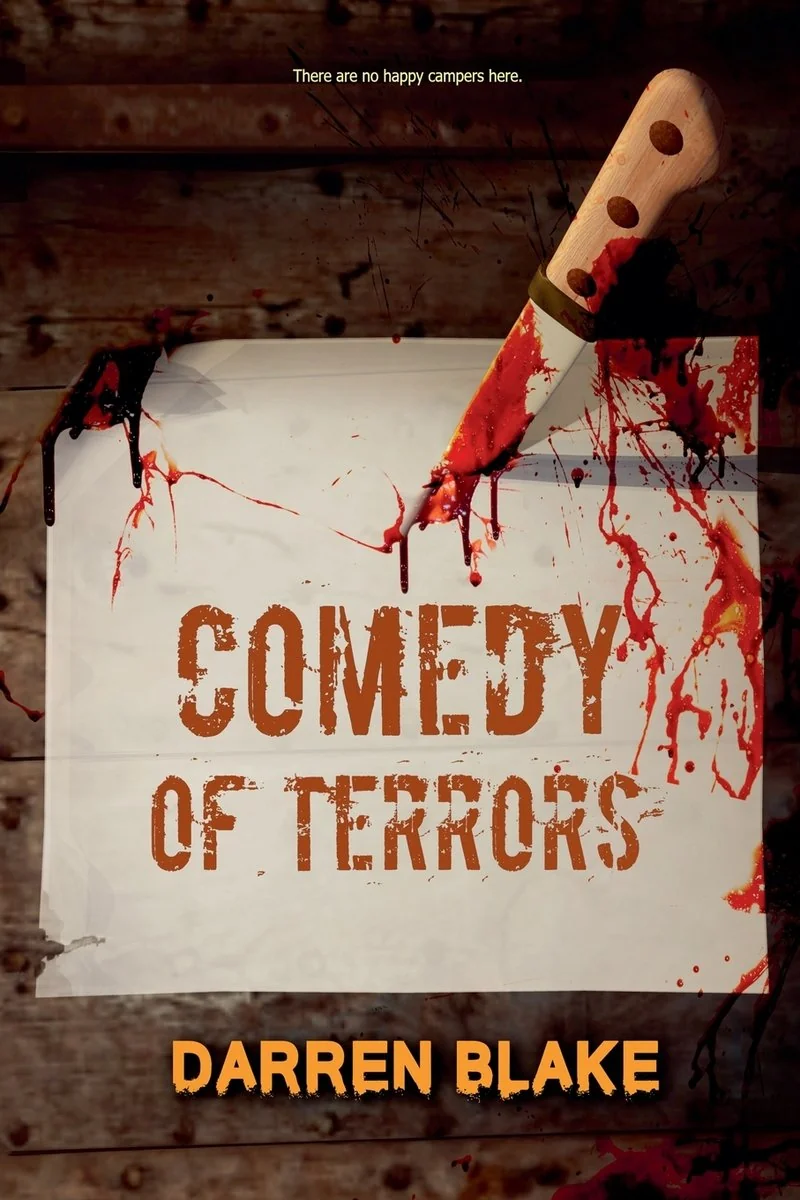
Comedy of Terrors
A slasher parody turns deadly when the killer ignores the rules of fun.
The narrative follows the author of Seeing Red as they navigate Camp Wannaslayem. This facility promises a safe simulation of horror movie scenarios for enthusiasts. The planned activities include archery and volleyball, designed to mimic cinematic tropes safely. However, the presence of an actual killer disrupts this carefully curated experience. The protagonist observes the transition from staged fear to genuine mortality. Blake uses the framework of slashers to critique the genre's reliance on violence. The story highlights the absurdity of treating murder as entertainment when the boundaries blur. Readers interested in the deconstruction of horror conventions will find this approach engaging. The plot moves from anticipation to dread as the safety measures prove illusory.
This work engages with the American slasher film tradition, specifically referencing the fictional Camp Death Massacre series. It critiques the cultural fascination with simulated violence and the summer camp archetype prevalent in horror media.


📝 Description: Comedy of Terrors
💎 Our verdict on Comedy of Terrors
📖 Why choose it
Why this book is worth reading
Readers who enjoy meta-commentary on horror cinema and appreciate a twist on the summer camp setting will find this approach engaging. The narrative subverts classic slasher tropes by placing them in a controlled environment where the killer fails to understand that actions are performative fun. This transforms intended parody into genuine horror as safety protocols fail. It suits those interested in the deconstruction of horror conventions and the absurdity of treating murder as entertainment. By highlighting the mechanics of genre collapse, it offers a unique perspective on how fiction bleeds into reality when boundaries blur. The gradual realization of failed safety measures creates a compelling shift from anticipation to dread.
⭐ Reader reviews
Reader rating
Blake effectively subverts the classic slasher genre by situating its tropes within the ironic framework of Camp Wannaslayem. The narrative excels in its critique of horror's reliance on violence, using the protagonist’s perspective as a barely-selling author to expose the mechanics of cinematic fear. While it may not appeal to those seeking traditional jump scares or straightforward survival tales without irony, it offers a sharp, intelligent deconstruction of summer camp horror conventions. The story captures the transition from staged safety to genuine mortality with precision, making it an ideal choice for readers who appreciate meta-commentary and the blurring of fictional boundaries in modern horror literature.
You might also like
See more →







Have a question about this item?
Ask about the edition, condition, delivery or anything else — we reply by email or phone, usually within a day.
