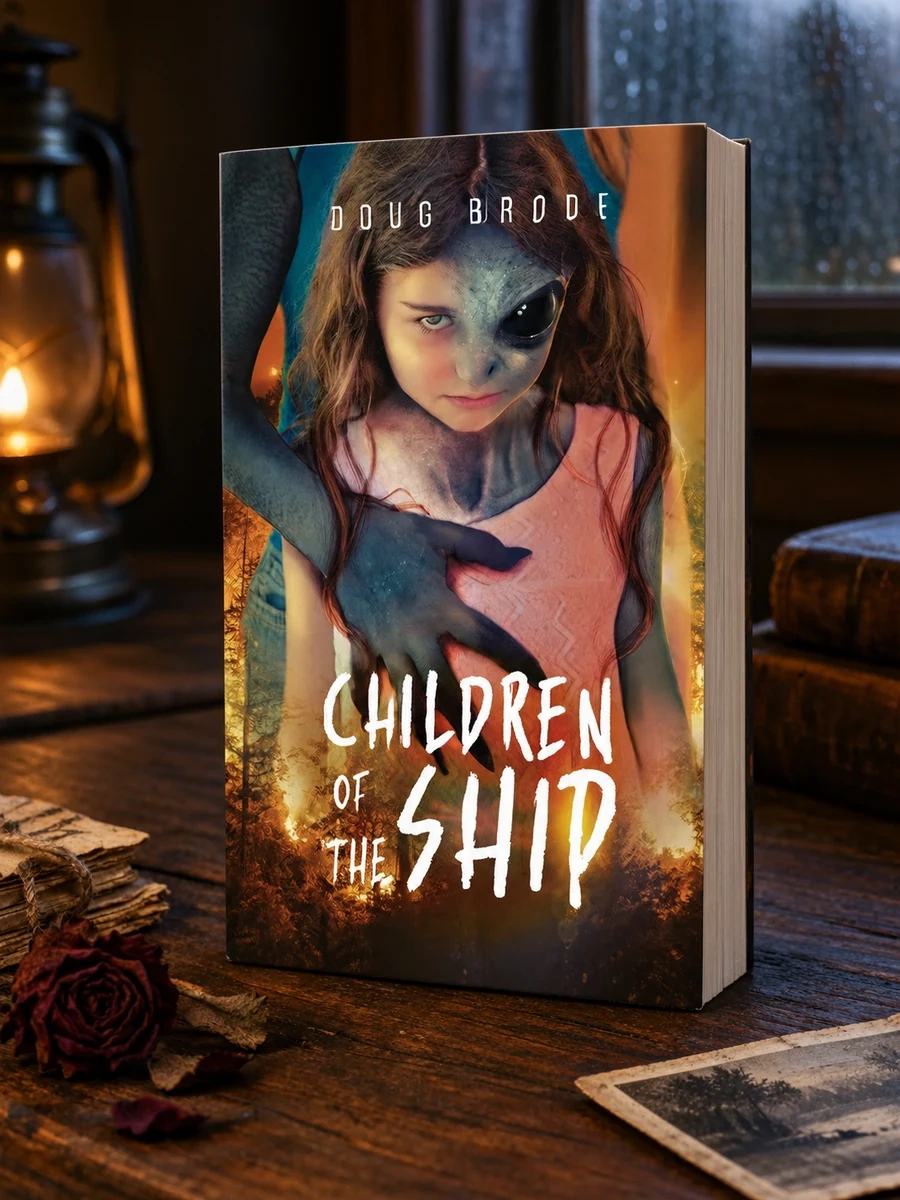

Children of the Ship
Doug Brode concludes The Ship Saga with a mystery rooted in Blackwood, Oregon.
The narrative follows Casey Anderson through the destruction of Blackwood, Oregon. She must recover her lost memories to stop the apocalyptic forces threatening the town. These forces include earth cracks and creatures from long-extinct eras. A yellow mist serves as a portal to other times and places. Brode integrates scientific theories with these supernatural events to build tension. The plot resolves the series' greatest mystery through Casey's personal struggle. This approach connects the protagonist's internal conflict with the external horror surrounding her. The story relies on the intersection of forgotten history and immediate physical danger.
This work sits within the tradition of American supernatural fiction and gothic horror. It draws on themes of memory loss and apocalyptic survival prevalent in contemporary genre literature. The setting in a small Oregon town grounds the fantastical elements in a recognizable, grounded reality for modern readers.


📝 Description: Children of the Ship
💎 Our verdict on Children of the Ship
📖 Why choose it
Why this book is worth reading
Readers who enjoy the intersection of scientific theory and supernatural horror will find this volume compelling. It suits those invested in the long-term narrative arc of The Ship Saga, offering a conclusion to the central mystery surrounding Casey Anderson. Fans of dark fantasy and gothic fiction appreciate how personal history collides with external physical danger. The book appeals to audiences seeking a tone that is neither lighthearted nor purely academic, but focused on survival against apocalyptic forces. It provides satisfaction for those who value internal character struggles mirrored by environmental decay.
⭐ Reader reviews
Reader rating
Doug Brode effectively grounds cosmic horror in tangible reality through the lens of memory loss and physical destruction. The integration of scientific frameworks with supernatural elements creates a unique tension suitable for fans of psychological horror. While the focus on Casey’s internal conflict drives the plot, it may alienate readers seeking pure action or nonfiction. The narrative succeeds by linking forgotten history to immediate threats, offering a cohesive end to the saga. It is best suited for dedicated genre readers who appreciate complex character arcs amidst apocalyptic settings. The tone remains consistently dark, ensuring the horror feels earned rather than gratuitous.