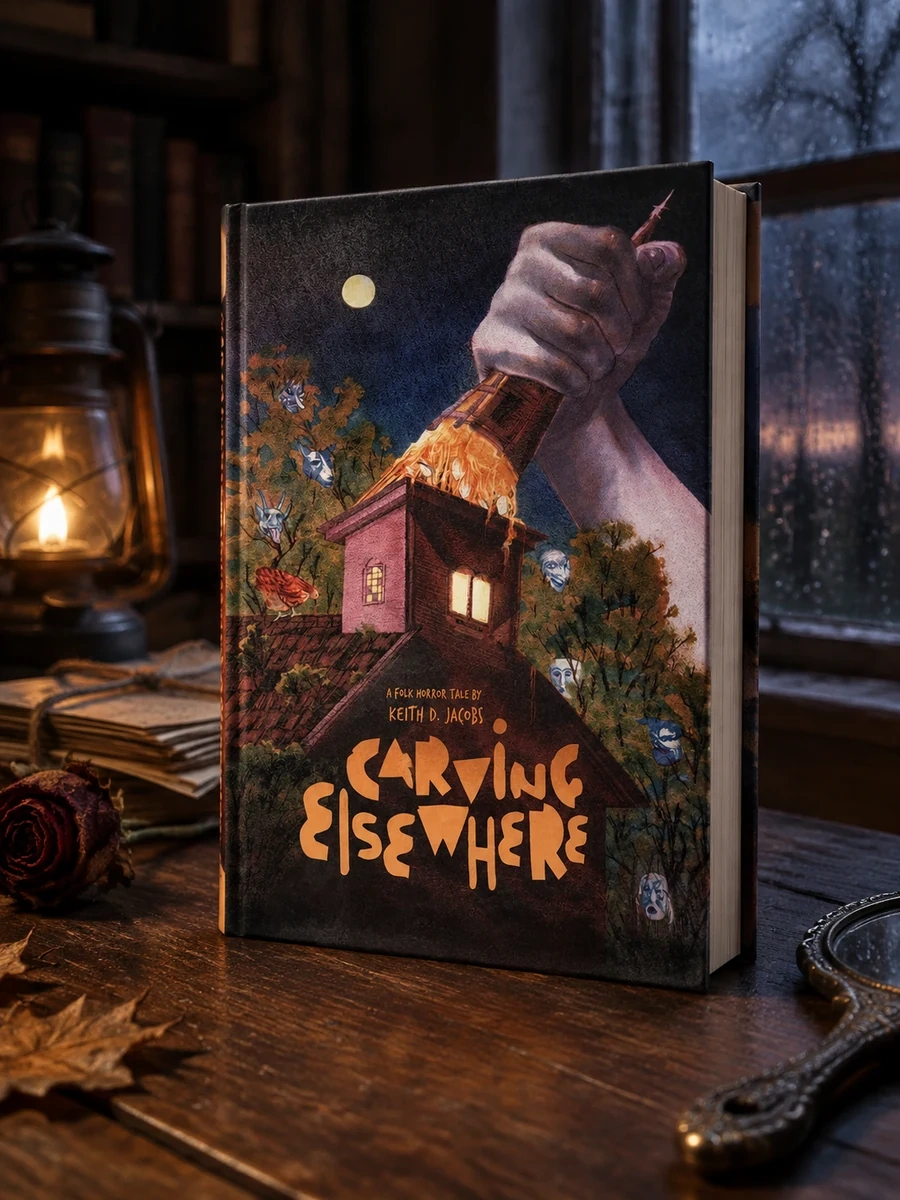
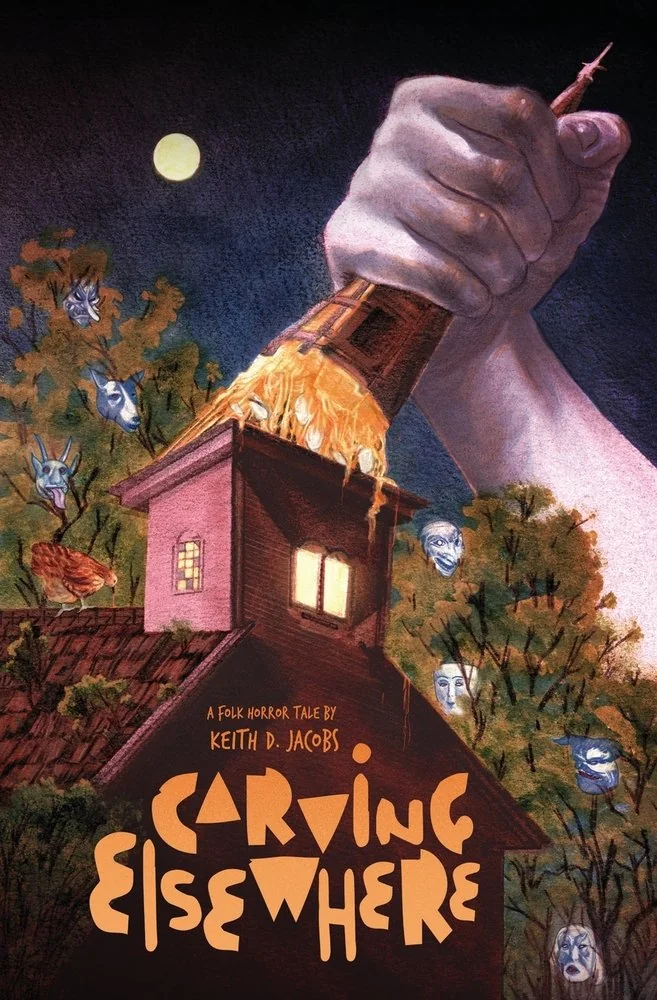
Carving Elsewhere
A 1990s New England tale of dark fantasy and local folklore.
Jacobs explores the intersection of personal desire and regional history. The protagonist uses town records and folklore as tools for his own survival. This creates a unique blend of psychological study and supernatural fiction. The setting is not merely backdrop but an active participant in the story. The narrative avoids conventional horror resolutions, focusing instead on the act of carving out identity through extreme means.
The book is set in New England during the 1990s. It draws on the specific folklore and town histories of this region. The setting provides a distinct cultural backdrop for the protagonist's actions. This regional focus distinguishes the work from generic horror narratives.


📝 Description: Carving Elsewhere
💎 Our verdict on Carving Elsewhere
📖 Why choose it
Why this book is worth reading
This title is ideal for readers who prefer character-driven psychological horror over fast-paced action or traditional monster stories. It appeals to those interested in the intersection of personal desire and regional history, offering a unique blend of supernatural fiction and intense psychological study. The book suits audiences who appreciate how isolation and personal mythology are explored within specific American settings. Readers seeking a narrative that avoids conventional resolutions will find value in its focus on self-creation through dark means. It is perfect for those willing to engage with an internal landscape where folklore structures existence, providing a slow-burn experience that prioritizes atmosphere and thematic depth over plot twists.
⭐ Reader reviews
Reader rating
Keith D Jacobs delivers a compelling exploration of isolation and identity within the specific context of New England’s past. The narrative excels in its refusal to offer moral judgments or clear solutions, instead observing the protagonist's process of self-creation through visceral acts. By grounding supernatural elements in local town histories rather than generic tropes, the book achieves a chilling authenticity that makes the setting an active participant. This approach creates a dense, atmospheric experience suitable for fans of regional gothic fiction. While it lacks traditional pacing, its strength lies in the psychological study of a man using folklore to survive. The ending provides a stark image of the chosen path without resolution, leaving a lasting impression on those who appreciate dark fantasy and literary horror over conventional scares.