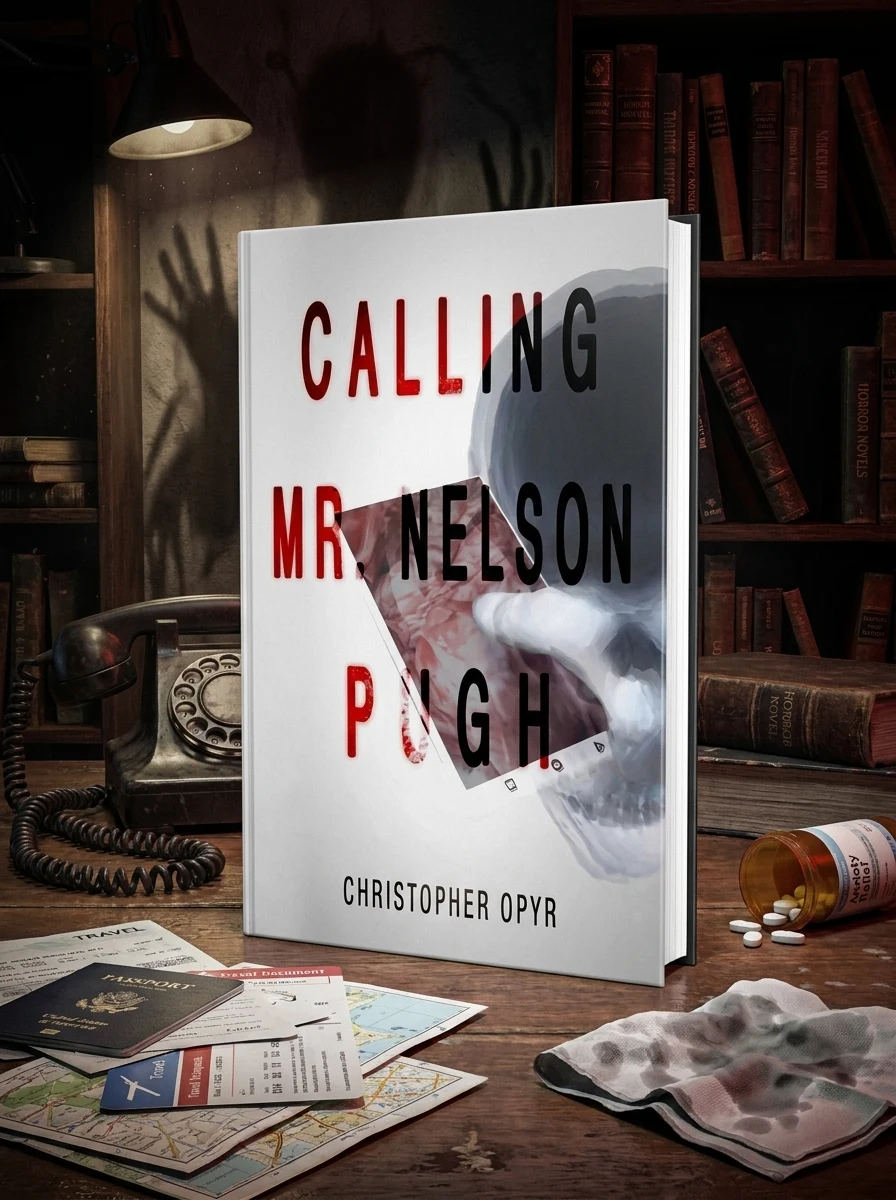

Calling Mr. Nelson Pugh
A man questions his sanity while receiving mysterious calls from his wife during a business trip.
Nelson Pugh faces a crisis when his anxiety spikes due to unexpected calls from Eleanor. He cannot determine if he is having a medical episode or if his family is in danger. The isolation of his travel amplifies his fear, leaving him unable to verify the truth. Opyr constructs a narrative where the protagonist’s mental state becomes the primary obstacle. The story examines how paranoia can distort perception and prevent rational action. Nelson’s inability to reach his family creates a sense of helplessness that drives the plot forward.
This 2020 release by Christopher Opyr sits within the modern independent publishing landscape. It targets American readers interested in contemporary psychological horror. The work reflects current trends in self-published genre fiction that focus on internal character struggles rather than external monsters.


📝 Description: Calling Mr. Nelson Pugh
💎 Our verdict on Calling Mr. Nelson Pugh
📖 Why choose it
Why this book is worth reading
Readers who crave slow-burn psychological horror and character-driven mysteries will find this book compelling. It appeals to those interested in how paranoia distorts perception and creates a sense of helplessness when isolation cuts off external verification. The narrative offers a deep dive into the terror of uncertainty, where the protagonist cannot distinguish between medical episodes and genuine threats. Those who enjoy stories that focus on internal dread rather than external action will appreciate the tight perspective on Nelson’s mental state. It is ideal for individuals who like to question reality alongside the main character, offering a tense exploration of trust and sanity without providing easy answers or clear resolutions.
⭐ Reader reviews
Reader rating
Opyr constructs a tense narrative where the protagonist’s mental state serves as the primary obstacle, effectively blurring the line between reality and fear. The book excels in its focus on internal dread, using the isolation of travel to amplify Nelson’s anxiety and paranoia. This approach creates a palpable sense of helplessness that drives the plot forward without relying on supernatural elements or fast-paced action. The story is best suited for readers who enjoy character-driven mysteries and psychological thrillers that explore the limits of human perception. While it may disappoint those seeking clear resolutions or external horror, it succeeds as a study in uncertainty and the failure of trust.
📖 Read on the blog
🏛 Books from this publisher Independently Published








You might also like
See more →

Have a question about this item?
Ask about the edition, condition, delivery or anything else — we reply by email or phone, usually within a day.
