Blood of Malakar
A soldier drinks dragon blood to save his sister, losing his soul in the process.
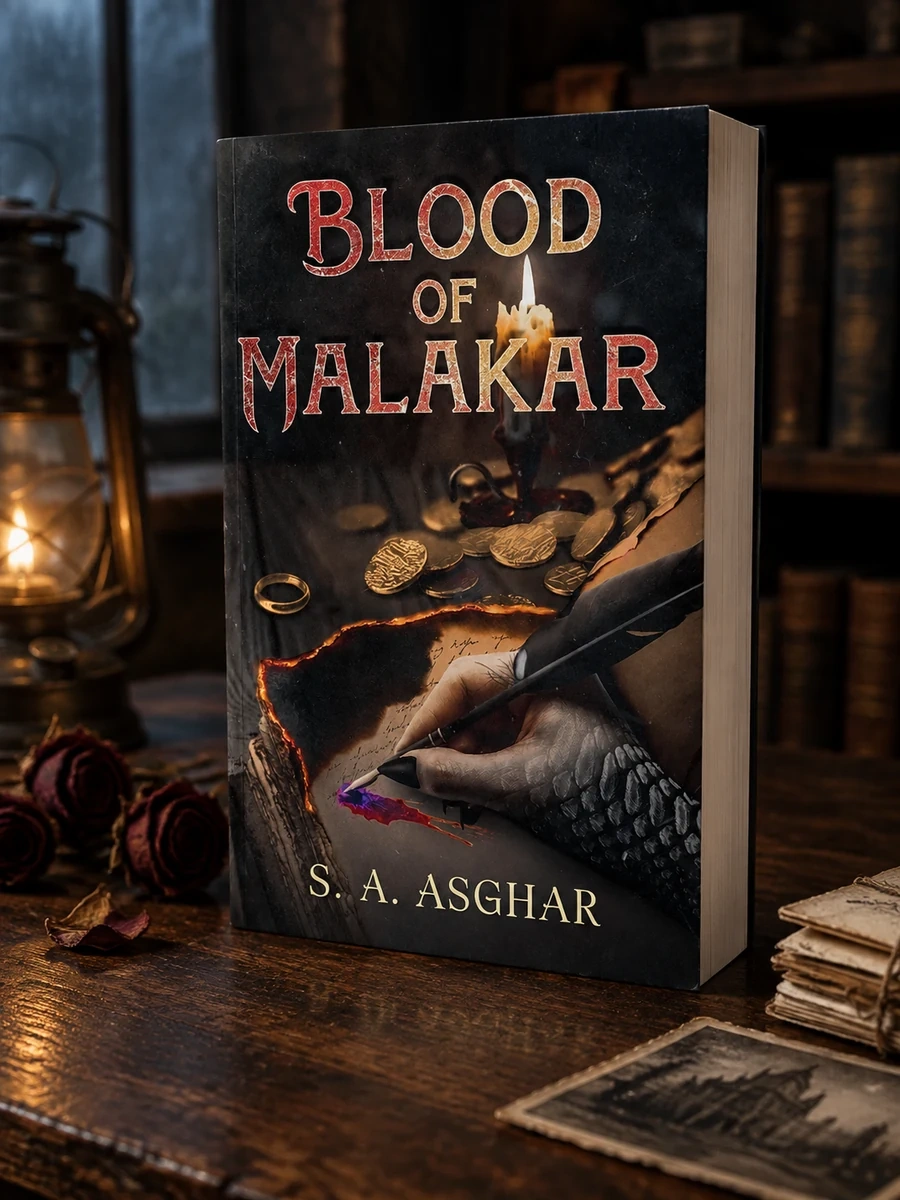
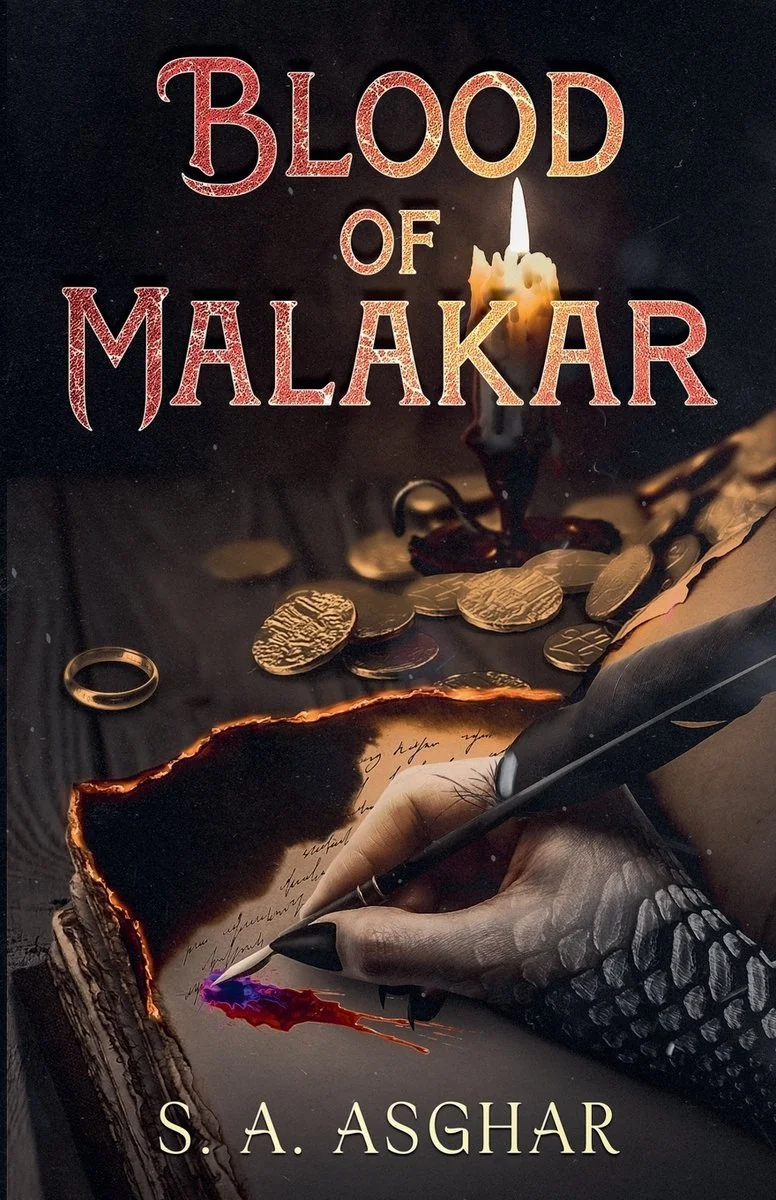
The plot follows Zarok’s descent from a willing hero into a monstrous weapon. His body becomes a battleground for conflicting powers: the King’s ambition and Malakar’s hunger. The text details the physical agony of this change, describing the burning drop that starts the process and the groaning skeleton that supports his new form. Asghar uses the journal format to create immediacy, forcing the reader to experience Zarok’s fading memories firsthand. The Kingdom of Zaravath faces destruction not from external foes, but from the weapon it created. This internal conflict drives the narrative forward, replacing traditional battle scenes with psychological erosion. The story asks what remains when a man is stripped of his name and purpose. It is a study in desperation and the cost of power.
Set in the Kingdom of Zaravath, this work blends high fantasy with gothic horror elements. The narrative structure mimics a personal diary, grounding supernatural events in intimate human experience. It reflects modern interest in tragic anti-heroes and body horror within speculative fiction.


📝 Description: Blood of Malakar
💎 Our verdict on Blood of Malakar
📖 Why choose it
Why this book is worth reading
Readers who appreciate visceral body horror and psychological erosion will find this narrative compelling. It offers an intimate glimpse into the disintegration of self through a forbidden journal format, making the protagonist's agony immediate and undeniable. Those interested in the cost of power and the loss of humanity in the face of desperate circumstances will engage with Zarok’s descent. The book suits those who prefer bleak explorations of sacrifice over lighthearted adventure. It provides a grim study of how ambition and hunger can strip away name and purpose, appealing to fans of dark fantasy who value atmospheric dread and tragic heroism.
⭐ Reader reviews
Reader rating
Asghar delivers a potent blend of gothic horror and dark fantasy through Zarok’s visceral transformation. The journal format effectively forces readers to experience the fading memories alongside the physical agony of bone reshaping and vein spreading. The narrative excels in depicting internal conflict over external battle, replacing traditional action with psychological erosion. This approach creates a claustrophobic atmosphere where the true enemy is the weapon itself. The tone is appropriately bleak, offering no easy resolutions or moral victories. It stands as a strong entry for those seeking intense magical corruption and tragic outcomes, though it may alienate readers preferring clear heroics.
You might also like
See more →







Have a question about this item?
Ask about the edition, condition, delivery or anything else — we reply by email or phone, usually within a day.
